Supreme Court Petition Challenges UGC's 2026 Equity Regulations as 'Reverse Discrimination'
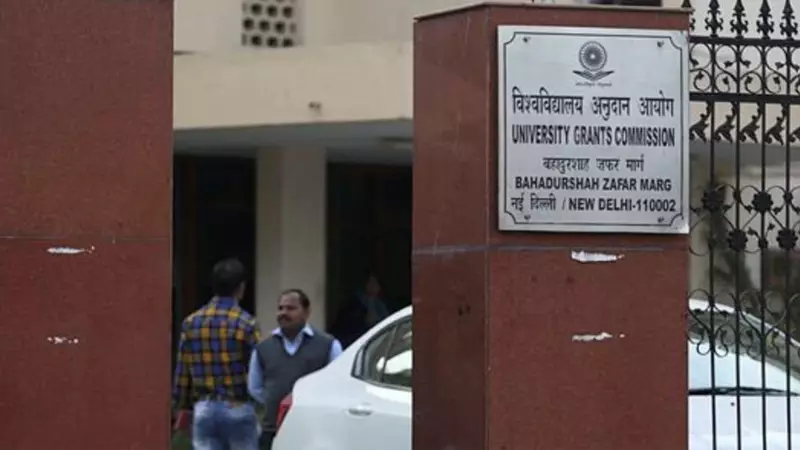
In a significant legal move, a plea has been filed before the Supreme Court challenging the constitutional validity of the University Grants Commission (Promotion of Equity in Higher Education Institutions) Regulations, 2026. The petition, submitted by Advocate Vineet Jindal, contends that these regulations, notified on January 13, 2026, legitimize what it terms as "reverse discrimination" and amount to state-sponsored bias by failing to acknowledge that individuals from general or upper castes may also face caste-based discrimination.
Constitutional Concerns and Alleged Infirmities
The writ petition argues that the regulations adopt an exclusionary and asymmetric definition of caste-based discrimination, specifically in Regulation 3(c), which limits such discrimination to members of Scheduled Castes (SC), Scheduled Tribes (ST), and Other Backward Classes (OBC). According to Jindal, this provision denies equal protection of law to a substantial section of citizens based solely on caste, thereby violating Article 14 of the Constitution, which guarantees equality before the law.
Jindal further asserts that this definition has a chilling effect on free academic discourse, protected under Article 19(1)(a) of the Constitution. He warns that in the absence of neutral, caste-agnostic safeguards, allegations of caste discrimination could be weaponized, while genuine grievances of others remain unheard. This, he claims, fosters fear, reputational harm, and self-censorship among students and faculty in higher education institutions.

Historical Parallels and Social Realities
The plea draws a stark comparison, stating that Regulation 3(c) suffers from a constitutional infirmity akin to the colonial-era Criminal Tribes Act of 1871. That act designated certain communities as inherently criminal and was later repealed for violating equality and constitutional morality. By presupposing that only certain castes can be victims of discrimination, the regulations allegedly revive a similar presumption of collective guilt and immunity, which is alien to the egalitarian ethos of the Indian Constitution.
Jindal emphasizes that the regulations fail to recognize the evolving social realities on campuses, where caste-based hostility has become bidirectional. He points to multiple reported incidents between 2022 and 2025 across various higher education institutions to illustrate this point.
- In December 2022, walls at Jawaharlal Nehru University (JNU) in Delhi were defaced with anti-Brahmin and anti-Baniya slogans, such as "Brahmins Leave The Campus" and "Brahmino-Baniyas, we are coming for you!"
- In March 2024, students at Ashoka University in Sonipat, Haryana, were recorded raising inflammatory slogans like "Brahmin-Baniyawaad Murdabad" during protests.
- In March 2025 at JNU, members of the Birsa Ambedkar Phule Students’ Association (BAPSA) chanted slogans targeting Brahmins, Baniyas, and Thakurs, labeling them as thieves.
These incidents, according to the plea, reflect a pattern of selective tolerance and institutional apathy towards caste-based hostility directed against general category students. Jindal also highlights several reported instances where students from the general category have died by suicide following sustained harassment, social ostracization, or false accusations, compounded by a lack of neutral grievance redressal mechanisms.
Call for Caste-Neutral Amendments
The petition urges the Supreme Court to strike down Regulation 3(c) or, alternatively, direct the UGC and the central government to read down and amend it. The proposed amendment would define caste-based discrimination in a caste-neutral and inclusive manner, extending protection and grievance redressal mechanisms to all persons subjected to discrimination based on caste, irrespective of their caste identity.

Jindal argues that by restricting protections exclusively to certain groups, the regulations perversely legitimize reverse discrimination and fail to promote the "full equity and inclusion" envisaged in the National Education Policy, 2020. This, he claims, perpetuates caste divisions rather than eradicating them, thereby defeating the professed purpose of the regulations.
The plea concludes that the regulations are manifestly arbitrary and violative of the Constitution, creating a hostile classification founded solely on caste without any intelligible differentia or rational nexus to the objective of promoting equity in higher education. As the Supreme Court considers this challenge, the outcome could have far-reaching implications for campus policies and social justice frameworks across India.