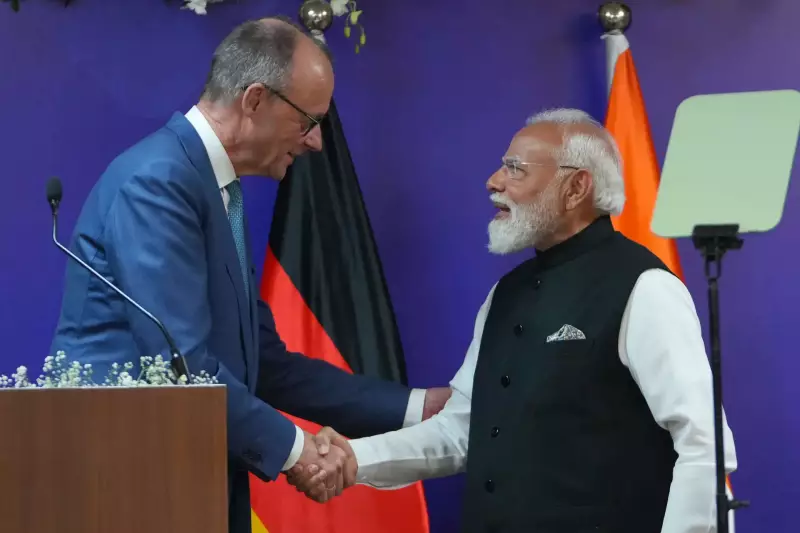
In a significant move to deepen bilateral ties, India and Germany have officially adopted a comprehensive higher education roadmap, placing academic collaboration and student exchange at the core of their strategic partnership. The announcement came during German Chancellor Friedrich Merz's official visit to Gandhinagar, where Prime Minister Narendra Modi extended a direct invitation to foreign institutions to establish campuses within India.
A New Direction for Academic Ties
Addressing a joint press conference, Prime Minister Modi stated that the roadmap would give "a new direction" to educational cooperation between the two nations. This framework elevates higher education from a symbolic aspect of diplomacy to a concrete policy instrument aimed at long-term partnership building. The development is part of a broader set of outcomes from the two-day engagement, which saw the conclusion of 19 agreements across various sectors, including education, skilling, and human resources, as reported by ANI.
The roadmap builds upon India's recent regulatory reforms that have opened pathways for foreign universities to operate in the country. However, it goes a step further by embedding academic collaboration, institutional presence, and student mobility within a structured, government-backed bilateral plan, moving beyond ad-hoc partnerships.

Focus on Campuses and Student Mobility
A key distinguishing feature of this agreement is its emphasis on the physical establishment of foreign university campuses in India, rather than just facilitating student exchanges. For Indian students, this could fundamentally alter the access and cost dynamics of international education. It promises the opportunity to earn foreign credentials and experience international curricula without the high costs associated with studying abroad.
On the mobility front, Germany announced a visa-free transit facility for Indian passport holders transiting through the country. While not a direct student visa reform, this measure, which PM Modi highlighted as strengthening people-to-people ties, reduces travel friction for Indian students heading to Europe for studies or academic work.
Linking Education with Skilling and Strategic Goals
The roadmap strategically aligns higher education with national skilling priorities. A concrete outcome is the plan to establish a National Centre of Excellence for Skilling in Renewable Energy at the National Skill Training Institute in Hyderabad. This initiative directly connects academic collaboration with applied training and employment pathways in high-growth sectors like green energy, where Indo-German cooperation is expanding.
Education is now being positioned alongside technology, defence, and renewable energy as a pillar of the long-term strategic partnership. The timing of this announcement is symbolic, coinciding with 75 years of diplomatic relations and 25 years of the strategic partnership between India and Germany, signalling that universities and students are integral to the relationship's infrastructure.
The practical impact for students will hinge on implementation. The establishment of campuses will require navigating regulatory approvals, developing faculty pipelines, and ensuring alignment with Indian quality standards. Nevertheless, this roadmap creates a powerful institutional anchor for future decisions, setting a clear intent to transform the educational landscape and reduce barriers for students seeking world-class education.