
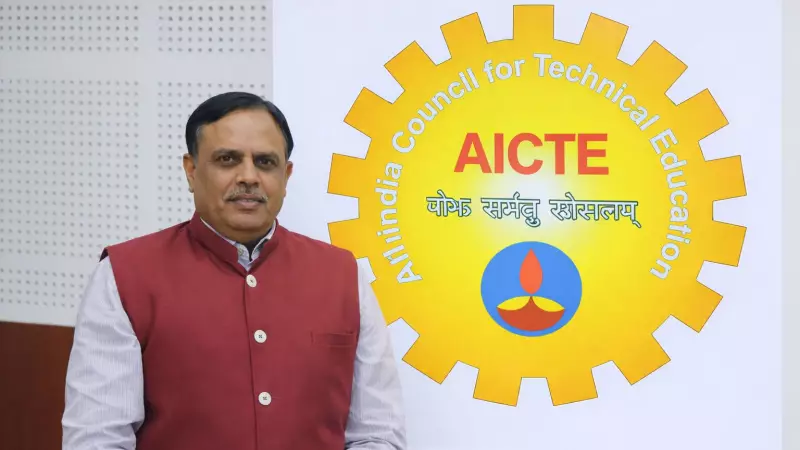
Former Chairman of the All India Council for Technical Education (AICTE), Professor T G Sitharam, has offered a crucial perspective on the impact of Artificial Intelligence on India's workforce. He asserts that the primary challenge is not widespread job loss but a significant skill mismatch. This insight comes ahead of his role as chair of the Human Capital Working Group at the upcoming India-AI Impact Summit 2026, scheduled for February and organized by the Ministry of Electronics and Information Technology.
Transforming Engineering Education for the AI Era
In an exclusive email interview, Professor Sitharam, who recently demitted office as AICTE chairman and is a former Director of IIT Guwahati, detailed the ongoing transformation in technical education. He explained that AICTE has shifted from a rigid curriculum to a flexible, outcome-based model. This new framework integrates subjects like AI, data science, machine learning, cybersecurity, and robotics across all engineering streams.
"Initiatives such as internships, project-based learning, industry certifications, and collaboration with leading tech companies ensure students are exposed to emerging technologies early," Sitharam stated. He emphasized that while students today are better exposed than ever, preparedness remains uneven. To bridge the gap between theory and practice, AICTE is pushing for hands-on learning and continuous faculty upskilling.
AI in the Classroom and the Future of Engineering Jobs
Professor Sitharam highlighted that AI is already changing engineering classrooms. Students are actively using AI tools for coding assistance, simulations, and personalized learning. However, he cautioned against over-dependence, stressing the need for responsible and ethical use to complement, not replace, critical thinking.
Addressing concerns about AI's impact on employment, Sitharam was clear: AI will transform jobs, not eliminate them. Routine tasks will be automated, creating new demand for engineers skilled in AI development, system integration, ethics, and human-AI collaboration. "Our concern is not job loss, but skill mismatch," he reiterated. This is precisely why the Human Capital Working Group's agenda for the 2026 summit focuses squarely on reskilling, upskilling, and lifelong learning.
Broader Trends and Regulatory Perspectives
The professor also addressed other key trends in technical education. He noted that the initiative for engineering education in regional languages has shown encouraging results, improving accessibility and reducing dropouts among students from rural backgrounds. On the rising BTech enrolment, he credited factors like the expanding startup ecosystem and government initiatives like Digital India and Make in India.
However, he acknowledged the paradox of vacant MTech seats, attributing it to students opting for early employment, entrepreneurship, or directly entering PhD programs. AICTE is countering this by promoting industry-linked MTech programs and flexible options. Regarding the proposed single higher education regulator, the Viksit Bharat Shiksha Adhishthan (VBSA), Sitharam emphasized that any reform must ensure academic autonomy while focusing on quality and accountability.
Professor Sitharam's analysis, provided on December 27, 2025, from New Delhi, presents a roadmap for India to harness AI's potential by proactively evolving its education and skilling infrastructure, ensuring its engineers remain globally competitive and future-ready.