In the rapidly evolving landscape of Indian education, a new question is haunting classrooms and faculty rooms alike: "Is this AI-generated?" This single query, driven by suspicion and presumption, is quietly reshaping the very benchmarks of academic evaluation, often at the cost of genuine student understanding.
The Algorithmic Judge: When Detection Tools Replace Human Judgment
Teachers, who traditionally prided themselves on their experience and instinct for spotting student shortcuts, now find themselves navigating the murky waters of Artificial Intelligence. As noted by Shruti Jain of National Law University, Delhi, in a piece published on January 1, 2026, at 11:28 AM IST, the confidence of educators is being replaced by a reliance on automated detection software. The process has become mechanical: an assignment is uploaded and immediately scanned by an AI detection tool. If the software flags the content, the work is presumed to be AI-generated, sidelining the student's actual effort and argument.
This shift has decisively altered academic assessment. The core objectives of evaluating a student's originality, reasoning, and conceptual understanding are being overshadowed by a singular, narrow expectation: to avoid using AI. In a stark example, marks are sometimes awarded in direct proportion to an algorithmic report. If a tool claims content is 45% likely AI-generated, a student might mechanically receive only 4.5 marks out of 10, leaving no room for nuanced human judgment.
A System Without Appeal: The Stark Unfairness of Flawed Tools
The procedural unfairness embedded in this system is deeply troubling. Students who fail an assignment or examination based on an AI detection report have no meaningful forum for appeal, despite the software's own disclaimers warning of "false positives" and advising against using the assessment as the sole basis for adverse action. Unlike conventional exams where re-evaluation by a human examiner is possible, the algorithmic verdict is often treated as final and unquestionable.
The injustice is magnified when a student's overall performance is considered. A learner may demonstrate exceptional clarity and understanding in a written exam but still receive low final grades because a separate assignment was flagged by a detection tool. There is no normalisation, no balancing of performance, and no academic discretion applied. The entire process rests on an uncritical faith in tools whose reliability remains hotly contested, even by their own developers.
Distorting Education's Purpose: The Cat-and-Mouse Game
This over-dependence on policing technology is distorting the fundamental purpose of education. A simple online search for "How to avoid AI detection" reveals countless strategies. Students are learning to paraphrase sentences, remove descriptive words, restructure paragraphs, and even deliberately introduce grammatical errors—all tactics aimed not at deepening understanding, but at slipping past an algorithm.
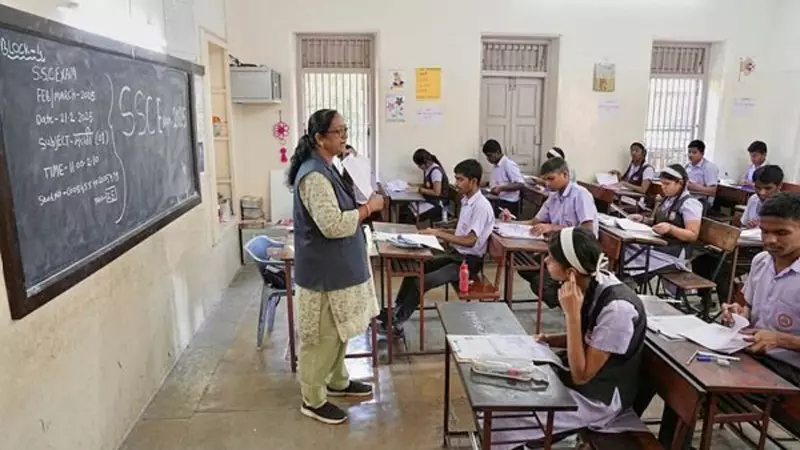
Consequently, the classroom is transforming into a space of mutual suspicion. Students focus on bypassing detection, while teachers focus on catching it. In this contest, regardless of who "wins," meaningful learning is the ultimate casualty. The goal is no longer to think or write better; it is simply to avoid being flagged.
Rethinking Assessment: The Path Forward for Indian Institutions
The solution lies not in perfecting flawed policing tools but in thoughtfully redesigning assessment for the age of AI. Educational institutions must shift their focus. While institutional AI policies often emphasise responsible use by students, they remain largely silent on the responsibility of faculty to critically evaluate and contextualise AI detection reports.
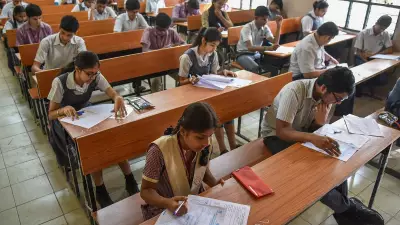
Not all forms of evaluation are equally vulnerable to misuse. Methods like face-to-face vivas, classroom discussions, presentations, and seminars allow students to demonstrate understanding in real-time, minimising the opportunity for AI substitution. Similarly, greater weightage should be given to in-person written examinations that test analytical and critical thinking, rather than formulaic report-writing that AI can generate in minutes.
As the article powerfully concludes, the future of learning depends on how thoughtfully we adapt to technology, not how effectively we police it. For India's education system to truly nurture critical minds, it must move beyond suspicion and embrace assessment methods that value human understanding over algorithmic scores.