Are you gearing up for the UPSC Civil Services Preliminary Examination 2026? Consistent revision of static syllabus topics is key to success. As part of this essential preparation, our daily subject-wise quiz initiative helps aspirants test their knowledge and identify areas for improvement. Today's focus is on crucial themes from Environment and Geography, featuring questions on India's tiger conservation, dramatic weather phenomena, and international climate agreements.
Revise Key Concepts with Targeted Questions
This quiz is designed to cover important factual and conceptual areas that are frequently tested. Let's delve into the questions and detailed explanations to solidify your understanding.
Question 1: The Himalayan Wonder - Rheum Nobile
Consider the following statements about the rare plant Rheum nobile:

- It thrives at altitudes between 4,000 to 4,800 metres.
- It is known as a "glasshouse plant."
- This plant is monocarpic (flowers once in its lifetime).
- It is commonly found along high-altitude trekking routes in Southern Ladakh.
How many statements are correct? The answer is only three. Statements 1, 2, and 3 are accurate. Rheum nobile, also called Sikkim Sundari, is a remarkable high-altitude species. Its translucent bracts act like a greenhouse, protecting its flowers. It grows for years as a leaf rosette before its single, spectacular flowering event. However, statement 4 is incorrect because this plant is typically found in North Sikkim, not Southern Ladakh.
Question 2: Understanding the 'Bomb Cyclone'
Which statements correctly describe a bomb cyclone?
- It forms due to the clash of warm and cold air masses.
- It is defined by a rapid pressure drop in a low-pressure system.
- These storms primarily occur during fall and winter.
The correct answer is all three statements. A bomb cyclone is a mid-latitude cyclone that undergoes rapid intensification, a process called bombogenesis. This happens when the central pressure drops by at least 24 millibars in 24 hours. While they can occur in any season, they are most common in colder months when Arctic air collides with warmer mid-latitude air.
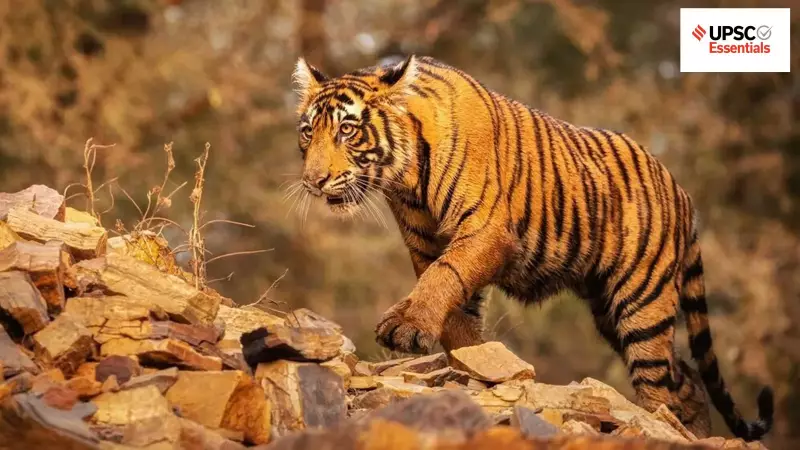
Question 3: Tiger Conservation and Mortality Data
Evaluate these statements concerning tigers in India:
- Project Tiger was launched in 1973.
- Since Project Tiger's launch, Karnataka has recorded the highest number of tiger deaths.
- No tiger deaths occurred from 2021 to 2024.
Only the first statement is correct. Project Tiger was indeed launched in 1973. Statements 2 and 3 are factually wrong. Recent data indicates that Madhya Pradesh has seen the highest tiger mortality in recent years, not Karnataka. Furthermore, tiger deaths have been reported every year; for instance, Madhya Pradesh alone recorded 55 deaths in a recent year, followed by 46 the previous year.
Question 4: The Kyoto Protocol and Its Legacy
With reference to the Kyoto Protocol:
- It entered into force in 1997.
- The protocol is legally binding only for developed countries.
- The Kigali Agreement is its successor.
Here, only statement 2 is correct. The Kyoto Protocol was adopted in 1997 but it entered into force in 2005. It is based on the principle of "common but differentiated responsibilities," placing emission reduction targets on industrialized nations. Statement 3 is incorrect because the successor to the Kyoto Protocol is the Paris Agreement. The Kigali Agreement is a separate pact to phase down hydrofluorocarbons (HFCs) under the Montreal Protocol.
Question 5: The World of Stingless Bees
Finally, consider the statements on stingless bees:

- They are found in tropical regions globally.
- Their honey is used medicinally to treat various illnesses.
- The Western Ghats host the highest number of stingless bee species in the world.
Statements 1 and 2 are correct. Stingless bees are vital pollinators in tropical ecosystems worldwide. Their honey possesses anti-inflammatory and antimicrobial properties and is used in traditional medicine. However, statement 3 is incorrect. While the Western Ghats have high diversity in India, the global highest diversity is found in tropical regions like the Amazon basin.
Why This Revision Matters for UPSC Aspirants
Regular practice with such quizzes helps in retaining static facts, understanding application-based questions, and developing the skill to eliminate incorrect options swiftly—a crucial strategy for the Prelims. Topics like biodiversity hotspots, climate change agreements, and extreme weather events are perennial favourites of the UPSC commission. Integrating current environmental developments with core geographical concepts can give aspirants a significant edge.
Make it a habit to revise these subjects daily and track your progress. Consistent effort in mastering Environment and Geography can substantially boost your overall score in the UPSC Civil Services Examination.