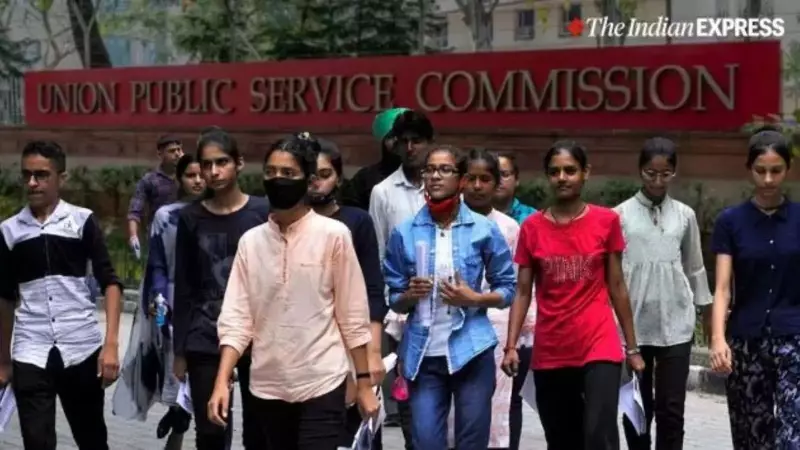
In a groundbreaking development that could transform the landscape of competitive examinations in India, the Supreme Court has directed the Union Public Service Commission (UPSC) to actively consider providing screen reader software for visually impaired candidates appearing for the prestigious Civil Services Examinations.
Judicial Push for Inclusive Examinations
The apex court's intervention came during proceedings where the bench emphasized that while the implementation is still in the "planning stage," the commission must seriously explore technological solutions to level the playing field for blind and low-vision aspirants.
This judicial nudge represents a significant milestone in the ongoing battle for equal opportunity in India's most competitive examination system. For thousands of visually impaired candidates who dream of serving the nation through civil services, this development brings renewed hope.

Breaking Down Barriers in Civil Services
The Civil Services Examination, known for its rigorous selection process, has historically presented numerous challenges for candidates with visual disabilities. The potential integration of screen reader technology could:
- Enable independent question paper reading
- Provide real-time audio feedback
- Reduce dependency on human scribes
- Create a more standardized testing environment
Technical Considerations and Implementation
While the Supreme Court acknowledged that the proposal is currently in preliminary discussions, the direction signals a crucial shift toward digital accessibility in government examinations. Screen reader software, which converts digital text into synthesized speech, would need to be carefully implemented to maintain examination integrity while ensuring fairness.
The UPSC now faces the challenge of developing a robust framework that addresses both technological requirements and examination security concerns. This move aligns with global best practices in accessible education and employment testing.
A Step Toward Equal Opportunity
This development represents more than just technological integration—it symbolizes a growing recognition of the need for inclusive examination systems that don't discriminate based on physical abilities. As the planning phase progresses, all eyes will be on how UPSC translates this judicial guidance into concrete action that could potentially open doors for countless deserving candidates across the nation.
The Supreme Court's stance reinforces the fundamental principle that talent and capability, not physical limitations, should determine one's opportunity to serve the country through its administrative machinery.