Nagpur's Unusual Study Haven Emerges Near Crematorium Grounds
Early mornings in Nagpur find determined young students walking along the Pili river banks with notebooks firmly held. They pass stone pathways and crematorium grounds on their daily journey. These students are not attending funeral ceremonies. They are heading toward an exceptional study center that operates just twenty meters from burning funeral pyres.
A Sanctuary Built for Silence and Concentration
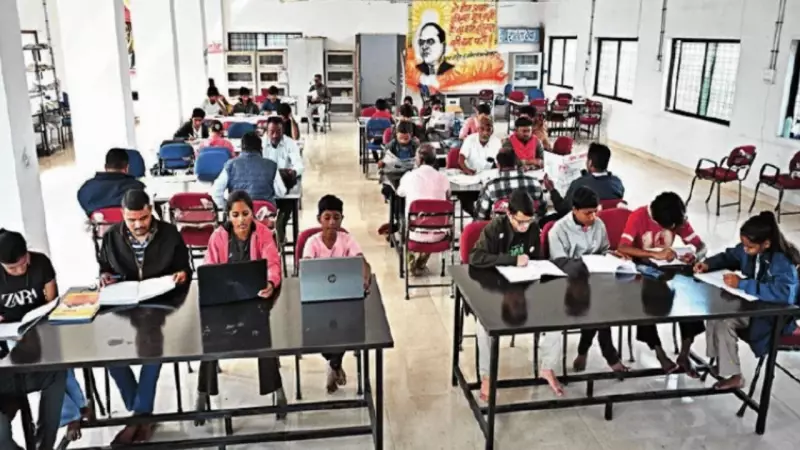
The Nari Takshashila Nirvan Ghat crematorium in north Nagpur hosts one of the city's most distinctive public facilities. The municipal corporation manages a two-story library and study center spanning five thousand square feet. This space has transformed into a vital sanctuary for ambitious students preparing for India's most challenging competitive examinations.
Many neighborhoods in Nagpur offer cramped living conditions with shared spaces and persistent noise. Concentration becomes difficult in such environments. Here, silence arrives as a precious commodity. The gently flowing Pili river, bordered by approximately fifteen hundred trees, generates a profound quiet that wraps around the study center like a protective layer. Two ancient wells and a simple idol of Lord Shiva contribute to the prevailing stillness. Only occasional sounds interrupt this peace—the crackling of funeral pyres and expressions of mourning from nearby ceremonies.

From an Idea to Reality: Creating Beginnings Near Endings
Former corporator Manoj Sangole originally proposed this innovative concept. He recognized that local youth needed more than just a library collection. They required a genuinely peaceful study environment. "A crematorium typically symbolizes conclusions," Sangole explains. "But this location could offer young people opportunities to start their futures." The municipal administration supported this vision. Implementation occurred during 2017 under the leadership of then-standing committee chairman Dayashankar Tiwari.
Construction required ninety-two lakh rupees. The completed center contains standard reading room facilities. The civic body supplies eighteen daily newspapers, crucial resources for competitive exam preparation. Students bring their personal study materials and textbooks.
Student Experiences: Finding Focus in Unlikely Surroundings
Approximately twenty-five to thirty students utilize the center on typical days. Rohit, a twenty-three-year-old banking exam aspirant, often arrives early. "My home environment contains constant noise and interruptions," he shares. "Concentration becomes challenging there. Here, the atmosphere naturally encourages focused study."
Railways examination candidate Priya initially found the location unconventional. "Once you settle here, you appreciate the remarkable calm," she observes. "The feeling isn't gloomy. It feels inspiring." Priya's noisy residential area makes studying difficult. "This center becomes the perfect distraction-free study location," she adds.
During study breaks, students stroll along the riverbank, exercise at an on-site green gym, or relax beneath the trees. UPSC aspirant Ankit values these moments. "It clears mental clutter," he notes. "You return to your study desk with renewed mental clarity."
Success Stories and Future Expansion Plans
The study center already celebrates several achievement stories. Former regular visitor Vipin Lamsonge secured employment with Indian Railways. Deepak Khorgade successfully joined the Indian Navy. Caretaker Meena Khaparde notes that student numbers vary as batches complete their preparation. "Numerous students who studied here now hold government positions," she confirms.
Current dedicated users include Samayak Sangode, a NEET aspirant from Kadu Layout who has studied here for over a year. Class twelve student Anshul Rangari describes it as "the most tranquil study environment I've ever experienced."

Facility supervisor Sandhya Nagdeote clarifies the original intention. "We never aimed to establish a conventional library," she states. "This space was developed specifically to provide students with a platform for government job preparation. Books can be organized individually, but genuine silence cannot be manufactured." The center operates daily from seven in the morning until seven in the evening. A pending proposal for twenty-five lakh rupees would fund two additional sheds, potentially increasing seating capacity for more students.