In a major overhaul of examination security, the National Testing Agency (NTA) is gearing up to introduce facial recognition technology and live photograph capture for India's premier entrance tests starting in 2026. This move is set to fundamentally transform how high-stakes exams like the National Eligibility-cum-Entrance Test (NEET) and the Joint Entrance Examination (JEE) are conducted, aiming to create a more robust and tamper-proof verification system.
How the New Biometric Verification System Will Work
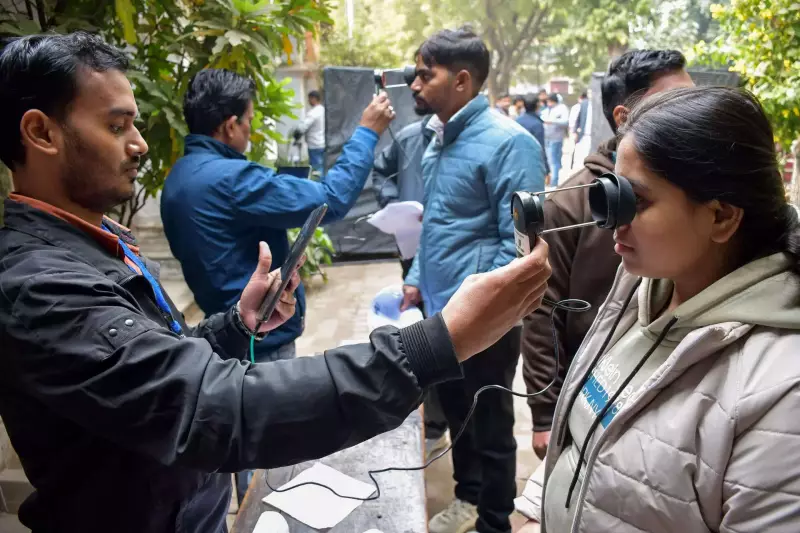
The new protocol will introduce a two-step verification process. First, during the application stage, candidates will be required to upload a standard photograph and capture a live image using their device's camera. Later, on the day of the exam at the test centre, this live photograph will be matched in real-time against the stored facial data of the candidate. This multi-layered check is designed to act as a strong deterrent against impersonation and other fraudulent practices.
This initiative is not an abrupt shift but follows a carefully tested pilot program. During the NEET-UG 2025 examination, the Unique Identification Authority of India (UIDAI) conducted a Proof of Concept (PoC) for Aadhaar-based face authentication. The pilot was executed at select exam centres in Delhi, where the technology was integrated with the National Informatics Centre's (NIC) infrastructure and the NTA's existing protocols.

A source familiar with the development confirmed to PTI, "During the 2025 NEET exam, UIDAI successfully conducted a PoC on the use of face authentication." The exercise was deemed a success, testing both the technical feasibility and operational effectiveness under the intense pressure of a live examination environment.
A Broader Trend in National Exam Security
The NTA's plan is part of a wider national trend towards tightening identity checks for competitive examinations. Another major recruiting body, the Union Public Service Commission (UPSC), has already embraced Aadhaar-based verification. Following a formal nod from the Department of Personnel and Training (DoPT) in August 2024, UPSC introduced voluntary Aadhaar authentication (Yes/No and e-KYC) on its new exam portal launched in May 2025.
The response from candidates has been overwhelmingly positive, with over 92% of applicants opting for the biometric verification route. This indicates a growing acceptance of such measures as a convenient and necessary step towards securing the examination process.
The push for advanced technological solutions like facial recognition stems from recommendations made by the Radhakrishnan Committee. This committee was constituted by the central government in the wake of several paper leak incidents that exposed critical vulnerabilities in the country's examination security apparatus.
The Road Ahead: Balancing Security with Accessibility
While the introduction of facial recognition and live photo capture promises a more secure and transparent exam ecosystem, it also presents new challenges. The primary focus for the NTA and other agencies will be to ensure the systems are not only reliable and accurate but also universally accessible. Authorities must ensure that candidates from remote or digitally underserved areas do not face additional barriers or hurdles in the application and verification process.
The ultimate goal remains clear: to leverage technology to deliver fair, transparent, and secure examinations for every single candidate across India, thereby restoring and strengthening public trust in these critical national tests.