JEE Main 2026 Day 3 Analysis: A Detailed Overview of Shifts and Performance
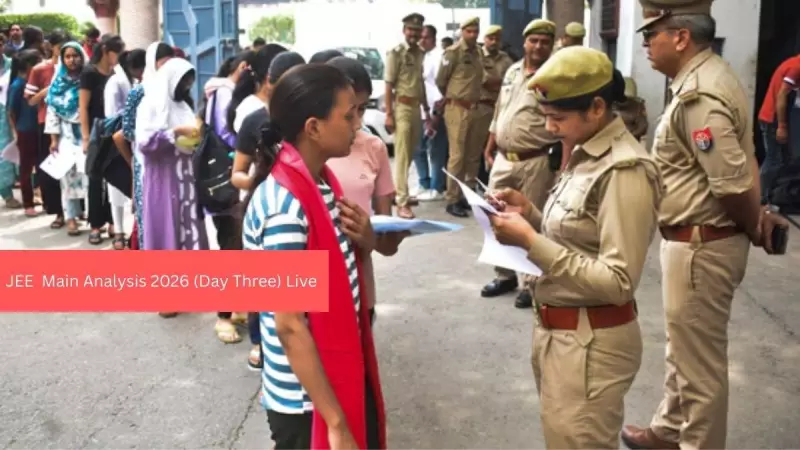
The third day of the JEE Main 2026 examination has concluded, marking a significant phase in the National Testing Agency's (NTA) schedule for engineering aspirants across India. This day featured multiple shifts, each presenting unique challenges and opportunities for candidates. As students await the official results, a thorough analysis of the question papers, difficulty levels, and expected outcomes becomes crucial for understanding the competitive landscape.
Question Paper Review and Shift-Wise Breakdown
Day 3 of JEE Main 2026 included two primary shifts, each designed to assess candidates' proficiency in Physics, Chemistry, and Mathematics. The first shift, conducted in the morning, reportedly emphasized conceptual clarity and application-based problems. Early feedback suggests that the Physics section was moderately challenging, with a focus on modern physics and electromagnetism, while Chemistry covered a balanced mix of organic, inorganic, and physical chemistry topics.
In contrast, the second shift, held in the afternoon, introduced variations in question patterns. Mathematics in this shift was noted for its integration of higher-order thinking skills, including complex algebra and calculus problems. Overall, the difficulty level across both shifts remained consistent with previous years, though some students reported time management issues due to the lengthy calculations required in certain sections.

Answer Key Updates and Expected Result Date
The National Testing Agency (NTA) is expected to release the provisional answer keys for Day 3 shifts shortly, allowing candidates to estimate their scores and raise objections if necessary. Based on past trends, the answer keys should be available on the official NTA website within a week of the exam. This step is critical for transparency and helps students gauge their performance before the final results are declared.
Regarding the result date, NTA typically announces JEE Main results within a month of the exam's conclusion. For JEE Main 2026 Day 3, results are anticipated by late March or early April 2026, depending on the processing timeline. Candidates are advised to regularly check the NTA portal for official notifications and avoid relying on unofficial sources for result-related information.
Student Reactions and Exam Pattern Insights
Initial reactions from test-takers indicate a mixed response to Day 3's papers. Many students appreciated the fair distribution of questions across topics, but some expressed concerns over the increased weightage on numerical problems in Physics and Mathematics. The exam pattern for 2026 continues to align with NTA's objective of testing analytical and problem-solving abilities, rather than rote memorization.
Key takeaways from the analysis include:
- Physics: Emphasis on application-based questions, with moderate difficulty in electromagnetism and optics.
- Chemistry: Balanced coverage, though organic chemistry reactions required careful attention.
- Mathematics: Challenging sections in calculus and algebra, demanding strong conceptual understanding.
- Overall Difficulty: Comparable to previous years, with slight variations in shift-wise complexity.
As the JEE Main 2026 examination progresses, candidates should focus on revising core concepts and practicing mock tests to improve their performance in upcoming sessions. The analysis of Day 3 serves as a valuable resource for understanding trends and preparing effectively for future attempts.