JEE Main 2026 Day 2 Analysis: A Detailed Look at the Exam and Future Steps
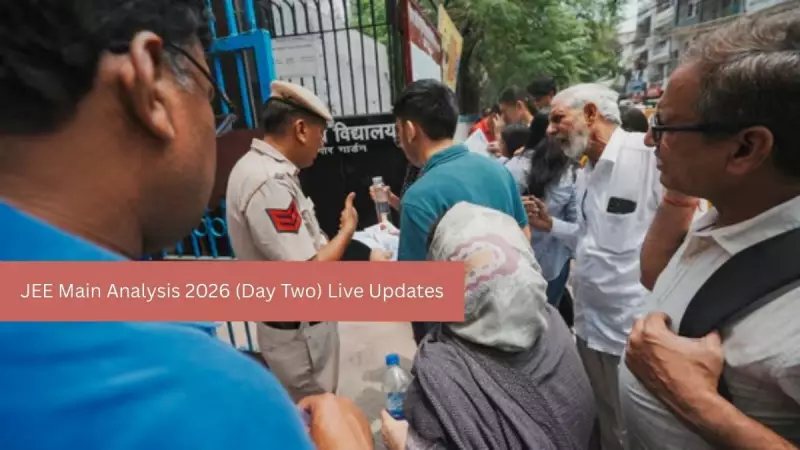
The second day of the Joint Entrance Examination (JEE) Main 2026 has concluded, marking a significant milestone for engineering aspirants across India. This crucial exam, conducted by the National Testing Agency (NTA), is a gateway to prestigious institutions like the Indian Institutes of Technology (IITs), National Institutes of Technology (NITs), and other centrally funded technical institutes. As candidates await their results, a thorough analysis of the day's proceedings provides valuable insights into the exam's difficulty, student experiences, and what lies ahead.
Question Paper Review and Difficulty Level
Initial feedback from candidates and educators suggests that the JEE Main 2026 Day 2 question paper maintained a balanced approach, with sections covering Physics, Chemistry, and Mathematics. According to experts, the paper was designed to test conceptual understanding and application skills, rather than rote memorization. The Physics section reportedly included numerical problems that required a strong grasp of fundamentals, while Chemistry focused on organic and inorganic topics with an emphasis on reaction mechanisms. Mathematics, often a challenging area, featured questions from calculus, algebra, and coordinate geometry, with some candidates noting a moderate to high difficulty level in this segment.
Educators have highlighted that the paper adhered to the prescribed syllabus, with no unexpected topics. However, the inclusion of application-based questions in all three subjects aimed to distinguish between high-performing students. This trend aligns with the NTA's objective of assessing analytical abilities, which is crucial for engineering education. Overall, the difficulty is estimated to be comparable to previous years, though individual experiences may vary based on preparation and subject strengths.

Candidate and Expert Reactions
Candidates who appeared for the exam on Day 2 have shared mixed reactions. Many expressed relief after completing the paper, citing adequate preparation and time management as key factors. Some students reported that the Physics and Chemistry sections were manageable, but Mathematics posed challenges due to complex problem-solving requirements. On social media platforms and discussion forums, aspirants exchanged views on specific questions, with debates emerging over tricky items and potential solutions.
Experts in the field of engineering entrance coaching have weighed in, emphasizing the importance of a strategic approach. According to them, the paper's structure rewards students who focused on understanding concepts rather than relying solely on practice tests. They advise future candidates to strengthen their basics and practice diverse problem types to handle such exams effectively. Additionally, experts recommend analyzing the answer key once released to identify areas for improvement, especially for those planning to attempt the exam in subsequent sessions.
Answer Key and Result Date Updates
The National Testing Agency is expected to release the provisional answer key for JEE Main 2026 Day 2 in the coming days. Candidates will have the opportunity to raise objections against any discrepancies, following which a final answer key will be published. This process ensures transparency and accuracy in the evaluation, allowing students to verify their responses and estimate their scores.
As for the result date, based on previous years' timelines, the JEE Main 2026 results for the January session are likely to be announced within a few weeks after the exam concludes. The NTA typically declares results on its official website, and students can access their scores using their application credentials. It is crucial for aspirants to keep an eye on official notifications to stay updated on exact dates and any changes in the schedule.
Implications for Future Sessions and Preparation Tips
With Day 2 completed, the focus now shifts to the remaining sessions of JEE Main 2026. Candidates who have yet to appear can learn from the analysis of this day's paper to refine their preparation strategies. Key takeaways include the need for a strong conceptual foundation, regular practice of numerical problems, and effective time management during the exam.

Educators suggest that students should not solely rely on previous years' papers but also engage in mock tests that simulate the current exam pattern. Additionally, staying updated with official announcements from the NTA regarding syllabus changes or exam formats is essential. For those aiming for top ranks, a balanced study plan covering all subjects equally can make a significant difference in performance.
In conclusion, the JEE Main 2026 Day 2 analysis reveals a well-structured exam that tests core engineering aptitude. As candidates await their results and prepare for future opportunities, this review serves as a guide to navigate the competitive landscape of engineering entrance exams in India.