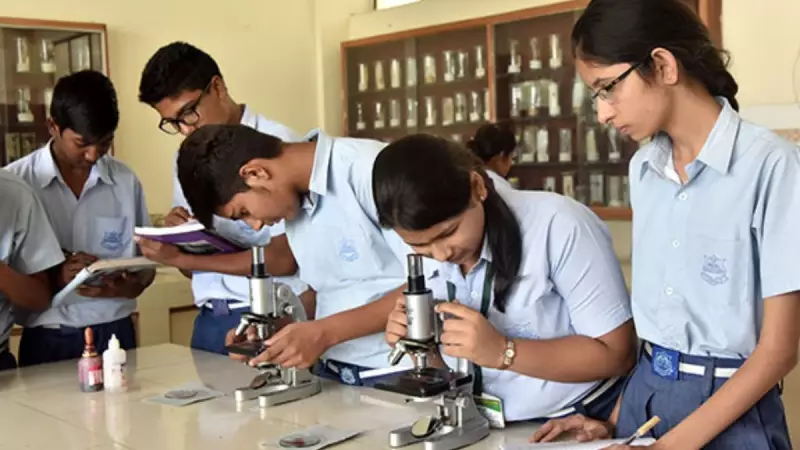
The Central Board of Secondary Education (CBSE) has officially announced the schedule and comprehensive guidelines for the upcoming practical examinations and internal assessments for students in Classes 10 and 12. The board has directed all affiliated schools to commence the practical exams from January 1, 2026. This early announcement aims to provide ample preparation time for both educational institutions and lakhs of students across the country and abroad.
Key Dates and Schedule for CBSE Practical Exams 2026
According to the official circular, the practical examinations and project assessments for the 2025-26 academic session will be conducted over a month-long period. The process is set to begin on January 1, 2026, and must be completed by all schools before the commencement of the theory examinations. The board has mandated that the marks obtained by students in these internal assessments be uploaded to the CBSE portal by a strict deadline. This streamlined timeline is designed to ensure a smooth transition into the main board theory papers.
The board has clarified that the practical exams will be held at the students' respective schools. However, an external examiner appointed by CBSE will be present to oversee the entire process, ensuring uniformity, fairness, and adherence to the prescribed standards. This system maintains the integrity of the evaluation while keeping the assessment within the familiar environment of the school for the candidates.

Detailed Guidelines for Schools and Students
CBSE has issued a detailed set of instructions for schools to follow meticulously. One of the primary directives is for schools to complete all practical work and projects as per the syllabus well before the examination date. Laboratories must be adequately equipped with all necessary materials, apparatus, and chemicals to facilitate a seamless examination process for every student.
For students, the guidelines emphasize thorough preparation based on the complete syllabus. The board advises candidates to focus on understanding core concepts and practical applications. Students should be ready to demonstrate their skills, record observations accurately, and present their project work with proper documentation and viva voce. The presence of an external examiner underscores the need for authenticity and individual proficiency.
The marks distribution for the practical exams is a critical component of the final board result. For most subjects, the theory paper carries 80 marks, while the practical or internal assessment component accounts for the remaining 20 marks. In subjects where the practical component is more significant, such as certain skill-based or fine arts subjects, the weightage can be 50-50 or 70-30. This structure highlights the importance of performing well in both theory and practical assessments.
Ensuring Fairness and Transparency in Assessment
The involvement of an external examiner is a cornerstone of CBSE's strategy to ensure a fair and transparent evaluation process. This examiner, appointed directly by the board, will work alongside the internal examiner from the school. Their joint assessment is final and aims to minimize any potential bias or inconsistency in marking across thousands of affiliated schools.
Furthermore, CBSE has warned schools against any form of malpractice. Strict action will be taken against institutions found violating the rules, including the possible cancellation of the school's affiliation. The board has also advised students to concentrate on genuine learning and skill development rather than relying on last-minute preparations or unfair means.
This early release of the 2026 practical exam schedule is a proactive step by CBSE. It allows school administrators, teachers, and students nearly a full year to plan, prepare, and align their academic activities with the board's requirements. The clear communication of dates and rules is expected to reduce last-minute confusion and help students approach their crucial board exams with greater confidence and clarity.