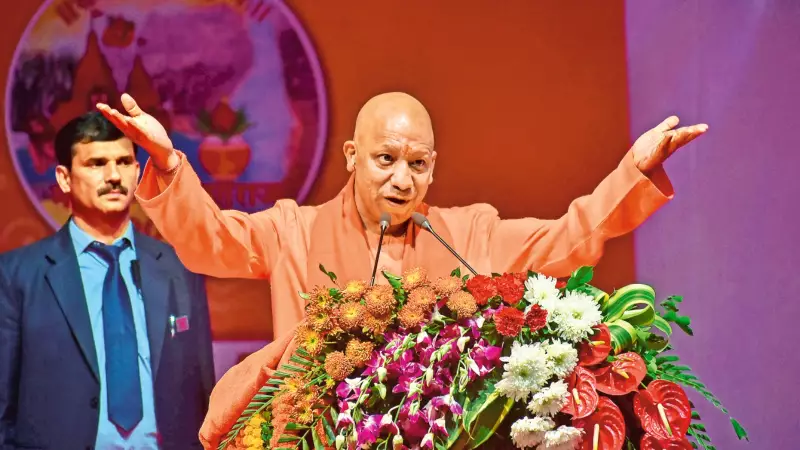
Uttar Pradesh Chief Minister Yogi Adityanath has announced a major reboot of the state's economic and culinary identity, unveiling the next phase of the flagship 'One District, One Product' (ODOP) scheme and pitching a new 'One District, One Cuisine' (ODOC) initiative. The move aims to create a unified brand for each district based on its unique products and food heritage, driving the state's economy from 'local to global'.
From ODOP to ODOC: Building a Unified District Identity
In a high-level meeting with senior officials on Friday, CM Adityanath directed that the highly successful ODOP initiative must now evolve into ODOP 2.0. He stated that ODOP has become a defining feature of Brand Uttar Pradesh and its next phase will focus on scaling up local industries, self-employment, and exports.
Parallelly, he introduced the concept of 'One District, One Cuisine' (ODOC). The Chief Minister emphasized that every region in UP has a distinct food tradition, with some areas famous for their halwa and others for snacks like dalmoth. The ODOC plan involves mapping each district's signature dishes and then working systematically to improve their quality, hygiene, packaging, branding, and marketing to give every district a unified culinary identity.

Strategic Push for Global Markets and Rural Economy
The core aim of ODOP 2.0, as outlined by the CM, is to ensure the state's traditional products become a strong foundation for accessing larger markets, increasing exports, and creating sustainable livelihoods. He stressed that ODOP products must break out of traditional markets and find space in major retail chains and modern marketplaces.
Adityanath issued specific instructions to set up dedicated ODOP sections in the Unity Malls (PM Ekta Malls) being established across various Indian states. He also directed officials to coordinate with large retail networks to ensure prominent placement for Uttar Pradesh's goods. The initiative is expected to significantly strengthen rural employment, as rising demand for ingredients like grains, pulses, spices, milk, vegetables, and oils will directly benefit farmers and boost the rural economy.
Solid Groundwork: Loans, Toolkits, and Geo Tags
The push for ODOP 2.0 builds on a foundation of considerable achievements from the scheme's first phase. Officials informed the Chief Minister that:
- Over 1.25 lakh toolkits have been distributed to artisans and entrepreneurs.
- Loans exceeding Rs 6,000 crore have been sanctioned under the scheme.
- More than 8,000 entrepreneurs have received direct marketing support.
- Thirty Common Facility Centres (CFCs) have been approved to support production.
- A significant 44 ODOP products have received Geographical Indication (Geo) tags, protecting their unique identity.
ODOP products are now sold on leading e-commerce platforms and contribute to more than 50% of the state's total exports. The scheme has also won a national award for two consecutive years.
For ODOP 2.0, the Chief Minister emphasized prioritizing the units and entrepreneurs who excelled in the first phase, helping them scale further. The future roadmap will empower UP's products across four critical areas: technology, packaging, quality, and market reach. Additionally, products will receive certification and enhanced brand value through reputed institutions to carve out a distinctive space in global markets.
This dual strategy of ODOP 2.0 and the new ODOC initiative represents a comprehensive effort by the Uttar Pradesh government to systematically brand and market its immense cultural and economic capital on the world stage.