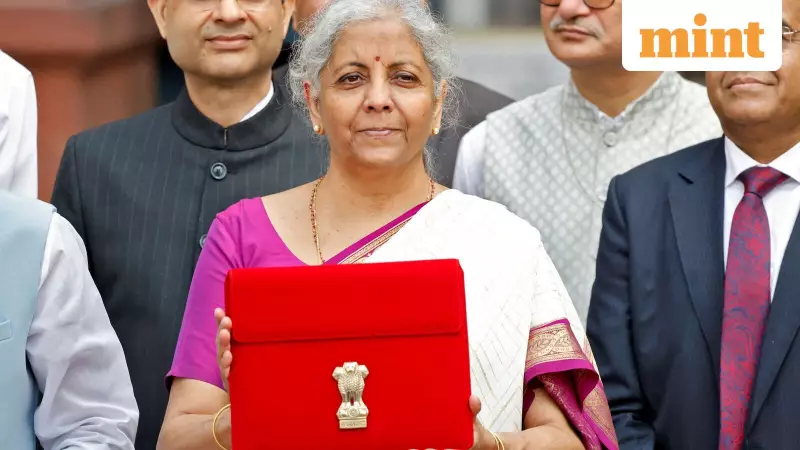
Finance Minister Nirmala Sitharaman is scheduled to present the highly anticipated Union Budget 2026 on 1 February in Parliament. As the nation awaits this crucial financial blueprint, Indian taxpayers are brimming with expectations, particularly hoping for significant income tax reliefs similar to those introduced in the previous budget.
Recap of Budget 2025: A Boost for Taxpayers
In Budget 2025, Finance Minister Nirmala Sitharaman delivered a substantial boost to taxpayers by overhauling the new tax regime to reduce the income tax burden. This strategic move specifically benefited the middle class, marking a pivotal shift in India's taxation landscape. A key highlight was the introduction of the New Income Tax Act, 2025, set to take effect from 1 April, which aimed to streamline tax processes and provide clearer guidelines for citizens.
Budget Expectations for Salaried Employees in 2026
Salaried employees across India are eagerly looking forward to potential enhancements in the upcoming budget. One of the primary expectations is an increase in the standard deduction limit, which currently stands at ₹75,000 under the new tax regime. This limit was previously raised from ₹50,000 to ₹75,000, and further relief is now anticipated to ease the financial strain on working professionals.

Additionally, taxpayers are hopeful for rationalization in Tax Deducted at Source (TDS) procedures. Simplifying TDS norms could lead to smoother transactions and reduced compliance burdens, making the tax system more efficient and user-friendly for individuals and businesses alike.
Income Tax Slab Rates for FY 2025-26: A Detailed Overview
Understanding the current tax slabs is essential for gauging potential changes. For the old tax regime, the structure is as follows:
- Income up to ₹2,50,000 – Nil
- ₹2,50,001 to ₹5,00,000 – 5%
- ₹5,00,001 to ₹10,00,000 – 20%
- Income above ₹10,00,000 – 30%
Under the new tax regime, the slabs are more segmented:
- Income up to ₹3,00,000 – Nil
- ₹3,00,001 to ₹6,00,000 – 5%
- ₹6,00,001 to ₹9,00,000 – 10%
- ₹9,00,001 to ₹12,00,000 – 15%
- ₹12,00,001 to ₹15,00,000 – 20%
- Income above ₹15,00,000 – 30%
Old vs New Tax Regime: Key Differences
The primary distinction between the old and new tax regimes lies in their slab structures. The old regime features fewer slabs, while the new regime categorizes income into more segments, potentially reducing the tax burden for many individuals by applying lower rates to specific income brackets.
However, the old tax regime offers significant advantages in terms of deductions. Taxpayers under this regime can claim various deductions for investments and expenses, which can substantially lower taxable income. In contrast, the new tax regime allows only a limited set of deductions, such as those for National Pension System (NPS) investments, making it less flexible but simpler for those who prefer fewer complications.
Key Income Tax Changes in Budget 2025
Last year's budget was a landmark for Indian taxpayers, with Finance Minister Nirmala Sitharaman implementing measures that cut income tax on earnings up to ₹12 lakh. This reform benefited millions of middle-class citizens, providing much-needed financial relief. For salaried individuals, the non-taxable income under the new tax regime increased to ₹12.75 lakh after accounting for the standard deduction, further enhancing disposable income.
What to Expect in Budget 2026?
According to financial experts, the government is unlikely to introduce major changes to income tax slabs in the upcoming budget. However, expectations remain high for adjustments in areas like TDS and standard deductions, which could offer incremental benefits to taxpayers.
Beyond personal taxation, there are broader budget expectations from various sectors, including infrastructure, healthcare, and education, which could influence the overall economic landscape. Stakeholders are keenly watching for announcements that might drive growth and stability in these areas.

How to Calculate Income Tax for FY 2025-26 (AY 2026-27)
To determine your income tax liability for the current financial year, you need to consider several factors. Start by compiling your income details, including salary and other sources such as interest or rental income. Next, choose between the old and new tax regimes based on your financial situation and eligibility for deductions.
Once you have selected a regime, identify the applicable tax slab from the structures mentioned above. This will help you calculate the approximate tax payable. For a more precise estimation, utilizing online income tax calculators can simplify the process, ensuring accuracy and saving time.
As the Union Budget 2026 approaches, stay informed with live updates and detailed analyses to understand how the proposed changes might impact your finances. The budget presentation by Finance Minister Nirmala Sitharaman promises to be a pivotal event, shaping the economic trajectory for the coming year.