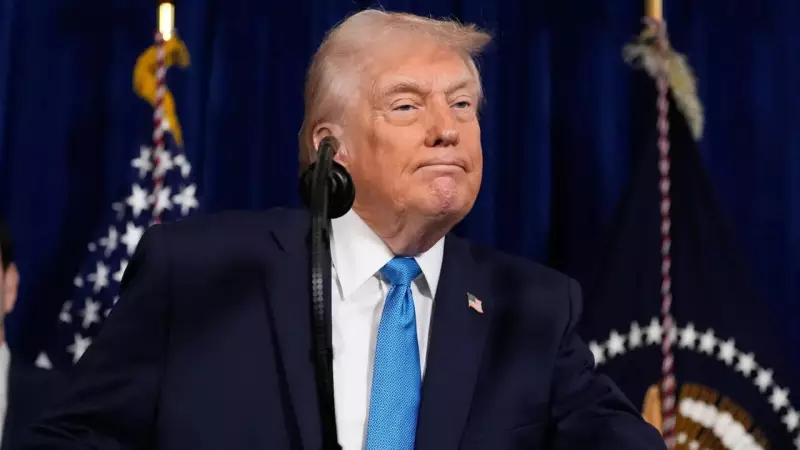
US President Donald Trump's proposal for American companies to take control and rebuild Venezuela's crippled oil industry following the capture of President Nicolás Maduro is not expected to influence global oil prices in the immediate future, according to energy analysts.
Decades of Decay: A Hollowed-Out Industry
The South American nation's oil sector, analysts point out, has been devastated by prolonged neglect, severe mismanagement, and international sanctions. This means any significant recovery in production will be a slow process requiring enormous capital investment. While recent US military action caused limited damage, the country's oil infrastructure has been deteriorating for years. "It has been decaying for many many years and will take time to rebuild," stated Patrick De Haan, lead petroleum analyst at GasBuddy.
Current production has plummeted to approximately 1.1 million barrels per day, a stark fall from its historical peaks. Some experts, however, believe output could potentially double or even triple if conditions dramatically improve, though this remains a long-term prospect.

The Core Challenge: Political Instability and Trust
A fundamental obstacle is the lack of political clarity. Major American oil corporations are hesitant to commit billions of dollars without a clear understanding of who will govern Venezuela in the long run and whether future contracts will be honoured. The situation remains uncertain after Trump declared the United States is now in charge, while Venezuela's vice president argued for Maduro's restoration before the nation's top court appointed her as the interim leader.
Experts emphasise that the primary challenge is not locating oil—Venezuela sits on the world's largest proven crude reserves, estimated at 303 billion barrels—but establishing trust and stability. "How do you get foreign companies to start pouring money in before they have a clear perspective on the political stability, the contract situation and the like," questioned Francisco Monaldi of Rice University.
Long Road to Recovery and Global Implications
If the US can establish swift and firm control, optimism among investors might rise. Phil Flynn, senior market analyst at Price Futures Group, noted that if Washington appears to be managing the country even temporarily, US energy firms could feel encouraged to step in and begin reviving production. Over a longer horizon, a revitalised Venezuelan oil sector could help maintain lower global prices and increase economic pressure on Russia, he added.
However, the path to recovery is steep. Due to corruption, sanctions, and chronic underinvestment, Venezuela's output has collapsed from 3.5 million barrels per day in 1999 to its current meagre levels. Monaldi estimates that reaching a target of four million barrels daily could take about a decade and require a staggering $100 billion in investment.
For now, oil markets have largely priced in Venezuela's existing production, which is part of OPEC's output. The global market is currently well-supplied, limiting any immediate price shock. Venezuela's heavy crude is particularly valuable for producing diesel and asphalt, fuels in tight supply globally. US refineries along the Gulf Coast are ideally configured to process this type of oil, making access to Venezuelan crude highly attractive.
Among US firms, Chevron is currently the only one with substantial operations in Venezuela, producing around 250,000 barrels a day through joint ventures with the state-owned PDVSA. Both ExxonMobil and ConocoPhillips left the country in 2007 after the late President Hugo Chávez nationalised much of the industry. Chevron has stated it remains focused on employee safety and legal compliance, while ConocoPhillips said it is monitoring developments but would not speculate on future investments.