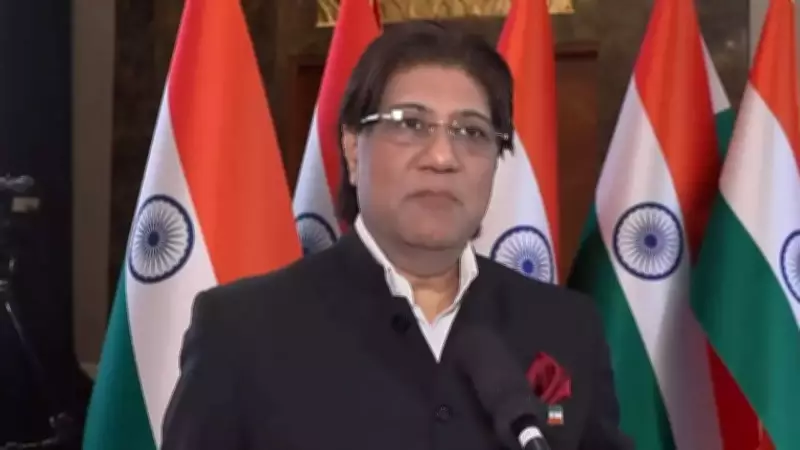
US Trade Deal Marks Turning Point for Indian Footwear Industry, Says Florence Shoe Chairman
In an exclusive conversation with TOI, Aqeel Panaruna, chairman of the Florence Shoe Company, has declared that the recently finalized trade agreement with the United States represents a pivotal moment for Indian manufacturing. He revealed that the company is now actively advancing plans for a significant joint venture with a foreign partner, leveraging the newfound market stability.
Life Before and After Tariffs: A Dramatic Shift
The landscape for Indian exports to the US was historically challenging. Previously, Indian products faced prohibitively high tariffs, sometimes reaching up to 50% in specific categories. This financial burden severely undermined India's competitive edge, suppressed export volumes, and eroded buyer confidence in the market.
Despite India's robust manufacturing capabilities, many American customers were reluctant to commit to long-term orders due to this tariff-induced uncertainty and cost volatility. The new trade pact promises a rationalization of these tariffs, which is expected to deliver immediate benefits:

- Enhanced Cost Competitiveness: Indian manufacturers will be able to price their goods more attractively in the US market.
- Recovery of Market Share: Companies can strategically regain segments that were lost to competitors from other nations.
- Strengthened Partnerships: US buyers are now more likely to enter into reliable, long-term sourcing agreements with Indian suppliers.
For Florence Shoe Company, this clarity translates into concrete business plans. The company now has clear visibility for expanding its production capacity, introducing new product lines, and making fresh investments. A key initiative is their ambitious Rs 2,500-crore joint venture with a Taiwanese partner, which is now moving forward. Furthermore, additional investment projects that were previously paused are being actively re-evaluated in light of this positive development.
Building a Resilient Export Ecosystem
Panaruna emphasized that the US agreement is part of a broader, strategic framework. Trade deals with the European Union, the United Kingdom, the European Free Trade Association (EFTA), and now the United States collectively forge a well-balanced and resilient export ecosystem for Indian industry.
The disruptions caused by the COVID-19 pandemic, coupled with years of tariff uncertainty, delivered a crucial lesson: over-reliance on any single market is a significant risk. The strategic imperative is clear—diversification is key to balanced trade.
Our strategy is not about dependence, but about portfolio balance, Panaruna stated. He outlined the distinct advantages of each market:
- Europe: Remains a stronghold for value-added and design-led products.
- United Kingdom: Offers continuity and a stable trading relationship.
- EFTA Nations: Open doors to premium, high-value market segments.
- United States: Brings unparalleled scale and opportunities for innovation-driven growth.
The Road Ahead: Addressing Structural Challenges
While the trade agreements provide a tremendous opportunity, Panaruna pointed out that a few structural challenges must be addressed for India to fully capitalize on its potential as a trusted global manufacturing hub.
- Sustained Cost Competitiveness: Beyond tariffs, maintaining overall cost efficiency is critical.
- Infrastructure Speed and Scale: Enhancing the speed, capacity, and reliability of logistical and industrial infrastructure is paramount.
Tackling these issues will not only help India benefit from these trade pacts but will also enable the nation to fully leverage them, supporting substantial job growth and solidifying its position in the global supply chain.