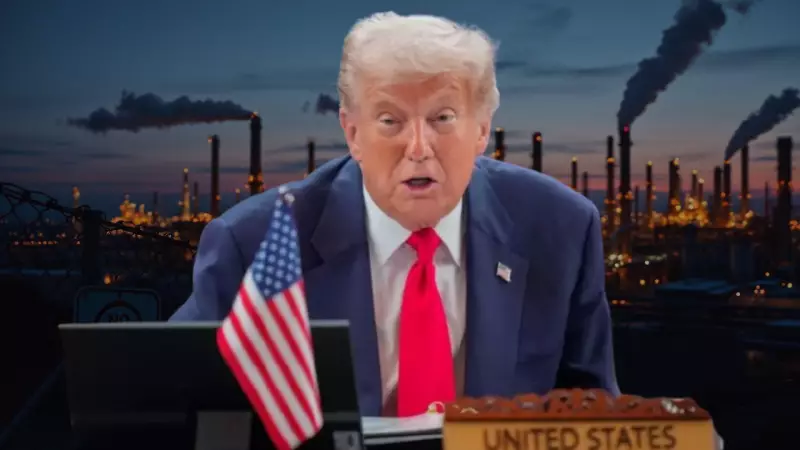
In a dramatic geopolitical shift, the capture of Venezuelan President Nicolas Maduro by American forces has been followed by US President Donald Trump expressing a keen interest in accessing the South American nation's massive oil infrastructure. However, the critical question remains whether such a move can deliver rapid results for the United States.
Billions in Investment Won't Guarantee Quick Oil Flow
Analysts caution that even if American oil giants pour billions of dollars into Venezuela, which holds the world's largest estimated oil reserves, a significant rise in crude production is not imminent. Years of decline have slashed output to a mere fraction of its former glory. This steep fall is attributed to poor management, chronic underinvestment, and the exodus of foreign firms after Venezuela nationalised its energy sector in the 2000s. This process involved seizing assets from major players like Exxon Mobil and ConocoPhillips, leading to their exit and lengthy international arbitration battles.
A Daunting List of Challenges for Returning US Firms
Experts outline a formidable array of obstacles for any company considering a return. The list includes:

- Severe security risks and dangerously decaying infrastructure.
- Unresolved legal questions surrounding the US operation against Maduro.
- The looming threat of prolonged political instability.
- A need for clarity on US sanctions and ironclad payment guarantees.
Mark Christian, director of business development at CHRIS Well Consulting, emphasised that American firms will not return until they are certain of payment and have at least a basic level of security. He added that US sanctions would need to be lifted first. Furthermore, Venezuela would have to amend its laws to allow greater foreign participation, reversing decades of state control centred around PDVSA.
Thomas O'Donnell, an energy and geopolitical strategist, noted that a peaceful, minimally resisted transition could lead to a significant production ramp-up in five to seven years. He pointed out that Venezuela's heavy crude is ideal for US Gulf Coast refineries. However, he warned that a transition perceived as US-dominated could trigger years of resistance from armed groups within the country.
Chevron Holds the Advantage, Others Wait and See
Currently, Chevron is the sole US oil major still operating in Venezuela, exporting roughly 150,000 barrels per day to the US Gulf Coast. It is widely seen as best positioned to benefit from any sector opening. Francisco Monaldi of Rice University's Baker Institute stated other firms like ConocoPhillips and Exxon Mobil would likely wait, assessing political stability and contractual terms first.
ConocoPhillips, seeking over $10 billion in compensation for assets taken nearly two decades ago, has a strong incentive to re-engage. "It's unlikely that they will get paid without going back into the country," Monaldi said. A company spokesperson told Reuters they are monitoring developments but called it "premature to speculate on any future business activities."
No Immediate Impact on Oil Prices, Warns Analyst
Ed Hirs, an energy fellow at the University of Houston, stated the Venezuela developments are unlikely to affect US oil and petrol prices immediately, as much of its crude currently goes to Cuba and China. He drew a sobering parallel with past US interventions, saying, "Trump now joins the history of US presidents who have overthrown regimes of oil-rich countries... In those cases, the United States has received zero benefit from the oil. I’m afraid that history will repeat itself in Venezuela."
Despite Chevron managing some shipments, analysts agree that hopes for a quick restart of substantial Venezuelan crude flows to the US remain uncertain. The nation's journey from an OPEC heavyweight producing 3.5 million barrels per day in the 1970s to a marginal producer averaging just 1.1 million barrels per day last year underscores the depth of the challenge ahead.