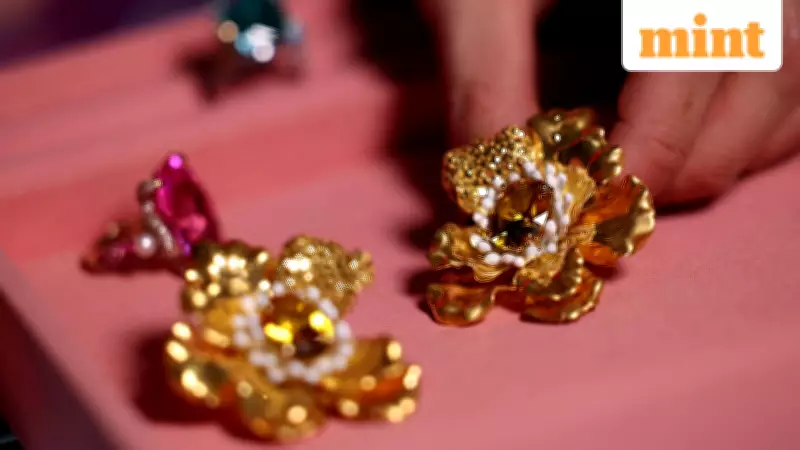
India-US Trade Agreement Ignites Hope for Gems and Jewellery Sector
The recently announced trade deal between India and the United States has sparked considerable optimism within India's gems and jewellery industry, a critical component of the nation's export economy. This development comes as tariffs on Indian shipments to the US are anticipated to decrease dramatically from a steep 50% to a more manageable 18%, potentially revitalizing a sector that has faced significant challenges in recent years.
Market Reaction and Industry Response
Financial markets responded positively to the news, with gems and jewellery stocks rallying alongside broader market gains. Kalyan Jewellers witnessed an impressive surge of over 6% during morning trading sessions, while industry giant Titan Company saw its shares rise by approximately 3.6%. This immediate market enthusiasm reflects the sector's anticipation of reduced trade barriers and improved export prospects.
US President Donald Trump initially revealed details of the agreement through his social media platform, Truth Social, confirming that Indian imports would now face an 18% levy. This represents a substantial reduction from the 50% tariff implemented in 2025, which was largely in response to India's purchases of Russian oil. While the comprehensive details of the trade deal are still forthcoming, industry leaders are already expressing cautious optimism about its potential impact.

Diamond Sector's Specific Aspirations
Sabyasachi Ray, executive director of the Gems and Jewellery Export Promotion Council (GJEPC), articulated the industry's hopes for even greater concessions. "We are not sure, but we hope that this trade deal also brings in zero duty on diamonds," Ray told Mint. "That will be a huge bonanza to the industry." The GJEPC has been actively advocating for the reinstatement of zero tariffs on diamonds polished in Surat and exported to Europe, where they serve as crucial inputs for jewellery ultimately destined for American consumers.
Recent trade data underscores the urgency of tariff relief. According to figures from the commerce and industry ministry, India's diamond exports to the United States plummeted by more than 58% year-on-year between April and November 2025, dropping to $1.36 billion. Overall jewellery exports experienced a similarly sharp decline of nearly 44%, falling to $3.55 billion during the same period. Given that gems and jewellery represent India's fourth-largest export category to the US, these declines have had profound economic consequences.
Employment Impact and Broader Economic Implications
The human cost of these export declines has been substantial. "One million people are engaged directly in the diamond sector, so all were affected," explained GJEPC's Ray. "And they were really badly affected. Their wages have gone down." While the meteoric rise of lab-grown diamonds has helped mitigate some job losses within the industry, it has simultaneously contributed to downward pressure on wages across the sector.
Financial analysts are projecting even more favorable outcomes than the announced tariff reduction might suggest. Bank of America's brokerage division noted in a recent analysis that "We estimate the effective tariff rate on India might be just around 12-13% as per our estimates, down from almost 30-35% previously." The report further emphasized that "This would provide significant relief to India's export sector, especially labor intensive areas such as gems & jewelry, textiles, agricultural products and engineering goods."
Supply Chain Restoration and International Context
Beyond direct tariff reductions, industry experts hope the revised trade terms will help repair complex international supply chains. Specifically, there is optimism that the agreement will facilitate the flow of diamonds from Surat's polishing centers to Belgium's trading hubs and ultimately to consumer markets in the United States.

Anil Talreja, partner at Deloitte India, highlighted the interconnected nature of global trade agreements: "One of the biggest beneficiaries of the India-EU trade deal which got signed on 27 January is Belgium, which is a big hub for the diamond industry. So that takes care of the supplier side. Now, the US is on the demand side." Talreja added, "We are waiting for the administrative order to see exactly which sectors and articles will get impacted [by the US trade deal], but the positive sentiment, in my view, will take care of the demand side to a great extent."
As the industry awaits the formal implementation and detailed provisions of the trade agreement, the prevailing sentiment remains cautiously optimistic. The potential tariff reductions represent not just a financial reprieve but a possible catalyst for renewed growth, employment stability, and enhanced competitiveness in one of India's most significant export sectors.