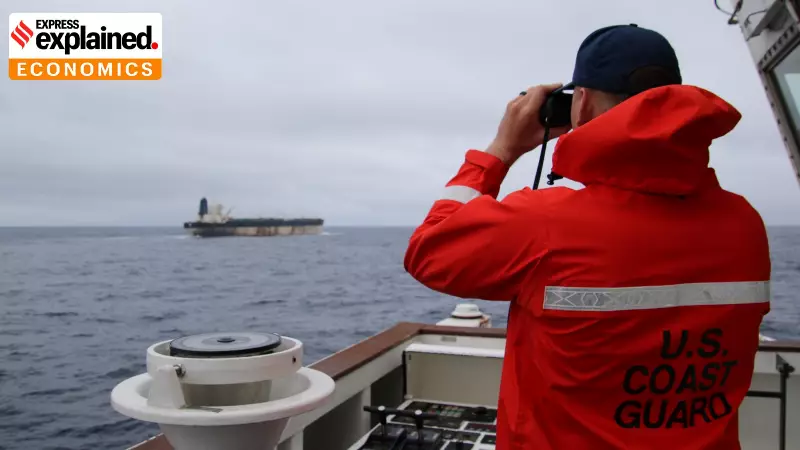
In a significant escalation of its enforcement actions, the United States has seized four oil tankers in recent weeks, targeting the clandestine network known as the 'shadow fleet.' This fleet is the backbone of global transportation for oil and petroleum products originating from nations under Western sanctions, primarily Iran, Venezuela, and Russia.
The Recent Crackdown and What is a Shadow Fleet?
On Wednesday, January 7, 2026, the US seized two oil tankers named Marinera and Sophia for their alleged involvement in moving crude oil sanctioned by Washington. This action followed the seizure of two other tankers, Centuries and Skipper, in December 2025 over purported links to the Venezuelan oil trade. These vessels are claimed to be part of the shadow fleet, a term for ships that use deceptive maritime practices and opaque ownership structures to conceal the true origin of their cargo and evade sanctions.
The Donald Trump administration has stated it will continue such seizures, a move that has drawn strong responses from countries like Russia and China. The shadow fleet, estimated to comprise over 3,000 vessels, operates by making tracking, detection, and enforcement exceptionally difficult for authorities.

Dark Fleets, Grey Fleets, and Deceptive Tactics
Within the shadow fleet ecosystem, maritime intelligence providers like Windward distinguish between 'dark' and 'grey' fleets. The dark fleet represents the highest-risk core. These vessels deliberately hide their activity by turning off their Automatic Identification System (AIS) transponders, manipulating GPS signals, using false flags, and conducting covert ship-to-ship transfers at sea.
The grey fleet is a newer, behaviour-based category that expanded after the Russia-Ukraine war. These vessels may not be explicitly sanctioned but exhibit high-risk indicators like irregular trading routes, rapid ownership changes, and port calls in high-risk locations, all while maintaining a veneer of compliance.
These tankers often have complex ownership structures, registered in jurisdictions with lax oversight like Panama, Liberia, the Marshall Islands, or even landlocked Mongolia. They are typically older ships, over 15-20 years, and may operate with substandard insurance and certifications.
India's Connection and Global Impact
The shadow fleet's operations have a direct link to India. A mysterious Mumbai-based entity, Gatik Ship Management, emerged suddenly to become one of the largest transporters of Russian crude between 2022 and 2023. At its peak, Gatik managed around 60 crude oil tankers valued at over $1.5 billion. By August 2023, facing global scrutiny, it transferred all its vessels to a web of related companies.
According to data from commodity analytics firm Kpler, between January and October 2025, 904 vessels were sanctioned by the US, EU, or other Western powers. Of these, 234 were sanctioned after 'dark' ship-to-ship transfers, 261 after location spoofing, and 168 after 'dark' port calls. Kpler's analysis further identified 302 high-risk tankers, with an average age of 20 years, that face a high probability of sanctions in the near future.
The US's recent, forceful seizures mark a new phase in confronting this opaque network. As the geopolitical landscape evolves, the cat-and-mouse game between sanction enforcers and the shadow fleet is set to intensify, with significant implications for global energy markets and maritime security.