United States Secretary of Agriculture Brooke Leslie Rollins has enthusiastically welcomed the newly announced US-India trade agreement, describing it as a significant victory for American agricultural producers that will inject much-needed capital into rural communities across the United States.
Addressing the Trade Deficit
In her public remarks, Secretary Rollins highlighted that the United States recorded an agricultural trade deficit with India amounting to $1.3 billion in the year 2024. She emphasized that India's rapidly expanding population represents a crucial and substantial market for American farm goods. The newly established trade pact is projected to substantially diminish this deficit by facilitating greater access for US agricultural products within the Indian marketplace.
Political Acknowledgments and Market Access
Rollins extended her gratitude to US President Donald Trump via social media platform X, crediting him for "once again delivering for our American farmers." She stated that the agreement would lead to increased exports of American farm products to India's massive consumer base, consequently lifting commodity prices and "pumping cash into rural America."

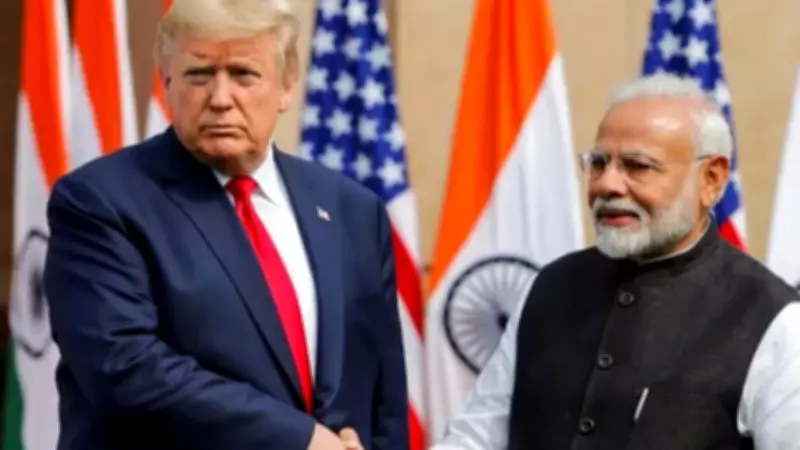
This commentary gains particular relevance following President Trump's own announcement regarding the bilateral trade deal. On his Truth Social platform, Trump noted that Indian Prime Minister Narendra Modi had committed to a "BUY AMERICAN" initiative. This commitment is reportedly in addition to agreements for India to purchase over $500 billion worth of US energy, technology, agricultural products, coal, and various other goods.
India's Agricultural Trade Profile with the US
The trade relationship between the two nations is multifaceted. India's primary agricultural exports to the United States encompass a diverse range of products including marine items, various spices, dairy products, premium basmati rice, and herbal goods. Data from the 2024-25 fiscal year indicates that India's agricultural exports to the US reached $6,249.07 million, constituting 11.74 percent of India's total agricultural exports valued at $53,242.70 million.
Conversely, India's agricultural imports from the United States primarily consist of fresh fruits, dry fruits and nuts such as almonds and walnuts, alcoholic beverages, raw cotton, vegetable oils, and an assortment of processed food items.
Historical Context and Recent Developments
The United States has long pursued enhanced market access for its agricultural products within India. A significant step was taken in September 2023 when both nations resolved a longstanding World Trade Organization dispute concerning poultry. As part of that settlement, India agreed to reduce import tariffs on specific US products including frozen turkey and duck, as well as fresh, frozen, dried, and processed blueberries and cranberries.
The recent comprehensive trade deal includes several key provisions announced by President Trump. Notably, the US has "effective immediately" lowered tariffs on imports from India to 18 percent, down from a previous rate of 50 percent. This adjustment follows India's efforts to address various US concerns in its recent budget and its proactive engagement in trade negotiations with other major economies like the United Kingdom and the European Union.
Further elements of the agreement involve India's commitment to cease purchasing Russian oil and to significantly increase its imports from the United States, with potential additional sourcing from Venezuela. The landmark $500 billion procurement commitment from India covers a broad spectrum of American goods, underscoring the scale of the new economic partnership.
As of now, India's Ministry of Agriculture and Farmers Welfare has not issued an official statement regarding these recent trade developments. The deal marks a pivotal moment in US-India economic relations, with a clear focus on rebalancing agricultural trade flows between the two democratic giants.