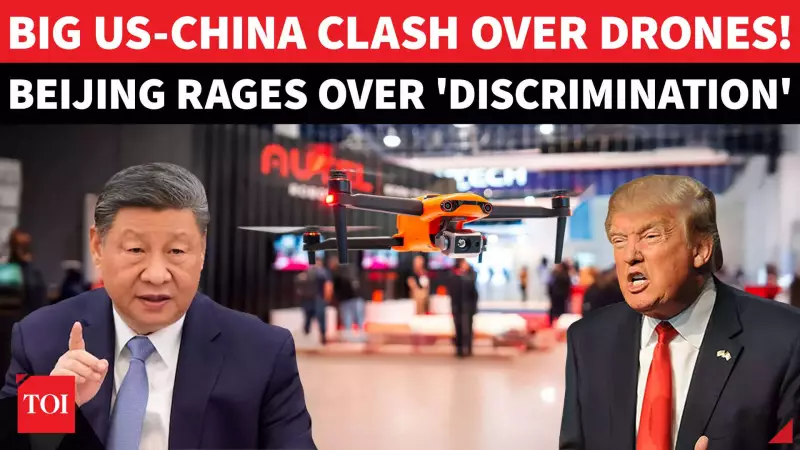
In a significant move impacting the global drone market, the administration of former US President Donald Trump has effectively barred the future of Chinese-made drones in America. The decision, announced on December 25, 2025, has triggered a sharp and angry response from Beijing, which has accused Washington of blatant discrimination.
FCC's Decisive Regulatory Strike
The core of this action lies with the US Federal Communications Commission (FCC). The regulatory body has placed several foreign drone manufacturers on its restrictive "Covered List." Crucially, this list now includes DJI, the Chinese firm that is the world's largest producer of commercial and consumer drones. This designation effectively blocks the import and sale of new drones from these companies in the United States, citing overarching national security concerns.
Beijing's Fiery Retort and Accusations
The Chinese government wasted no time in condemning the American move. Chinese foreign ministry spokesperson Lin Jian led the charge, lambasting the US for what he termed as "over-stretching" and "over-generalizing" security risks. In an official statement, Lin Jian argued that Washington's actions were not based on fair assessment but on prejudice. He forcefully urged the United States to provide a "fair, just and non-discriminatory environment" for Chinese enterprises operating or seeking to operate in the American market.

This protest underscores the deepening rift in technology and trade between the two superpowers. From Beijing's perspective, the drone ban is less about genuine security and more about economic protectionism and strategic containment under the guise of national safety.
Implications and the Road Ahead
The FCC's ruling represents a decisive blow to DJI's dominance in the lucrative US market. The implications are far-reaching:
- Market Vacuum: The ban creates a major opportunity for American and other non-Chinese drone manufacturers to capture market share.
- Existing Users: Questions remain about support, software updates, and parts for the vast number of DJI drones already in use across the US.
- Escalating Tech War: This move is seen as the latest salvo in the ongoing US-China tech cold war, following previous tensions over semiconductors, 5G networks, and social media apps.
The decision, finalized in the final days of 2025, sets a new precedent for how the US government views technology products from geopolitical rivals. It signals a hardening stance where economic interdependence is being deliberately severed in critical technology sectors deemed vital for national security. The response from the incoming US administration and the long-term impact on global supply chains and innovation will be closely watched by allies and adversaries alike.