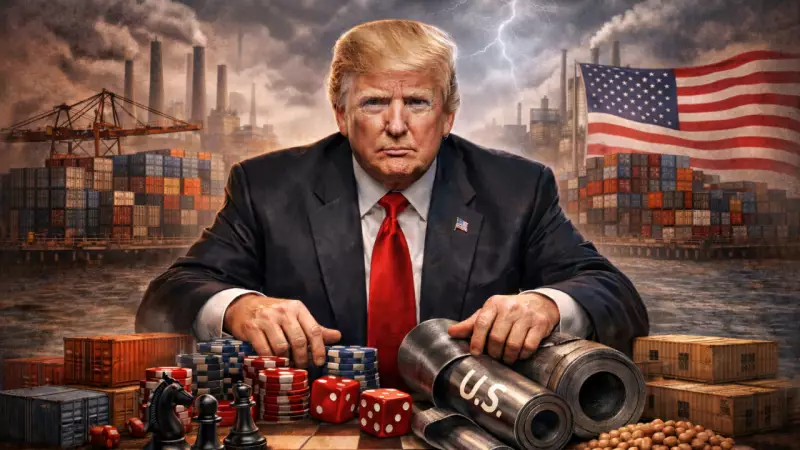
Donald Trump's declaration of a new "golden age" for America at the start of his second presidency in January 2025 has been defined not by diplomatic accords, but by a relentless campaign of tariffs. Moving swiftly away from the negotiation tables of his first term, Trump has weaponized trade policy, using tariffs as his primary tool to enforce American interests, unsettle allies, and pressure rivals on the global stage.
A World on Edge: The Tariff Doctrine in Action
Trump's core belief—that tariffs are levers of geopolitical power, not just economic tools—has been put into practice with unprecedented scale. The average US tariff rate has skyrocketed to nearly 17%, a dramatic jump from under 3% at the end of 2024. This aggressive shift is now funneling roughly $30 billion a month into the US Treasury, a revenue stream the administration proudly highlights.
The policy has thrown governments and markets into a state of constant uncertainty, with rates announced, escalated, and rolled back with little warning. While some nations have secured exemptions or negotiated limits, often in exchange for promises of US investment, the most significant relationships remain fraught with tension.

Key Battlegrounds: From China and India to North America
The global impact of Trump's tariff wars is most visible in his dealings with major economies.
China: The trade war reopened with a jolt in April 2025, as Trump imposed a staggering 104% tariff on Beijing, later raised to 145%. China retaliated with 125% duties on US goods. While Washington later scaled back its tariff to 30%, the confrontation escalated in October when Beijing expanded export controls on rare-earth metals. Despite the tensions, both sides continue negotiations, with meetings between Trump and Xi Jinping planned to prevent a deeper economic rupture.
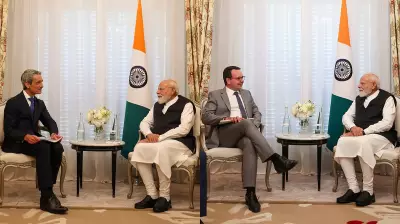
India: Despite warm personal rhetoric between Trump and Prime Minister Narendra Modi, trade relations have turned sharply confrontational. On August 1, the US imposed a 25% tariff on Indian goods, doubling it to 50% by August 27. Trump criticized India's "obnoxious" trade barriers and its purchases of Russian oil. While India's exports to the US fell 28.5% between May and October, they rebounded strongly in November, growing 19.4% to $38.1 billion, showcasing resilience.
Canada and Mexico: America's closest neighbors have faced severe strain. Canada was hit with tariffs of up to 35%, alongside demands to open its dairy market and change digital laws. Mexico faced a 30% tariff from August 1, later increased by another 5% over a water treaty dispute. The deeply integrated North American supply chains have been thrown into turmoil.
Broader Fallout and the Limits of Power
The ripple effects extend worldwide. Trump has targeted the BRICS bloc, warning of tariffs for any country aligning with it, even as the group expanded to ten members. Brazil faced 50% tariffs before a partial rollback, and Venezuela was subjected to a harsh "secondary tariff" regime and a naval blockade.
However, the economic results within the US have been mixed. Manufacturing job growth has been sluggish, and tariff-induced price pressures have emerged. The White House has acknowledged the strain, with Chief of Staff Susie Wiles calling the rollout "more painful than I expected." This has led to some retreats, like lowering tariffs on certain agricultural imports to ease domestic inflation.
The larger strategic question remains unanswered. While Trump aims to reassert American primacy through his "America First" doctrine, his tariff wars risk accelerating the multipolar world order he seeks to prevent. As India and China push back, BRICS expands, and global supply chains reconfigure, the world is navigating a new, volatile era of trade shaped more by political power plays than economic logic.