

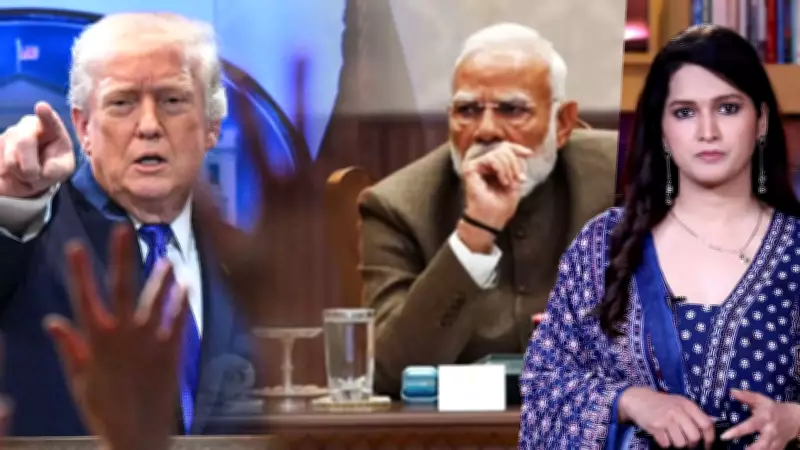
Global Trade Landscape Transformed by Trump's Sweeping 15% Universal Tariff
The international trade system has undergone a dramatic and immediate transformation following a decisive policy move by the United States. In response to the US Supreme Court invalidating several of his earlier global tariffs, President Donald Trump has implemented a flat 15 percent universal import duty on all goods entering the country. This bold action has instantly redrawn competitive lines and reshuffled economic advantages on the world stage, creating a new, more fluid, and politically charged trade environment.
India Emerges as a Significant Beneficiary in the American Market
For India, this policy shift represents a substantial improvement in market access. Previously, Indian exports faced tariffs that peaked near a burdensome 50 percent before stabilizing at approximately 18 percent. The new universal 15 percent duty effectively lowers the cost barrier for Indian goods, strengthening New Delhi's relative competitive position within the crucial American consumer market. This development underscores India's growing leverage within global supply chains and highlights the critical importance of strategic, calibrated diplomacy during periods of international economic turbulence.
Mixed Outcomes for China and a Major Setback for the United Kingdom
The impact of the tariff is not uniform across all trading partners. China gains only limited relief from the new policy, as its previous tariff rates were varied and often high. The more significant story is the disadvantage now faced by the United Kingdom. The UK previously enjoyed a favorable tariff rate of just 10 percent under prior trade understandings. The new universal 15 percent duty eliminates this preferential advantage, placing British exporters at a relative cost disadvantage compared to their global competitors, including India.

European Uncertainty and a New Era of Fragmented Trade
The policy announcement has sent shockwaves through European capitals, where leaders are urgently seeking clarity on the long-term implications. This uncertainty may lead to significant delays in finalizing new trade agreements and understandings with the United States. What is emerging from this unilateral action is a more fragmented and unpredictable global trade system, where swift political decisions in one nation can instantly reshape economic flows and competitive dynamics worldwide. The era of stable, multilateral trade frameworks appears to be giving way to a period defined by rapid policy shifts and bilateral maneuvering.






