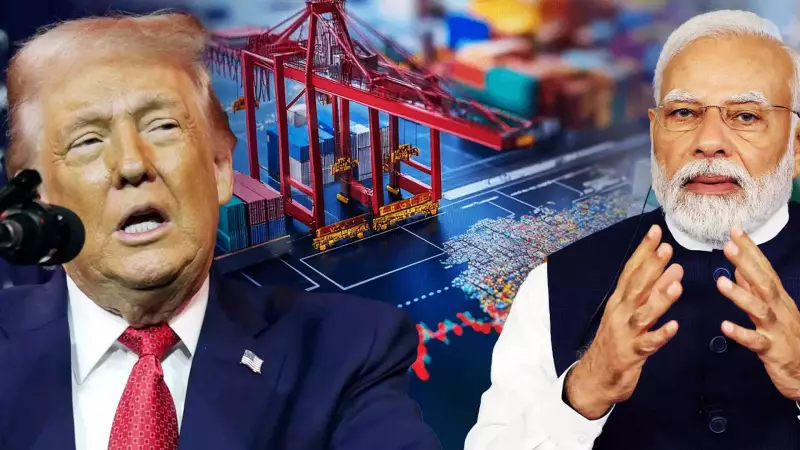
In a candid admission, former US President Donald Trump has revealed that Prime Minister Narendra Modi is displeased with Washington's imposition of high tariffs, a move directly tied to India's energy imports from Russia. Trump made these remarks while addressing the House GOP Member Retreat on January 07, 2026.
Strong Ties Shadowed by Trade Tensions
Trump was quick to emphasize that his relationship with the Indian Prime Minister remains robust. He pointed to significant defence collaborations, most notably India's order for 68 Apache attack helicopters, as concrete proof of the deep strategic partnership between the two nations.
However, the former President acknowledged a significant point of friction. He stated that PM Modi is "not happy with me" due to the substantial tariffs levied by the United States. The US administration, under Trump, has imposed tariffs as high as 50% on certain goods, a policy explicitly designed to pressure India into reducing its energy trade with Russia amidst the ongoing conflict in Ukraine.

The Tariff Strategy and India's Response
Defending his administration's approach, Trump argued that the tariff strategy serves a dual purpose: it benefits the American economy while applying diplomatic and economic pressure on New Delhi. The core US argument is that these measures are necessary to discourage countries from financially supporting Russia through energy purchases.
Trump claimed that the pressure tactic yielded results. He indicated that India subsequently reduced its oil imports from Russia to address Washington's concerns. This claim suggests a direct impact of US policy on India's energy procurement decisions.
A Warning of Escalation
The remarks also contained a clear warning for the future. Trump cautioned that tariffs could be raised even further if the Indian government fails to adequately address the underlying issue. This sets a potential stage for renewed trade tensions should Trump return to office and perceive India's actions on Russian oil as insufficient.
This revelation highlights the delicate balancing act India continues to navigate between its longstanding strategic partnership with the United States and its economic and energy interests, including ties with Russia. The situation underscores how global geopolitical conflicts can directly influence bilateral trade relations.