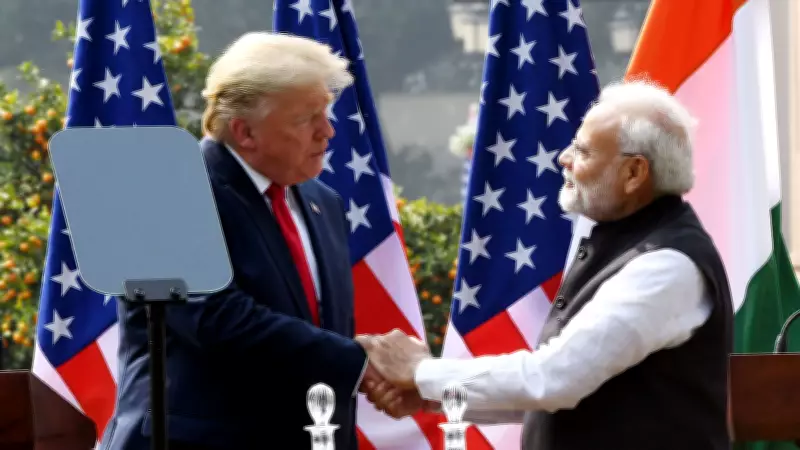
In a significant development for international trade relations, US President Donald Trump has announced a substantial reduction in tariffs imposed on Indian goods. The punitive duties, which previously stood at a combined 50%, have been slashed to 18% following diplomatic discussions between Trump and Indian Prime Minister Narendra Modi.
Tariff Reduction Announcement and Diplomatic Context
The tariff cut comes after eight months of trade tensions between the United States and India, marking a notable shift in their economic relationship. President Trump made the announcement via a post on Truth Social, where he referred to Prime Minister Modi as one of his "greatest friends" and revealed that India has "agreed to stop buying Russian Oil, and to buy much more from the United States and, potentially, Venezuela."
"Out of friendship and respect for Prime Minister Modi and, as per his request, effective immediately, we agreed to a Trade Deal between the United States and India, whereby the United States will charge a reduced Reciprocal Tariff, lowering it from 25% to 18%," Trump wrote in his social media post.

Details of the Trade Agreement
According to Trump's statement, the reduction includes the removal of the 25% tariff that was imposed as "punishment" for India's purchases of Russian oil, along with a decrease in the reciprocal tariff rate from 25% to 18%. The US President further claimed that India will eliminate tariffs and non-tariff barriers against American products, commit to 'Buy American' initiatives, and purchase $500 billion worth of US agricultural, coal, energy, and technology products.
Prime Minister Modi confirmed the tariff reduction in a post on X, though he did not provide specific details about the broader trade agreement. This development follows Trump's October statement that Modi had agreed to halt Russian oil purchases, which was subsequently followed by US sanctions on Russia's major oil producers, Rosneft PJSC and Lukoil PJSC.
Comparative Analysis: How India's New Tariff Rate Stacks Up
With the reduction to 18%, India's tariff position relative to other nations has shifted significantly. Here's how India now compares with key trading partners and competitors:
Countries with Lower Tariffs Than India
- European Union, Japan, South Korea, and Switzerland: 15% US tariffs
- United Kingdom: 10% rate
Countries with Comparable Rates in South and Southeast Asia
- Vietnam and Bangladesh: 20%
- Pakistan, Malaysia, Cambodia, and Thailand: 19%
Countries with Higher Tariffs Than India
- Brazil: 50%
- China: 37%
- Laos and Myanmar: 40%
- South Africa: 30%
Notably, within Asia, India now has the second highest tariffs from the US, trailing only Japan and South Korea, which have maintained long-standing alliances with the United States. When examining BRICS counterparts, India fares better overall, but compared to its immediate neighbors Bangladesh and Pakistan, only China shows significantly different tariff rates.
Background: India's Russian Oil Purchases
India's increased purchases of Russian oil represent a relatively recent development in its energy strategy. Traditionally, the European Union has been the primary importer of Russian oil, but following sanctions and international pushback against Russia's 2022 invasion of Ukraine, India capitalized on discounted rates offered by Moscow.
A Bloomberg report indicates that India made the most of these economic opportunities, though this strategy created tensions with the United States. The recent agreement to curtail Russian oil purchases represents a significant shift in India's geopolitical positioning and energy procurement strategy.
Long-Term Trade Negotiations
The India-US trade deal has been in development for an extended period, with India among the first nations to initiate trade talks with the Trump administration. However, progress has been inconsistent, with speculation continuing through late 2025 about whether an agreement would materialize.

US Trade Representative Jamieson Greer commented last Tuesday that while India had "made a lot of progress" on reducing Russian oil purchases, "they still have a way to go on this point." Specific details regarding the exact reduction in Russian oil purchases and the increase in US agricultural imports remain undisclosed, according to Bloomberg sources.
Key Implications and Takeaways
- Enhanced Trade Competitiveness: The reduction from 25% to 18% tariffs will significantly improve India's position in US markets, potentially boosting exports across multiple sectors.
- Geopolitical Realignment: India's commitment to reduce Russian oil purchases signals a strategic shift toward closer alignment with the United States, with potential implications for regional power dynamics.
- Economic Impact: The trade deal could positively influence India's GDP growth and stock market performance, though the exact magnitude depends on implementation details.
- Comparative Advantage: While India's new tariff rate remains higher than some competitors, it represents a substantial improvement from previous levels and places India in a more favorable position relative to key rivals like China.
The tariff reduction announcement comes amid Trump's ongoing anti-China campaign, which has seen consistently higher tariffs maintained against Chinese goods. This development underscores the evolving nature of international trade relationships and the complex interplay between economic policy and geopolitical strategy.