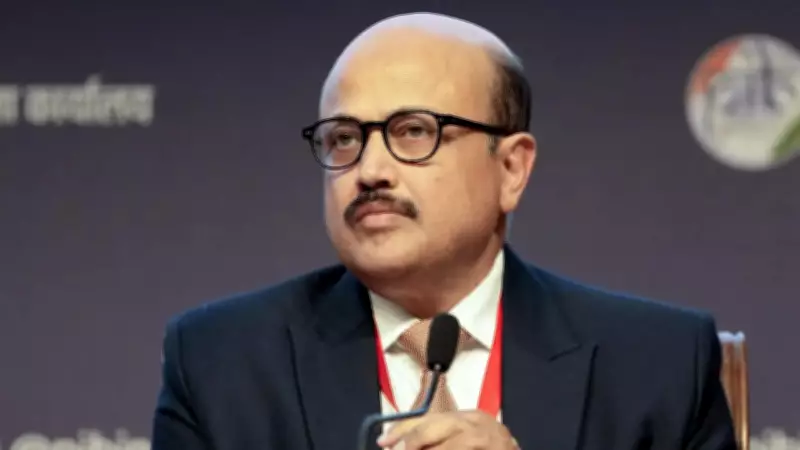
The Budget FY27 proposal to permit Special Economic Zone (SEZ) manufacturing units to sell goods in the domestic market at concessional import duty rates is poised to significantly enhance import substitution and foster employment generation, according to Commerce Secretary Rajesh Agrawal. Detailed operational guidelines for this one-time measure are expected to be unveiled within the next two to three months, marking a pivotal shift in India's trade and industrial policy.
Addressing Long-Pending Demands of SEZ Units
This strategic move addresses a persistent demand from SEZ units, which have historically faced challenges in offloading excess production domestically due to high import duties in several labour-intensive sectors and uncertainties in global demand. Agrawal emphasized that the initiative will not only bolster import substitution and job creation but also establish a level playing field for domestic tariff area (DTA) firms in comparison to SEZs.
Key Sectors Set to Benefit
Approximately seven to eight sectors, including leather, textiles, and engineering goods, are anticipated to reap substantial benefits from this measure. These sectors currently contend with relatively high import duties in India, which have limited the viability of local sales from SEZ units. By enabling domestic buyers to source goods from SEZ units instead of importing from third countries, the proposal aims to redirect trade flows and strengthen domestic manufacturing capabilities.

Finance Minister's Vision and Implementation Framework
In her Budget speech, Finance Minister Nirmala Sitharaman articulated that this special one-time measure is designed to address capacity utilisation concerns in SEZ manufacturing units, exacerbated by global trade disruptions. The quantity of such domestic sales will be restricted to a prescribed proportion of exports, with the government introducing regulatory changes to operationalise the measure while ensuring fair competition with units outside SEZs.
Safeguarding DTA Industries
Agrawal clarified that limits will be imposed to prevent adverse impacts on DTA industries. "They cannot sell all of their production. They will be able to sell a portion only in DTA. So, what will be that part? We will calculate that, we will keep a limit on that," he stated. This cautious approach aims to balance the benefits for SEZs with the protection of domestic industries.
Leveraging SEZs in a Changing Trade Landscape
The Commerce Secretary highlighted that labour-intensive goods currently imported from countries like Vietnam and Bangladesh at concessional duty rates could increasingly be sourced domestically from SEZ units. Vietnam benefits from India's free trade agreement with ASEAN, while Bangladesh enjoys duty-free access as a least developed country. Agrawal noted that SEZs, functioning as foreign trade enclaves primarily for export-led manufacturing, have faced limitations in serving local demand due to high import duties, despite having spare capacity.
Evolution Since the SEZ Act of 2005
This move reflects significant changes in India's trade policy landscape since the SEZ Act was introduced in 2005. "Now, we have done multiple FTAs (free trade agreements)," Agrawal remarked, pointing out that imported goods are already entering India at concessional duty rates under various trade agreements. The government will separately notify concessional duty rates on a sector-wise basis and finalise limits on domestic sales volumes to ensure seamless implementation.
Supporting Exporters Amid Global Tariff Barriers
Additionally, the measure is expected to provide crucial support to SEZ exporters confronting steep tariff barriers in markets such as the United States, where duties on certain Indian goods have escalated to around 50 per cent, adversely impacting sectors like textiles and leather. By enhancing domestic sales opportunities, SEZ units can mitigate some of the pressures from volatile international markets.

Current SEZ Performance and Infrastructure
Exports from SEZs witnessed a growth of 7.37 per cent, reaching $172.27 billion in the fiscal year 2024-25. India currently boasts 276 operational SEZs housing 6,279 units, according to official data. This robust infrastructure underscores the potential of the new policy to catalyse further economic activity and align with broader national objectives of self-reliance and industrial growth.