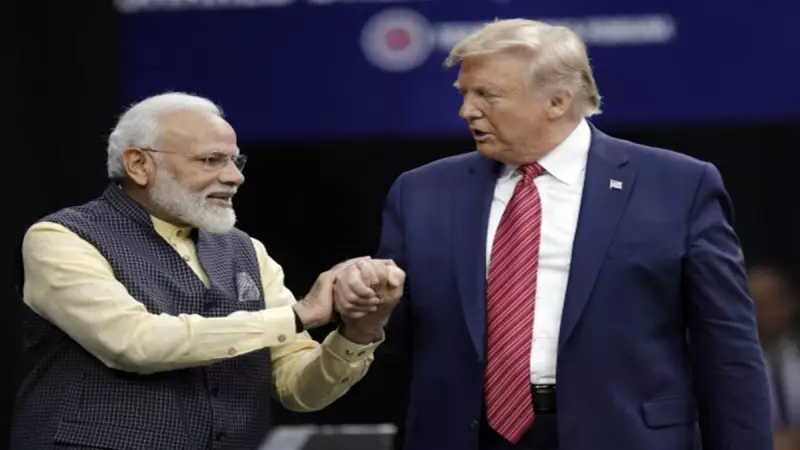
The much-anticipated trade agreement between India and the United States, which was seen as a landmark deal during the Trump administration, ultimately collapsed. A key aide to former President Donald Trump has now shed light on the primary reason for this failure, while also clarifying a significant point about Prime Minister Narendra Modi's involvement.
The Core Issue: A Fundamental Disagreement on Tariffs
According to Howard Lutnick, the chairman of Cantor Fitzgerald and a close advisor to Donald Trump, the deal fell apart due to a deep-seated disagreement on tariffs. The Trump administration was pushing for India to significantly reduce or eliminate tariffs on a wide range of American products, including high-profile items like Harley-Davidson motorcycles and agricultural goods such as almonds and apples.
Lutnick, who was actively involved in the trade discussions, revealed that the Indian side, led by Commerce Minister Piyush Goyal, was unwilling to make the sweeping concessions demanded by the US. The Indian government was concerned about protecting its domestic industries and farmers from a sudden influx of cheaper foreign goods. This created a stalemate where neither side was ready to back down from its core position.

The negotiations, which had been ongoing for nearly two years, finally reached a breaking point in early 2020. Despite several rounds of talks and a high-profile visit by Trump to India in February 2020, the two nations could not bridge their differences.
Clarifying PM Modi's Role: No Direct Call to Trump
An important clarification made by Howard Lutnick addresses a point of speculation. He stated that Prime Minister Narendra Modi did not make a direct phone call to President Donald Trump to halt the trade deal. This counters some narratives that suggested a last-minute intervention by the Indian PM scuttled the agreement.
Instead, Lutnick explained that the decision was a result of the official negotiation channels hitting a wall. The Indian negotiators, following their mandate, communicated their final stance, which was a refusal to accept the US terms on tariffs. This was a strategic decision taken at the ministerial and bureaucratic level, based on India's economic assessments, rather than a sudden personal directive from the top.
Aftermath and Lasting Impact of the Collapse
The collapse of the trade talks had immediate and lasting consequences. The United States, under Trump, had already removed India from its Generalized System of Preferences (GSP) status in 2019, which allowed duty-free entry for thousands of Indian products. The failure to secure a new deal meant this status was not restored.
Furthermore, both countries engaged in a series of retaliatory tariff measures. India imposed higher tariffs on US goods like apples and walnuts, while the US threatened additional duties on Indian products. This mini trade war created uncertainty for businesses and exporters in both countries.
The unresolved trade issues also cast a shadow on the otherwise strengthening strategic partnership between India and the US. While defense and geopolitical cooperation continued to grow, the economic pillar of the relationship remained under strain. The Biden administration has since taken a different approach, focusing more on broader frameworks and less on a bilateral free trade agreement, though many of the same market access issues persist.
Lutnick's revelations underscore that the deal's failure was rooted in hard economic realities and negotiating red lines, not in a personal diplomatic snub. It highlights the challenges of aligning the interests of a developed economy seeking open markets with those of a large developing economy focused on protecting its domestic sectors.