Punjab's Vanishing Red Gold: The Chilli Crisis Deepens
For generations, the fiery red chilli fields of Punjab have been a symbol of agricultural prosperity, but today they're rapidly disappearing. Across the state, particularly in the traditional chilli hub of Ferozepur district, farmers are making the painful decision to drastically reduce their chilli cultivation amid collapsing prices and export market failures.
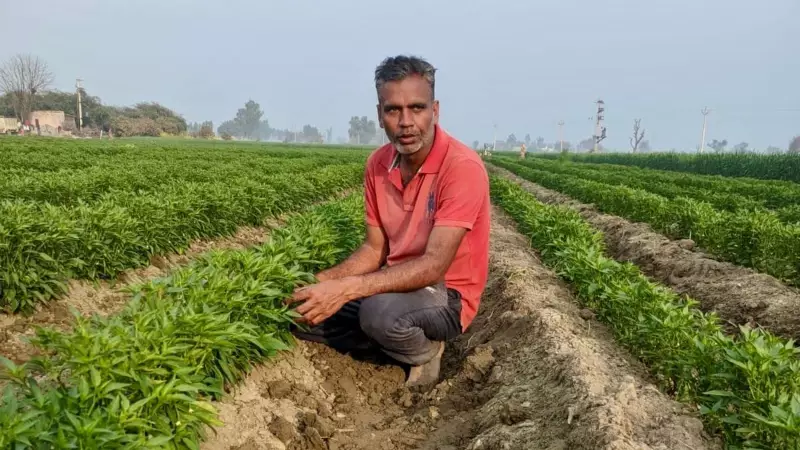
Manpreet Singh from Loombriwala village represents this troubling trend. His family has cultivated chillies for over four decades, yet this year he's reduced his planting area from 100 acres to just 60. The reason is straightforward yet devastating: declining prices and export challenges have made chilli farming economically unviable.
The Domino Effect: From Guntur to Punjab
The crisis began far from Punjab's borders in Guntur, Andhra Pradesh, which serves as India's primary chilli export hub. When Guntur's chilli crops suffered from black thrip attacks, farmers applied chemicals to control the pests. This led to failed chemical samples and subsequent import restrictions from key markets including China and Bangladesh.

The collapse of Guntur's export market created a domino effect that reached Punjab's farmers. As Manpreet Singh explains, when Guntur chilli prices plummeted, it caused a downturn across all major markets, leaving Punjab farmers struggling to secure fair prices despite their chillies being grown within permissible chemical limits.
The statistics tell a grim story. Farmers who once cultivated chillies across 15,000 to 16,000 acres in Punjab have dramatically reduced their planting. Dalbir Singh, another pioneer chilli farmer from Loombriwala, has completely abandoned the crop he once grew on 75 acres.
The Financial Reality: Soaring Costs, Plummeting Returns
The economic impact on farmers has been severe. For red chillies, the price has crashed from the typical range of ₹170-₹250 per kg to just ₹70-₹80 per kg this year. This represents a devastating blow to farmers who face high cultivation costs averaging ₹1 lakh per acre.
Compounding the price crisis, farmers faced additional challenges from climate and scheduling conflicts. The early sowing of paddy from June 1 reduced the ideal red chilli picking window from 25 days to just 10 days, resulting in lower crop yields and further financial losses.
Smaller farmers like Lakhwinder Singh from Toot village have been equally affected. After years of successfully cultivating chillies on nearly 7 acres, he's reduced his planting to just 3 acres this year. His frustration echoes across the farming community: "We did not sow chillies this year. There is no point when the rates are poor and the government does not help us with marketing."
Broken Promises and Government Inaction
Farmers across Punjab express deep disappointment with government support systems that have failed to materialize. Despite promises of a "chilli cluster" and repeated requests for formal export channels, no substantial assistance has reached the farmers.
Baljinder Singh from Lohgarh village, with over 22 years of chilli farming experience, reveals that farmers even met with Union Minister of State for Food Processing Industries Ravneet Bittu to request support for Punjab's chillies in processing plants, but nothing materialized.
The sentiment among farmers is unanimous: regardless of which political party has been in power—Akali-BJP, Congress, or AAP—none have provided meaningful support. As Maninder Singh from Maujgarh village states bitterly, "Our success in chilli cultivation was our own doing, and now, when we are facing marketing issues, that too is our own failure."
While horticulture development officer Simran Singh acknowledges the crisis and mentions a subsidy of ₹9,600 per acre to chilli growers, farmers say this is insufficient to address the fundamental marketing and export challenges they face.

The situation represents a significant setback for agricultural diversification in Punjab, where chilli farming once offered a profitable alternative to traditional crops. Unless immediate intervention occurs, Punjab's once-thriving chilli industry may fade into agricultural history, taking with it the livelihoods of countless farming families who invested decades in building this specialty crop sector.