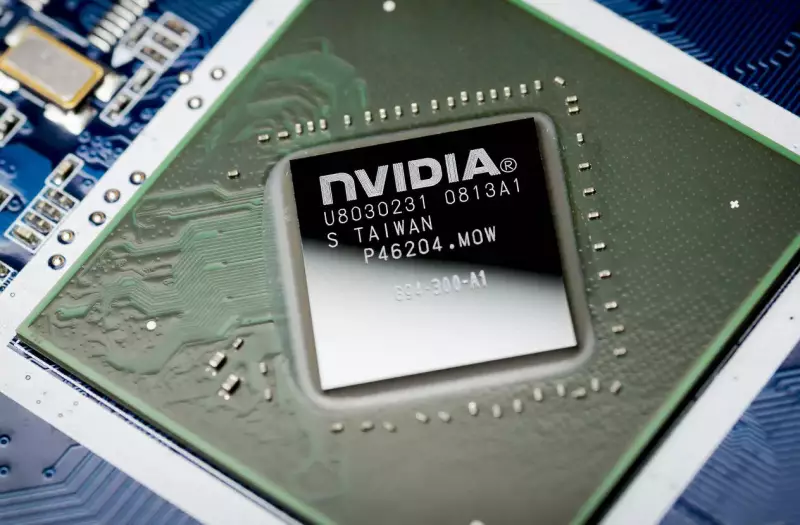
In a sharp critique of American policy, technology giant Nvidia has declared that years of expansive US export controls on advanced semiconductors are ultimately harming the United States itself. The company's statement came in response to comments made by White House AI czar David Sacks, who suggested China was deliberately rejecting Nvidia's high-performance chips.
Nvidia's Billion-Dollar Warning to America
Responding directly to Sacks and a related Financial Times report, an Nvidia spokesperson delivered a pointed message. The company confirmed it continues to collaborate with the US administration regarding licenses for its H200 AI chips for vetted customers. However, it underscored a significant economic consequence. "While we do not yet have results to report, it’s clear that three years of overbroad export controls fueled America’s foreign competitors and cost US taxpayers billions of dollars," the spokesperson stated.
This rebuttal was triggered by remarks from David Sacks during an interview on Bloomberg Tech. Sacks claimed, "They’re rejecting our chips," referring to China, and attributed this to a desire for "semiconductor independence." He later clarified he was citing a Financial Times article, which reported that Chinese regulators were considering a new approval process for purchasing Nvidia's H200 chips.

China's Proposed Approval Process for AI Chips
According to the Financial Times report, which cited sources within China, Beijing regulators are actively discussing methods to allow limited access to Nvidia's H200. The H200 represents Nvidia's second-most powerful generation of artificial intelligence chips. The proposed system would not be an outright ban but a bureaucratic hurdle.
Chinese buyers would likely be required to submit formal requests, justifying their need for the H200 chips and explaining why domestic semiconductor providers cannot meet their specific requirements. This local approval process is seen as a step to carefully control imports while fostering self-reliance. The report emphasized that no final decision has been made by Chinese authorities on implementing this mechanism.
CEO Jensen Huang's Repeated Disappointment
This incident marks another chapter in Nvidia's ongoing challenges within the Chinese market, stemming from US restrictions. In September of this year, CEO Jensen Huang expressed his disappointment following reports that China's Cyberspace Administration had directed major firms like ByteDance (owner of TikTok) and Alibaba to avoid purchasing Nvidia's China-specific RTX Pro 6000D chip.
At the time, Huang noted pragmatically, "we can only be in service of a market if the country wants us to be." The renowned CEO has been actively lobbying the US government to ease the stringent export bans. A significant driver for this lobbying effort is the observable effect of the controls: China has used the restrictions as a catalyst to push its domestic chipmakers to develop competitive alternatives to Nvidia's products.
The evolving situation highlights the complex interplay between national security, economic policy, and global technological leadership. Nvidia's stark warning frames the US export controls not just as a barrier for China, but as a potentially costly strategy that empowers competitors and impacts American economic interests directly.