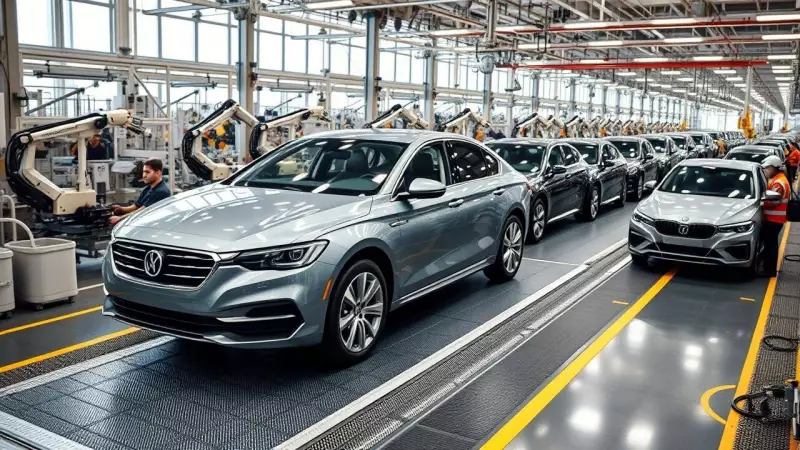
India's premier policy think tank, Niti Aayog, has issued a clarion call for a decisive strategic shift to enhance the nation's standing in international markets. In its latest quarterly trade report, the body emphasized that reducing import tariffs and reorienting manufacturing towards high-demand sectors like passenger vehicles are critical steps.
Key Recommendations for a Competitive Edge
Released on Tuesday, the Trade Watch Quarterly report for April–June 2025 outlined a multi-pronged strategy. Niti Aayog member Arvind Virmani, while releasing the findings, stressed that boosting export competitiveness, particularly in automobiles, is vital for long-term economic growth and job creation.
The report advised the government to work on boosting two-way trade, increasing participation in cross-border digital platforms, and securing a better position within global supply chains. It identified visible positive changes, such as a growing share of technology-intensive exports and sustained growth led by the services sector.

Automotive Sector: A $2.2 Trillion Opportunity
A major focus of the analysis was India's automotive export potential. While the country has found success in some niches, the report highlighted considerable scope to expand its share in the massive $2.2-trillion global automotive export market.
Based on global mapping and stakeholder talks, Niti Aayog listed urgent policy priorities for the auto sector:
- Strengthening quality standards and certification systems.
- Adopting advanced manufacturing technologies.
- Diversifying into new international markets.
- Building stronger forward linkages within global automotive supply chains.
Stable Trade Amid Global Shifts
The report provided a snapshot of the global and domestic trade landscape. It noted that worldwide trade in goods and services grew by approximately 2.5% quarter-on-quarter during April–June 2025. This growth was primarily driven by developing economies and an increase in South-South trade, even as weaker US trade figures pulled down the global average.
On the domestic front, India's overall trade position in Q1 of the 2025-26 fiscal year remained stable. The total merchandise and services trade reached $439 billion, marking a 3.5% year-on-year increase. A standout performance came from services exports, which surged by 10%, generating a substantial surplus of $48 billion and underscoring the sector's role as a key strength for the economy.