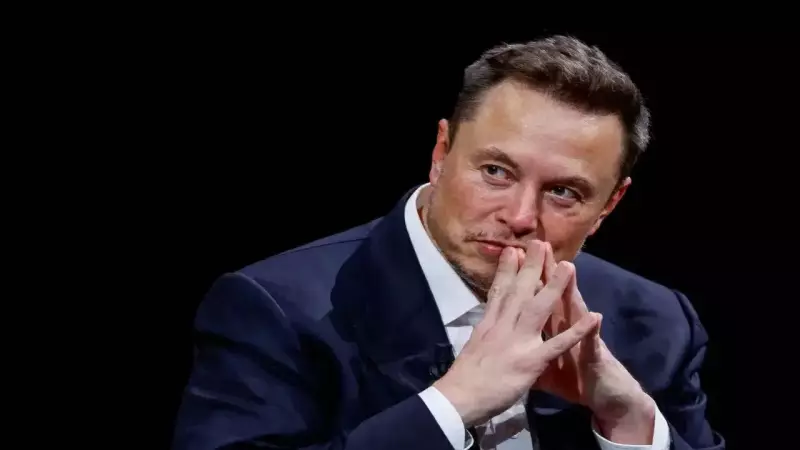
Tesla and SpaceX CEO Elon Musk has publicly voiced his apprehension regarding the sharp and sustained rise in silver prices. His comments come as a critical deadline for new export regulations from China, a dominant player in the global silver market, draws closer.
Musk's Warning and the Roots of the Crisis
Taking to the social media platform X, Musk responded to a discussion about "exploding" silver prices by stating, "This is not good. Silver is needed in many industrial processes." This succinct remark from one of the world's most prominent industrialists underscores the material's critical role beyond being a precious metal. The price of silver indeed reached a historic peak of $78.65 per ounce on Friday, December 26, driven by what analysts describe as a perfect storm of supply constraints.
The core trigger for the current anxiety is a policy shift from Beijing. Starting January 1, 2026, China will mandate that all companies exporting silver must obtain licenses from the Ministry of Commerce (Mofcom). The eligibility criteria are stringent: firms must have an annual production capacity of at least 80 tonnes and secure credit lines worth around $30 million. This move is expected to block small and mid-sized exporters, consolidating control with large, state-approved entities.

Given that China is estimated to control 60–70% of the global silver supply, any restriction on its exports has an immediate and profound impact on worldwide availability. Market observers note this strategy mirrors China's previous use of export controls on rare earth metals.
A Market Already in Deep Deficit
China's new rules are exacerbating an already critical supply-demand imbalance. The silver market has been in a structural deficit for five consecutive years, meaning consumption has consistently outstripped new supply. Projections for 2025 highlight this gap starkly: global demand is estimated at 1.24 billion ounces against a supply of only 1.01 billion ounces, leaving a shortfall of 100–250 million ounces.
Compounding the problem is the nature of silver production. Most silver is mined as a by-product of copper and zinc extraction. Developing new mines is a long-term endeavour, often taking over 10 years, and the quality of ore is declining. Recycling efforts, while helpful, are insufficient to bridge the growing deficit. There is, as experts put it, no quick fix.
Physical Shortages and Disconnected Markets
The tangible evidence of the squeeze is visible in plummeting physical inventories. Since 2020, stockpiles in key vaults have seen dramatic declines:
- COMEX inventories are down by 70%.
- London vault holdings have fallen by 40%.
- Shanghai inventories are at a 10-year low.
At current consumption rates, some regions reportedly hold only 30 to 45 days of usable silver. This physical scarcity has caused premiums—the extra cost paid for actual metal over the paper price—to surge. In Shanghai, physical silver has been trading above $80 per ounce, while paper contract prices on exchanges like COMEX are significantly lower.
This highlights a dangerous disconnect. The ratio of paper silver contracts (derivatives) to physical silver is estimated at an extreme 356:1. This means there are hundreds of paper claims for every single ounce of real silver. If even a small fraction of buyers demanded physical delivery, the system could face severe strain, explaining the volatile, near-vertical price movements.
Irreplaceable Industrial Demand
The rally is not merely speculative. Silver's value is underpinned by robust and growing industrial demand, which now constitutes 50-60% of its total use. The metal is essential and often irreplaceable in key technologies of the future:

- Solar panels for the green energy transition.
- Electric vehicles and their electronics.
- Various consumer electronics and medical devices.
This fundamental demand, coupled with the impending supply shock from China and collapsing inventories, is driving banks and financial institutions to reassess their positions. Elon Musk's concern reflects a broader realization: the silver market is experiencing a genuine, real-time supply squeeze with significant implications for global industry.