The recent deadly fire at an unauthorized nightclub in Goa and the persistent toxic air in Delhi are not isolated incidents. They are stark symptoms of a deeper malaise plaguing India's governance and its vast, untapped tourism potential. This sector, a powerhouse for job creation, remains neglected due to a chronic inability to enforce rules and a mindset resistant to change.
The 'Soft State' Legacy and Its Modern Manifestations
Economist Gunnar Myrdal's concept of the 'soft state' – a government with limited capacity to untangle competing interests and enforce regulations – was used to describe India decades ago. While the country has since become a fast-growing economy with reduced poverty, the 'soft state' syndrome persists. This is glaringly evident in Delhi's ongoing air pollution crisis, where successive governments have failed to clean the air, unlike other major global cities like Tokyo, London, and Beijing that have successfully tackled similar problems.
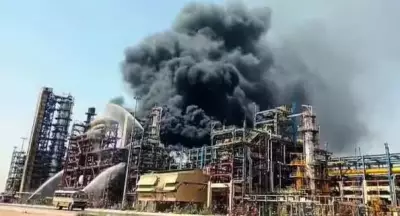
The tragedy in Arpora, Goa, on December 25, 2025, where a fire at the unlicensed 'Birch by Romeo Lane' nightclub killed 21 people, is a brutal example of regulatory collapse. The club operated illegally on a sandbank, using fireworks indoors without adequate exits. A demolition order had been ignored, and the owners, the Luthra brothers, allegedly bypassed compliance through bribery and intimidation, reportedly backed by powerful figures.

How Regulatory Failure is Killing the Golden Goose
Goa's case is a highly visible symbol of a nationwide problem. The aftermath of the fire revealed several other unauthorized establishments, highlighting systemic failure. This culture of non-compliance, coupled with unsafe facilities, poor service, and high costs, is driving tourists to more competitive destinations like Thailand, Sri Lanka, Croatia, and Georgia.
The data is telling. Despite being the world's fourth-largest economy, India ranks a lowly 39th in the World Economic Forum's Global Tourism ranking. Tourism contributes a mere 0.9% to India's GDP, a sharp fall from the pre-pandemic peak of 2.7%. In contrast, it makes up 20% of Croatia's GDP and 11% of China's. As highlighted by Amitabh Kant, a four-star hotel room in India costs ₹12,000-15,000 per night, double the price in Phuket or Danang.
The Path Forward: Prioritizing Budget and Religious Tourism
The neglect of tourism is particularly unfortunate given its high employment intensity and strong multiplier effects. While it accounts for 0.9% of GDP, its employment share is 5.5%. Raising its GDP share back to 2.7% could increase direct and indirect jobs from 76 million to 95 million. Doubling it to 5.4% could push employment to 195 million.
Achieving this requires a fundamental mindset change and rationalizing the Kafkaesque regulatory framework that deters investment and breeds corruption. The focus should not be solely on high-end tourism but on the massive, underserved segment of low-budget religious tourism. This includes millions of devout Indians traveling to sites like Hardwar, Vaishno Devi, Tirupati, Ajmer Sharif, and the Buddhist circuit.
These tourists seek affordable train travel, rooms for ₹1,000-2,000, and meals for ₹150-200. Providing them with cheap, safe, and clean facilities on a vastly expanded scale could capture political interest due to its phenomenal revenue and employment impact. Fulfilling India's tourism potential hinges on moving beyond the 'soft state' and building a system that enforces rules, encourages investment, and serves its most numerous visitors.