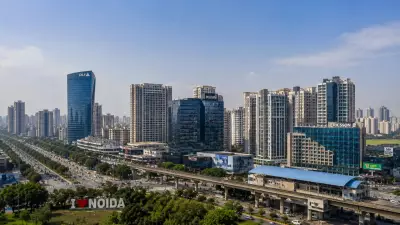
India's National Expressways: A Comprehensive Overview of the High-Speed Network
India's national expressways represent a critical component of the country's modern infrastructure, designed to facilitate rapid and efficient movement of goods and people across vast distances. These controlled-access highways, characterized by their high-speed limits, grade-separated intersections, and limited entry and exit points, are engineered to reduce travel time, enhance road safety, and stimulate economic development. As of early 2026, the network has seen substantial expansion, reflecting the government's commitment to upgrading India's transportation backbone.
Current Count and Operational Expressways
The exact number of national expressways in India is dynamic, with new projects continually being commissioned and existing ones upgraded. As of February 2026, India boasts over 20 operational national expressways, spanning thousands of kilometers across the country. Key examples include the Mumbai-Pune Expressway, one of the earliest and busiest, and the Delhi-Meerut Expressway, which significantly reduces travel time between the capital and Uttar Pradesh. Other notable expressways are the Eastern Peripheral Expressway around Delhi, aimed at decongesting the city, and the Chennai Bypass, which improves connectivity in Tamil Nadu.
Future Projects and Expansion Plans
Looking ahead, India has ambitious plans to further expand its national expressways network. By 2030, the government aims to increase the total length of expressways to over 5,000 kilometers, with several mega-projects in the pipeline. These include the Delhi-Mumbai Expressway, a game-changer for north-south connectivity, and the Bengaluru-Chennai Expressway, which will boost trade in southern India. Additionally, projects like the Amritsar-Jamnagar Expressway are set to enhance cross-regional links, supporting industries and agriculture along their routes.

The expansion is driven by initiatives such as the Bharatmala Pariyojana, a flagship program focused on developing economic corridors, inter-corridors, and feeder routes. This strategic approach ensures that expressways are not just isolated stretches but integrated into a larger network that connects key economic hubs, ports, and border areas.
Economic and Social Impact
The development of national expressways has far-reaching implications for India's economy and society. Economically, these highways reduce logistics costs by up to 30%, making Indian goods more competitive in global markets. They also attract investments in industrial corridors and special economic zones, creating job opportunities and fostering regional development. For instance, expressways like the Yamuna Expressway have spurred real estate growth and urbanization in previously remote areas.
Socially, improved connectivity enhances access to healthcare, education, and tourism. Reduced travel times mean faster emergency response and easier commutes for workers. Moreover, expressways contribute to environmental sustainability by lowering fuel consumption and emissions through smoother traffic flow, compared to congested national highways.
Challenges and Considerations
Despite the progress, challenges remain in the expansion of India's national expressways. Land acquisition issues, environmental clearances, and funding constraints can delay projects. Ensuring safety standards, such as proper signage, lighting, and emergency services, is crucial to prevent accidents on these high-speed roads. Additionally, maintaining and upgrading existing expressways requires continuous investment and technological integration, like smart toll systems and real-time traffic management.
In summary, India's national expressways network is a testament to the country's infrastructural ambitions, with a current count of over 20 expressways and plans for significant growth. By focusing on economic corridors and connectivity, these highways are poised to drive India's development in the coming years, making travel faster, safer, and more efficient for all.