The year 2025 has been declared a landmark 'Year of Reforms' for India's defence sector, witnessing unprecedented progress in self-reliance, technological innovation, and global competitiveness. The strategic focus has decisively shifted towards new-age domains including cyber, space, artificial intelligence (AI), machine learning (ML), hypersonics, and robotics, setting the stage for India's emergence as a leading military power.
Record-Breaking Production, Exports, and Technological Showcase
India's defence production soared to an impressive Rs 1,50,590 crore in the current period. Significantly, the private sector contributed approximately 23% of this total, highlighting its growing role. The supply chain is now robustly integrated with nearly 16,000 MSMEs working with Defence Public Sector Undertakings (DPSUs) and large private manufacturers.
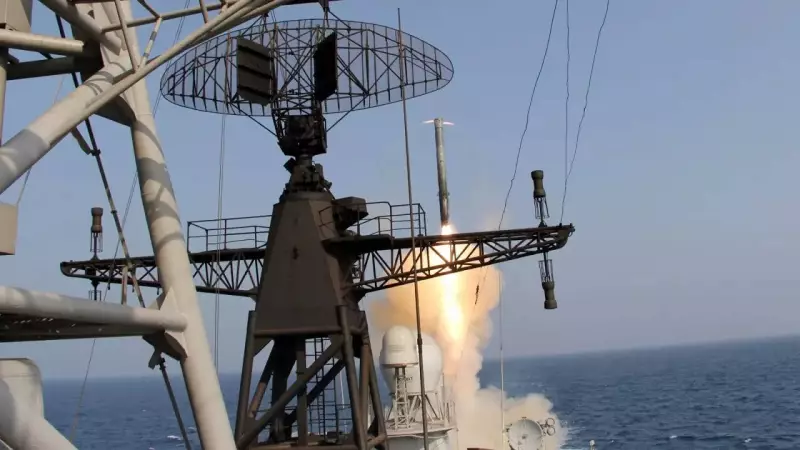
On the exports front, India achieved a historic high, with defence exports reaching Rs 23,620 crore. A standout success story is the BrahMos supersonic cruise missile, which has garnered keen interest from nations like Indonesia, South Africa, and several Middle Eastern countries.

The year was also notable for major technological unveilings. The Defence Research and Development Organisation (DRDO) showcased its highly anticipated Hypersonic Glide Vehicle (HGV) and the Transporter Erector Launcher for the Long-Range Anti-Ship Missile program. The dynamic ecosystem of corporations, MSMEs, start-ups, and academia revealed numerous advanced systems, including various unmanned platforms, India's first Generation 5 AI-driven imaging seeker, wing-in-ground effect aircraft, and exoskeletons.
Strategic Modernization and Key Policy Reforms
With a total defence budget of Rs 6,81,210 crore, India stands among the world's top five military spenders. A substantial portion, around Rs 2,67,000 crore, is specifically earmarked for modernization. This effort balances indigenous acquisitions with imports for immediate capability gaps, as seen in the Rs 63,000 crore deal with France for 26 Rafale-Marine fighter jets in April 2025 and the planned import of 100 Javelin Missile Systems and 216 Excalibur projectiles from the USA.
Policy reforms have been a cornerstone of 2025. After comprehensive stakeholder consultations, the Ministry of Defence released the updated Defence Procurement Manual (DPM) 2025 in September, replacing the 2009 version. The new DPM introduces decentralized decision-making to speed up approvals and cut bureaucratic delays. Furthermore, the government released the Technology Perspective and Capability Roadmap (TPCR) 2025, providing industry with a clear 15-year vision of the armed forces' needs.
The Road Ahead: Co-Development and Global Partnerships
The journey towards Atmanirbharta (self-reliance) is increasingly intertwined with strategic global partnerships. In a significant first, DRDO will partner with a leading global aerospace major to co-develop a 120 kN aeroengine. Collaborative models are also central to projects like P75I, which involves manufacturing six submarines in India.
India's defence engagement is expanding beyond mere arms trade into deeper strategic technology partnerships, joint development, and interoperability initiatives. The nation has forged bilateral agreements covering emerging technologies and critical mineral security with countries like Australia, Canada, USA, Chile, and Congo to de-risk supply chains. Military diplomacy now focuses on building co-production ecosystems and multi-domain cooperation in space, cyber, and AI-driven command systems.
Today, indigenous production meets nearly 65% of defence requirements, a remarkable leap from a decade ago, powered by homegrown platforms like BrahMos, Pinaka, Akash, and Tejas. While challenges remain in next-generation propulsion and stealth technologies, India's cost-effective, battle-proven systems have achieved strong export competitiveness.

As 2026 approaches, the foundation is set for achieving greater self-reliance, supply chain resilience, enhanced localization, and the integration of legacy systems with AI-enabled warfare technologies. For the Indian defence industry, the end of a dynamic year is merely the beginning of an ambitious new chapter on the global stage.