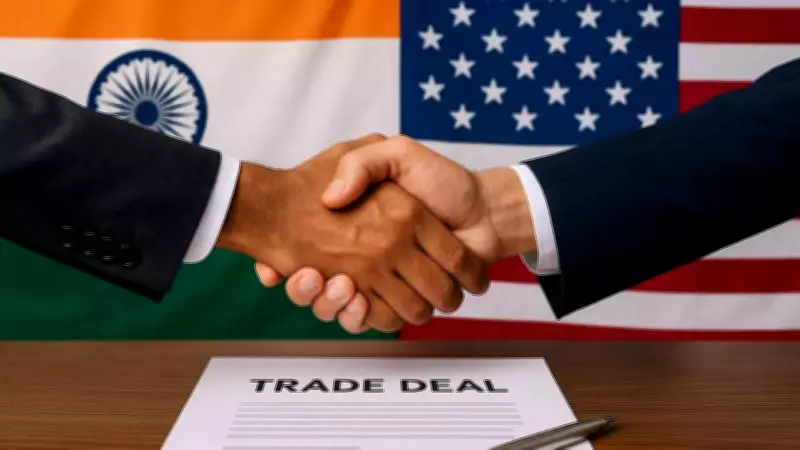
India-US Trade Deal Finalized: Tariffs Slashed to 18%, Boosting Export Competitiveness
After months of stalemate, India and the United States have successfully finalized a significant trade deal that reduces tariffs imposed on New Delhi to 18%. This development places India in an advantageous position compared to other major export competitors, including China, Pakistan, Bangladesh, and Vietnam. The agreement marks a pivotal shift in bilateral trade relations, addressing long-standing tariff disputes that had threatened to escalate.
Key Details of the India-US Trade Agreement
While the precise terms of the agreement remain undisclosed, greater clarity is expected once the United States issues an executive order addressing the tariff changes. The formal trade agreement text will likely outline which specific sectors fall under this arrangement, with both documents still awaited. Announcing the deal, former US President Donald Trump revealed that India has committed to purchasing more than $500 billion worth of American goods. According to Reuters, these purchases will span critical sectors such as petroleum, defence, electronics, pharmaceuticals, telecom equipment, and aircraft, with some agricultural products also included.
US Agriculture Trade Secretary Brooke Rollins confirmed that the deal provides greater access for US agricultural exports to India, a strategic move aimed at reducing America's farm trade deficit. Prime Minister Narendra Modi welcomed the agreement, expressing pleasure that "Made in India products will now have a reduced tariff of 18%."

Background and Significance of the Tariff Reduction
The development is particularly significant because Indian goods entering the US market were facing sharply higher duties, with total tariffs set to rise to as much as 50% from August 27, 2025. In August 2025, Trump had announced a 25% tariff on Indian exports, coupled with an additional 25% punitive levy linked to India's purchases of Russian crude oil and defence equipment. Under the new deal, this combined tariff has been reduced to 18%. White House officials have indicated that the 25% tariff related to Russian crude will also be removed.
Tariffs, which are taxes or customs duties levied on imported goods, raise the cost of foreign products in domestic markets. Competitiveness is influenced not only by tariff levels but also by factors such as product quality and compliance with standards. With this deal, Indian exports to the US become more competitive compared to regional peers, as rival exporting countries face higher tariffs:
- Bangladesh: 20%
- Vietnam: 20%
- Thailand: 19%
- Pakistan: 19%
- China: 34%
Trump's Statements and India's Commitments
In his announcement, Trump emphasized the strategic aspects of the agreement, stating, "It was an Honor to speak with Prime Minister Modi... We spoke about many things, including Trade... He agreed to stop buying Russian Oil, and to buy much more from the United States and, potentially, Venezuela." He added that this move could help end the war in Ukraine. Trump further noted that India would reduce its tariffs and non-tariff barriers against the US to zero, while committing to "BUY AMERICAN" at a much higher level.
Unresolved Issues: Russian Crude and Clarity
Despite Trump's claims that India will cease purchasing Russian crude, no official confirmation has been provided by Indian authorities. Russia is currently India's largest source of crude oil, but with a diversified energy portfolio, India may not find it overly challenging to shift away from Russian supplies. A White House official quoted in an ANI report clarified that the removal of the 25% penal tariff is conditional on India completely halting Russian crude imports. Indian refiners are reportedly awaiting government guidance on this matter.

India-US Trade Relationship: Key Statistics
The United States has been India's largest trading partner in goods between 2021 and 2025, accounting for approximately 18% of India's exports, 6.22% of its imports, and nearly 10.73% of total two-way trade. In 2024-25, bilateral merchandise trade reached $186 billion, comprising $86.5 billion in exports and $45.3 billion in imports. India posted a trade surplus with the US of $41 billion in 2024-25, up from $35.32 billion the previous year.
In services trade, India recorded exports of around $28.7 billion and imports of $25.5 billion, resulting in a surplus of $3.2 billion. Combined, India's overall trade surplus with the United States stood at approximately $44.4 billion. Estimates for 2024 indicate that the US imported services from India worth $40.6 billion, with computer and IT services accounting for $16.7 billion and business management services contributing $7.5 billion.
Major Commodities in India-US Trade
India's exports to the US in 2024 were led by:
- Pharmaceutical formulations and biological products: $8.1 billion
- Telecom equipment: $6.5 billion
- Precious and semi-precious stones: $5.3 billion
- Petroleum products: $4.1 billion
- Gold and jewellery: $3.2 billion
- Automobiles and auto components: $2.8 billion
- Cotton ready-made garments: $2.8 billion
- Iron and steel products: $2.7 billion
Notably, smartphones have emerged as a significant component of India's export basket to the US, though they remained exempt from Trump's tariffs.
On the import side, India sourced from the US:
- Crude oil: $4.5 billion
- Petroleum products: $3.6 billion
- Coal and coke: $3.4 billion
- Cut and polished diamonds: $2.6 billion
- Electrical machinery: $1.4 billion
- Aircraft and spacecraft parts: $1.3 billion
- Gold: $1.3 billion
Sectors Poised to Benefit from the Deal
Industries that rely heavily on labour, such as apparel, leather and non-leather footwear, gems and jewellery, carpets, and handicrafts, are expected to gain substantially from the tariff reduction. The previous 50% US tariffs had severely impacted exports from these segments, and the easing could help revive shipments and boost economic growth.
Expert Reactions and Analysis
Apparel Export Promotion Council Chairman A Sakthivel highlighted that the development is likely to strengthen apparel exports, attract new investments across the supply chain, and reinforce India's position as a dependable global sourcing destination. Federation of Indian Export Organisations President SC Ralhan noted that the agreement could lead to the immediate release of deferred orders, particularly in labour-intensive sectors like garments, textiles, leather, and footwear.
Manoj Mishra, Partner and Tax Controversy Management Leader at Grant Thornton Bharat, commented, "The India–US trade deal, cutting reciprocal tariffs on Indian exports from 50% to 18%, is a positive development particularly for MSME-led sectors such as textiles and apparel, gems and jewellery, and leather, which were hardest hit by recent tariff hikes. The move reinforces India’s position as a reliable long-term sourcing partner for the US, supporting order recovery and restoring buyer confidence."
Moody's Ratings Assessment
Reacting to the announcement, Moody's Ratings stated that the reduction of US tariff rates on most Indian goods will reinvigorate India's goods export growth to the US, its largest export market. The ratings agency emphasized that lower tariffs will be credit positive for labour-intensive sectors like gems, jewellery, textiles, and apparel. However, pharmaceuticals and consumer electronics, which were exempt from the 50% tariffs, are unlikely to be affected by the reduction.
Moody's also cautioned that while India has reduced its purchases of Russian crude in recent months, an immediate cessation could disrupt economic growth. A complete shift away from Russian oil might tighten global supply, raise prices, and contribute to higher inflation, given India's status as one of the world's largest oil importers.
Conclusion: A New Chapter in India-US Trade Relations
The finalized India-US trade deal represents a landmark achievement in bilateral relations, offering a pathway to enhanced economic cooperation and mutual benefit. By reducing tariffs to 18%, the agreement not only boosts India's export competitiveness but also underscores the strategic importance of the partnership between the two nations. As details unfold and implementation progresses, the deal is poised to shape the future of global trade dynamics, reinforcing India's role as a key player in the international marketplace.