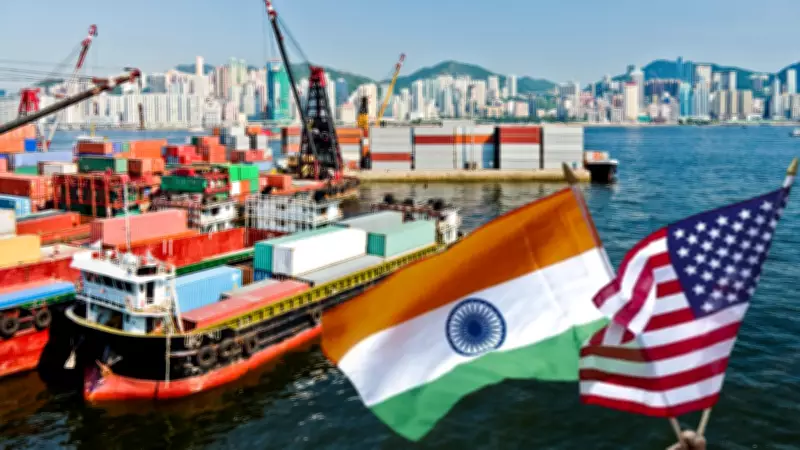
India and US Seal Historic Trade Agreement, Tariffs Reduced to 18%
In a significant development for bilateral economic relations, the United States and India have finalized a comprehensive trade deal after months of negotiations. US President Donald Trump announced that effective immediately, tariffs on Indian goods have been lowered to 18% from the previous 50% rate. This marks one of the lowest tariff levels imposed by the Trump administration on any trading partner.
Key Components of the Trade Agreement
The landmark agreement includes several crucial commitments from both nations. India has agreed to cease purchasing Russian oil and instead increase imports from the United States and potentially Venezuela. Furthermore, New Delhi has committed to buying $500 billion worth of American products spanning energy, agriculture, coal, and various other sectors over the duration of the trade deal.
This breakthrough follows India's proactive measures to address multiple US concerns. The Indian government incorporated several American demands into its recent Union Budget and has been actively pursuing trade agreements with other major economies, including the United Kingdom and the European Union.

Background: From 'Tariff King' to Trade Partner
The path to this agreement was marked by considerable tension. President Trump had frequently criticized India as the 'tariff king', citing challenges faced by American companies like Harley Davidson in the Indian market due to high import duties. In response, India implemented several tariff reductions prior to the deal's finalization.
- Motorcycles with engine capacity above 1,600cc saw duties drop from 50% to 30%
- Bourbon whisky tariffs were reduced from 150% to 50%, benefiting the United States as the world's largest producer
These concessions faced domestic opposition, with Indian industries advocating for more gradual implementation over extended periods.
Addressing Agricultural and Trade Barriers
The United States Trade Representative had previously highlighted numerous trade barriers in India, particularly in agricultural sectors. American concerns included:
- High applied tariffs on various goods including vegetable oils, apples, maize, and automobiles
- Regulations requiring GM-free certificates for milk, pork, and fish imports without scientific justification
- Agricultural support programs that potentially distort markets
Despite these issues, India maintained relatively favorable standing compared to other Asian nations. While India faced 27% tariffs at one point, other countries confronted significantly higher rates: China at 54%, Vietnam at 46%, Bangladesh at 37%, and Thailand at 36%.
Strategic Implications and Regional Context
The trade agreement carries substantial strategic importance for both nations. For India, the deal represents an opportunity to strengthen economic ties with the United States while diversifying energy sources away from Russia. The agreement also fulfills key US demands including India's passage of the SHANTI Bill, which opens the nuclear power sector to private participation.
The negotiations occurred against a complex geopolitical backdrop. The United States had previously claimed that tariff leverage helped facilitate a ceasefire between India and Pakistan following military tensions in May 2025, though India maintained that diplomatic channels between military officials achieved the resolution.
With this agreement, India joins other major economies that have reached trade understandings with the United States, positioning itself as a crucial partner in American economic and strategic calculations, particularly regarding counterbalancing China's influence in the region.