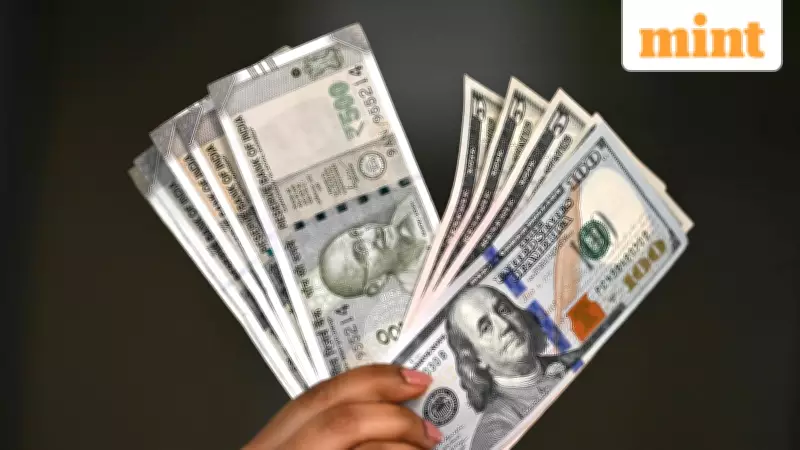
India-US Trade Agreement Resets Economic Relations with 18% Tariff Rate
The announcement of a comprehensive trade deal between India and the United States on Monday marks a significant turning point in bilateral relations that had been strained for nearly a year. This agreement comes after a series of dramatic events that tested diplomatic and economic ties between the two nations, culminating in a reset that promises to restore balance to their trade relationship.
Key Provisions of the Landmark Trade Agreement
Under the newly announced terms, India will now face an 18% tariff rate on exports to the United States, a substantial reduction from the previous 50% rate that had been in effect since late August. This adjustment places India on a more competitive footing with other export nations, potentially even providing an advantage in certain sectors.
The United States has stated that India has agreed to several important concessions as part of this deal:

- Ceasing purchases of Russian oil, which had become a major point of contention
- Moving toward zero tariffs on a wide range of American products
- Eliminating non-tariff barriers that hindered US exports
- Purchasing $500 billion worth of US products over an unspecified period
- Allowing greater access to India's agricultural market
It is important to note that India has not yet officially confirmed all aspects of the US announcement, particularly regarding the agricultural market access that had been a major sticking point in earlier negotiations.
Impact on Key Indian Export Sectors
The reduction from 50% to 18% tariffs is expected to provide much-needed relief to several Indian industries that were particularly hard-hit by the previous rates. While overall exports showed resilience by finding alternative markets, specific sectors suffered significant blows:
- Gems and jewellery – A major export category that faced substantial challenges
- Textiles – An industry crucial to India's manufacturing economy
- Marine products – A sector with significant export potential
Madhavi Arora, chief economist at Emkay Global Financial Services, emphasized the importance of this development: "The deal brings India broadly in line with its Asian peers on tariff rates—at the very least eliminating the earlier unfair and disproportionate drag on exports and, by extension, the rupee."
Geopolitical Context and Energy Implications
The trade tensions between India and the United States escalated significantly around the issue of Russian oil imports. Following the Russia-Ukraine conflict, India had increased its purchases of discounted Russian oil, with Russia's share of India's crude imports rising dramatically from under 2% before 2022 to approximately 35% in 2024-25, making it India's largest oil supplier.
This shift in energy sourcing became a central point of contention, with the August 2025 penalty tariffs explicitly tied to India's Russian oil purchases. The trade measures served as leverage in broader geopolitical negotiations, demonstrating how economic tools were employed to address strategic concerns.
Recent trends show some adjustment in this pattern, with Russia's share declining to 32% in FY26 so far, and India dropping from second to third-largest purchaser of Russian oil in December. Meanwhile, the United States has increased its share of India's crude imports from 5% until 2024-25 to above 8% in 2025-26, becoming India's fourth-largest source.
Broader Economic and Diplomatic Significance
The trade deal represents more than just tariff adjustments—it signifies a reset in India-US relations that had deteriorated through several challenging episodes. The timeline of tensions included:

- Reciprocal tariffs imposed in April 2025 affecting India alongside other nations
- Stalled negotiations over agricultural market access
- Escalating tensions following President Donald Trump's claims about his role in India-Pakistan conflict resolution
- The additional 25% tariff imposition in late August that made India, along with Brazil, among the worst-hit by US tariffs
This agreement was essential for preserving India's access to its largest export market. As Arora further noted: "There are no incremental advantages or preferential placements vis-à-vis Asian peers, but restoring a level playing field is a meaningful reset point from a trade perspective."
The $500 billion purchase commitment mentioned by President Trump requires context—India-US bilateral trade totaled $132 billion in FY25, with imports from the US amounting to approximately $43 billion. The specifics of this commitment, including the timeframe and implementation details, remain to be clarified as more information about the trade deal emerges.
While a comprehensive assessment will require examination of the finer details once they are officially released, the initial framework suggests that India has achieved a more favorable position in its trade relationship with the United States, potentially setting the stage for more stable economic cooperation moving forward.