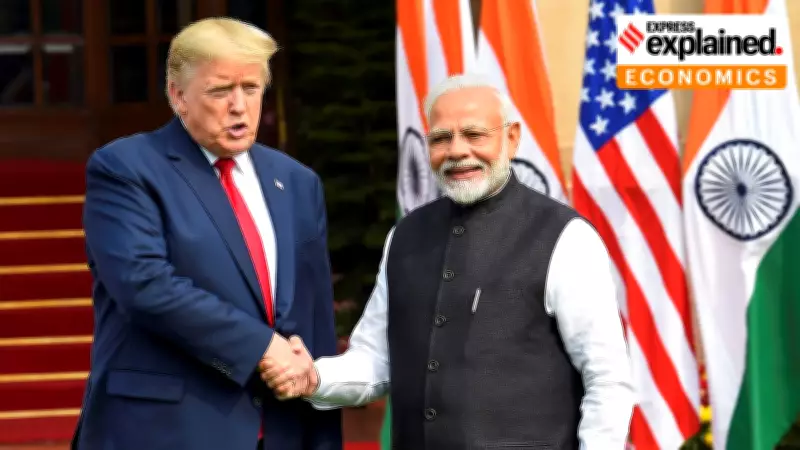
The recently implemented India-US trade deal has sparked significant analysis regarding its potential effects on India's macroeconomic landscape. Coming into effect immediately, this agreement is poised to reshape trade dynamics between the two nations, with far-reaching implications for exports, currency stability, and overall economic growth.
Tariff Reductions and Export Sector Relief
Central to the trade deal is the substantial reduction of US tariffs on Indian products, which have been lowered from 50% to 18%. According to detailed analysis, when considering specific concessions granted for electronics, pharmaceuticals, and key food items such as spices, coffee, and tea, the effective tariff rate on Indian exports could potentially drop to as low as 12%.
Bank of America Securities highlighted that even with certain Section 232 tariffs remaining on products like steel, aluminum, and automobiles, the estimated effective tariff rate on India might settle around 12-13%, a dramatic decrease from the previous 30-35%. This development is expected to provide considerable relief to India's export sector, particularly benefiting labor-intensive industries including gems and jewellery, textiles, agricultural products, and engineering goods.

Growth Forecast Revisions
The trade breakthrough has prompted leading financial institutions to revise their growth projections upward. Goldman Sachs raised its current year real GDP growth forecast by 20 basis points to 6.9% year-on-year, reflecting increased optimism about the deal's economic impact. Bank of America Securities similarly anticipates reasonable growth in high-frequency indicators, with GDP growth expected to benefit further from this trade development.
Addressing Rupee Pressure and Capital Flows
One of the most critical aspects of the trade deal involves its potential to stabilize the Indian rupee, which has faced significant pressure from foreign portfolio investment outflows. Elevated uncertainty surrounding the India-US trade negotiations had kept capital flows muted throughout the previous year, with Indian equity markets experiencing approximately $19 billion in foreign portfolio outflows amid an earnings slowdown.
The high tariffs previously in place made other destinations, particularly Southeast Asian countries, appear more attractive for investment. However, with the reciprocal tariffs on India's exports to the US now lowered, Goldman Sachs Research estimates the current account deficit could narrow by around 0.25% of GDP, potentially decreasing to 0.8% of GDP. The research further suggests that if capital flows recover following the conclusion of the trade deal, pressure on the Indian rupee could ease, creating downside risk to their current USD/INR 12-month forecast of 94.
Recent Rupee Performance and Economic Survey Insights
The Indian rupee recently hit a lifetime low of Rs 91.98 per US dollar, driven by sustained foreign portfolio investment outflows. Foreign portfolio investors withdrew $4 billion in January alone, with total outflows reaching $11.8 billion in the previous year.
The Economic Survey 2025-26 provided crucial context for this currency pressure, noting that India runs a trade deficit in goods that isn't fully offset by its net trade surplus in services and remittances. This structural reality makes India dependent on foreign capital flows to maintain a healthy balance of payments. When these flows diminish, as they did amid trade and policy uncertainties, rupee stability becomes vulnerable.
The survey further detailed that foreign portfolio investors were net sellers of Indian securities from April to December 2025. Multiple factors contributed to this trend:
- Relative underperformance of Indian equities compared to other major markets
- Trade and policy uncertainties surrounding international agreements
- Depreciation of the Indian rupee
- Broad-based global risk-off sentiment amid elevated US bond yields
With the new trade deal now in effect, economists and analysts will closely monitor whether the anticipated benefits materialize, particularly regarding export growth, currency stabilization, and sustained economic expansion in the coming quarters.