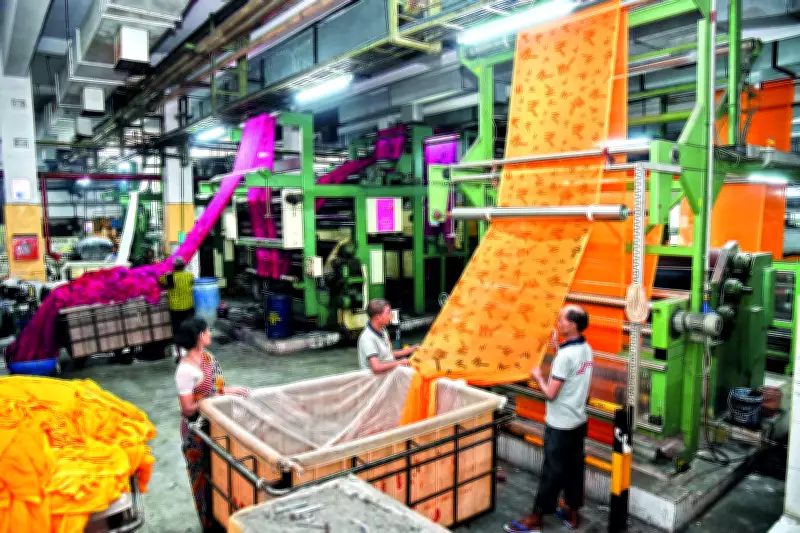
NEW DELHI: The recent announcement of the India-US trade deal has arrived at a crucial moment for Indian exporters, particularly those in the garment, leather, and footwear sectors. As these industries had just dispatched their summer season shipments, concerns were mounting about securing orders for the upcoming season.
Immediate Relief for Exporters
In recent months, smaller players in these sectors had virtually halted their shipments, while larger companies with deeper pockets were sustaining operations by offering steep discounts. This strategy came at a cost, as even their US buyers were absorbing minor losses. With the new trade deal, Indian goods are suddenly appearing more competitive in the American market.
Tariff Advantages and Competitive Positioning
The deal introduces an 18% additional tariff over the Most Favored Nation (MFN) or product-specific rates. This levy positions Indian garments marginally better than those from Bangladesh or Sri Lanka, which face a 20% tariff. Similarly, Indian carpets, which had experienced significant market share losses, will now be more competitive against products shipped from Turkey. Shrimps from India are also set to become more affordable in American stores.

Gems and jewellery exporters, who had been losing their competitive edge, can now breathe a sigh of relief. With levies on several Chinese products standing at 34%, Indian goods will enjoy a slight advantage. However, it is important to note that some sectoral tariffs, such as those on auto parts and metals, will remain unchanged.
Awaiting Full Clarity and Future Prospects
Despite the optimism, businesses are eagerly awaiting full clarity on the terms of the trade deal. Currently, there is no joint statement, and the claims made by former US President Donald Trump on his social media account have not been fully addressed by Indian authorities. This lack of detailed information leaves some uncertainty in the air.
With India having previously signed trade deals with the UK and the European Union, businesses are now better positioned to rebalance their portfolios. By diversifying export destinations, they can hedge against potential future policy fluctuations, such as those that might arise from changes in US administration.
Export Growth and Sectoral Impact
India's exports to the US have already shown robust growth, rising by 11.3% to $59 billion between April and November. This surge was led by a doubling of smartphone shipments, which reached $16.7 billion. Additionally, frontloading of exports to beat the tariff deadline, which took effect in August, contributed to this period's export performance.
It is noteworthy that nearly 40% of India's exports, including electronics and pharmaceuticals, were not impacted by the tariffs, indicating a resilient export base.
Political and Business Reactions
Union Home Minister Amit Shah described the deal as a "big day for India-US relations," highlighting that it paves the way for stronger trade ties and mutual growth. He emphasized that this historic agreement will elevate the strategic partnership between the two nations.
Commerce and Industries Minister Piyush Goyal stated that the deal "unlocks the power of two large democracies working together for shared prosperity." He added that both India and the US are natural allies, and their partnership will foster co-creation of technologies and co-development of solutions for a brighter future.
IT and I&B Minister Ashwini Vaishnaw echoed these sentiments, noting that the US and India have complementary strengths. He affirmed that the trade deal is a win-win situation that will greatly benefit citizens and industries in both countries.
Business Community's Optimistic Outlook
The business community has responded with enthusiasm. Aditya Birla Group Chairman Kumar Mangalam Birla remarked, "The Aditya Birla Group is the largest Indian investor in the US, and we see this agreement helping shape more resilient supply chains, unlocking manufacturing opportunities, and driving long-term economic competitiveness in both the US and India."
Overall, the India-US trade deal marks a significant step forward in enhancing trade relations, providing a competitive boost to key Indian export sectors while fostering economic collaboration between the two democracies.