India-US Trade Deal: Export Diversification Amid Tariffs, Sectoral Struggles
The India-US trade agreement has finally materialized, with US tariffs reduced to 18 percent from the previous 50 percent under the pact finalized on Monday. This development follows significant challenges that compelled Indian exporters to seek diversification in their markets.
Impact of Tariffs and Export Performance
Indian exports experienced a decline in September and October due to the 50 percent tariffs implemented on August 27. However, overall exports rebounded in November, surging by 19 percent, with exports to the US jumping 22 percent. This growth was largely driven by products not subject to reciprocal tariffs.
Analysis of September data, the first month affected by the tariffs, reveals that Indian goods successfully found alternative markets. Concurrently, several previously stalled trade negotiations were revived. New Delhi has signed trade deals with the European Union, the United Kingdom, and Oman, and concluded an agreement with New Zealand.

Revival of Trade Talks
The commerce and industry ministry has also resumed trade discussions with Canada and Israel, which were previously halted. While political tensions with Canada led to the rupture of that trade deal, talks with Israel stopped in 2022 due to Indian negotiators' concerns about potential gains. India is now exploring a preferential trade agreement with Israel.
Sectoral Analysis: Successes and Struggles
Data from the commerce and industry ministry highlights varied impacts across sectors:
- Gems and Jewellery: Exports to the US plummeted 76 percent in September compared to last year, but total exports saw only a marginal 1.5 percent dip. Shipments to the United Arab Emirates surged 79 percent, with increases to Hong Kong (11 percent) and Belgium (8 percent).
- Auto Components: Exports to the US dropped 12 percent in September, but shipments to Germany, the UAE, and Thailand helped total auto component exports grow by 8 percent.
- Marine Products: Grew 23 percent in September and 11 percent in October, driven by higher exports to China (up almost 60 percent), Japan (37 percent), Thailand (about 70 percent), and the European Union.
Sectors Facing Challenges
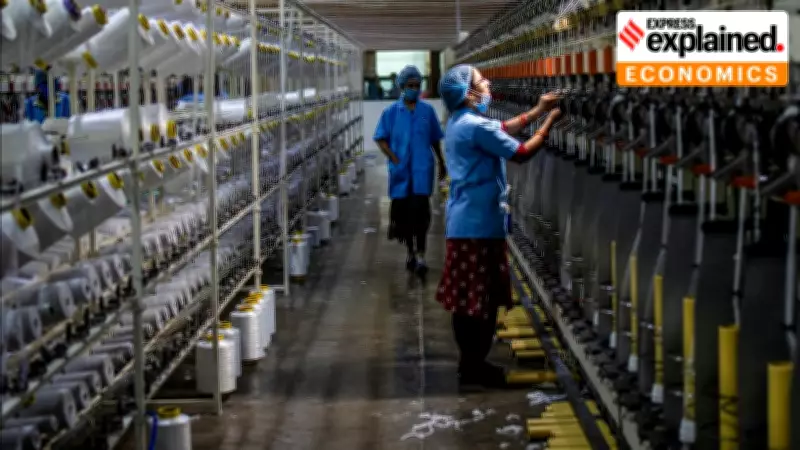
However, low-margin, labor-intensive product segments such as cotton garments, sports goods, carpets, and leather footwear are struggling to diversify. These sectors face stiff competition from China and ASEAN countries, indicating that the long-term impact of US tariffs could be uneven, disproportionately affecting small units across India.
These low-margin products are more susceptible to trade-related shocks due to working capital stress and inability to establish units abroad. For instance:
- Sports Goods: With 40 percent of exports going to the US, alternative markets have not been found, leading to a 6 percent overall export decline in October.
- Cotton Garments: Facing competition from Vietnam and Bangladesh, exports to the US fell 25 percent. While shipments to the UAE, Spain, Italy, and Saudi Arabia increased, overall category exports slipped 6 percent in September.
- Leather Footwear: Registered a 10 percent overall decline after a sharp dip in exports to the US.
Insights from SBI Ecowrap Report
An SBI Ecowrap report released in November noted that India's exports have managed to find alternative markets, and this diversification could help mitigate the US tariff impact over time. The report highlighted that India's total merchandise exports between April and September inched up by 2.9 percent, with cumulative exports to the USA growing 13 percent during the same period, despite some front-loading effects.
"Interestingly, the share of India’s merchandise exports to other countries during this period has increased significantly, indicating the diversification of our export basket," the report stated. Key destinations include the UAE, China, Vietnam, Japan, Hong Kong, Bangladesh, Sri Lanka, and Nigeria across various product categories.

The report also pointed to potential rerouting, with declines in container shipments from India and China accompanied by rises from Indonesia, Thailand, and Vietnam. Container volumes to the US dropped sharply, with India seeing an 18.4 percent decline and China a 16.3 percent decline, while Indonesia, Thailand, and Vietnam registered positive growth.
Additionally, shifts in US import patterns were noted, such as Australia's share in US imports of pearls and precious stones increasing to 9 percent from 2 percent, and Hong Kong's share rising from 1 percent to 2 percent during January-August 2025 compared to the previous year.