India-US Trade Deal Announcement Stuns Observers After Months of Stalemate
The announcement of an India-US trade deal by President Donald Trump took many by surprise, ending months of deadlocked negotiations that had persisted since early talks began. Despite repeated rounds of discussions and even after the United States imposed 50% tariffs, the impasse continued with the Trump administration maintaining that any trade agreement with India would be conditional on New Delhi halting its crude oil imports from Russia.
Trump's Claim and Modi's Response
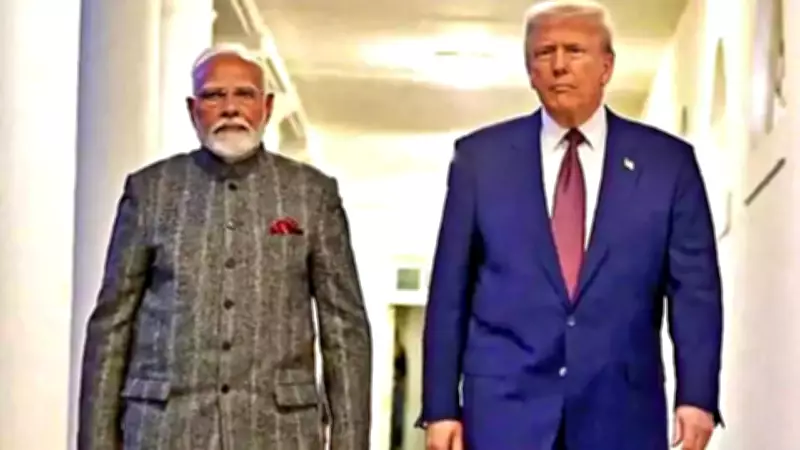
In a social media post on Truth Social, Trump asserted that India had agreed to stop purchasing crude from Russia. Prime Minister Narendra Modi, while welcoming the announcement of reduced tariffs on Indian goods—now lowered to 18%—did not address the issue of Russian crude oil imports in his remarks.
The Trigger: EU Free Trade Agreement Pressure
According to an analysis in News Week, the recently concluded India-EU Free Trade Agreement (FTA) talks played a pivotal role in breaking the deadlock. The successful wrap-up of what Brussels termed a "landmark" free-trade pact strengthened India's negotiating position and raised concerns within the Trump administration about being sidelined. Both India and the EU have described this FTA as the "mother of all trade deals."

Prime Minister Modi had publicly welcomed the India-EU deal just days earlier, calling it a significant advancement that "opens new pathways for growth, investment and strategic cooperation." The sequencing of events appears deliberate, with newly appointed US Ambassador to India Sergio Gor hinting at imminent news shortly before the announcement, posting: "President Trump just spoke with Prime Minister Modi. STAY TUNED…"
Geopolitical and Energy Policy Dimensions
From the US perspective, the issue intertwines energy policy with geopolitics. The White House has explicitly linked tariff reductions to the objective of curbing Russia's oil earnings, a stance reinforced by US Treasury Secretary Scott Bessent, who noted that India's imports of Russian crude had "collapsed" and indicated a pathway for removing tariffs.
The Associated Press framed this approach in stark terms: squeezing Russia's oil income to increase pressure for ending the Ukraine conflict, while Trump also referenced alternative supply routes like Venezuela to prevent global price surges. In his Truth Social post announcing the trade deal, Trump claimed India would increase purchases of US oil and potentially buy Venezuelan oil in the future.
Broader Strategic Calculations
This calculation gains added significance as the US manages risks related to Iran, with recent reports suggesting Tehran fears potential US strikes could destabilize the regime. This underscores how disruptions in the Gulf can quickly reverberate through global oil markets, adding volatility to energy politics.
On the political front, the trade deal offers mutual benefits: Trump secures a narrative of leveraging diplomacy for peace regarding Russia, while Modi gains tariff concessions and clearer pathways for Indian exports. Beneath the surface, broader strategic considerations around supply chains are at play, with the US keen to establish India as a manufacturing and defense partner outside China's orbit, and India seeking tangible evidence that closer alignment with the US yields results.
The analysis concludes that the recalibration of India-US ties is purposeful and directed from the highest levels, marking a significant shift in trade dynamics amid evolving geopolitical landscapes.