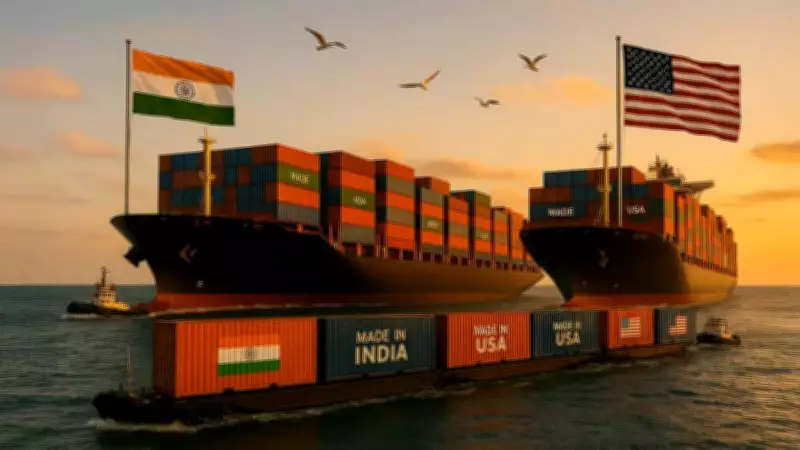
India and US Finalize Bilateral Trade Deal, Slashing Tariffs to 18%
In a significant development for international trade relations, India and the United States have agreed on a comprehensive framework for a bilateral trade deal. Under this new agreement, Washington will reduce tariffs on Indian goods to 18%, a substantial decrease from the current 50% rate. This announcement marks a pivotal shift in trade dynamics between the two nations, as the US had previously imposed steep duties on Indian exports entering American markets, effective from August 27, 2025.
Background of Tariff Impositions
The backdrop to this agreement involves the US imposing a 25% tariff along with an additional 25% punitive duty on India in August 2025. These measures were enacted in response to India's purchases of Russian crude oil and military equipment, adding to existing tariffs on Indian goods. The new framework now brings the overall duty down to 18%, alleviating some of the trade tensions that had escalated between the two countries.
Prime Minister Narendra Modi has welcomed this move, expressing his delight that "made in India products will now have a reduced tariff of 18%." This reduction is expected to foster stronger economic ties and enhance India's export capabilities in the global market.

Global Tariff Comparison and India's Position
To understand the impact of this tariff reduction, it is essential to compare US tariff rates across major economies. India now finds itself in the middle of the global tariff spectrum with an 18% duty on its exports. This places India below several emerging-market competitors, offering a relative pricing advantage in the US market.
- Brazil faces the steepest tariff at 50%.
- Myanmar and Laos are subject to 40% duties each.
- China attracts a 37% tariff.
- South Africa faces a 30% levy.
Several manufacturing hubs in Southeast Asia, including Vietnam and Bangladesh at 20%, and Malaysia, Cambodia, and Thailand at 19% each, are subject to duties in the 19–20% range. With an 18% tariff, India is now positioned more favorably than most of these competitors.
Advanced economies enjoy significantly lower tariffs. The European Union, Switzerland, Japan, and South Korea each face a 15% duty, while the United Kingdom has the lowest rate at 10%.
Expected Benefits for India's Economy
The reduction in tariffs is anticipated to benefit India's labor-intensive sectors significantly. Exporters will be able to price their products more competitively in the US market, potentially boosting export volumes and economic growth. This move could lead to increased job creation and enhanced market access for Indian goods, strengthening the country's trade balance.
Reasons Behind US Tariff Impositions
The United States has argued that it faces a significant trade deficit with India, attributing this to New Delhi's high tariffs on American goods, which restrict US exports to the Indian market. Under the proposed pact, India is expected to take several steps to address these concerns:
- Eliminate duties on certain goods immediately.
- Phase out duties on others over time.
- Reduce tariffs in specific sectors.
- Offer quota-based tariff concessions for select products.
However, sensitive sectors such as agriculture and dairy remain completely outside the ambit of the agreement, as reported by PTI. This exclusion ensures that domestic industries in these areas are protected from potential adverse effects.
Future Steps and Clarifications
An executive order from the US is expected to provide greater clarity on the specifics of the tariff changes. Additionally, a joint statement from both countries will outline the sectors covered under the deal. Both documents are awaited and will offer more detailed insights into the implementation and scope of the agreement.
This bilateral trade deal represents a crucial step towards resolving trade disputes and fostering a more cooperative economic relationship between India and the United States. By reducing tariffs and enhancing market access, both nations stand to gain from increased trade and investment opportunities.