India-US Trade Deal: A Year-Long Journey from Tensions to Tariff Cuts
The India-United States trade agreement has been finalized after approximately twelve months of intense negotiations, marking a significant milestone in bilateral economic relations. This pivotal deal comes shortly after the announcement of the India-European Union trade pact, underscoring India's proactive engagement in global trade partnerships.
Key Announcements and Diplomatic Exchanges
U.S. Ambassador to India Sergio Gor broke the news on social media at 9:16 PM Indian Standard Time, setting the stage for a series of high-profile confirmations. Following this, US President Donald Trump took to Truth Social to declare that the United States would "effective immediately" lower reciprocal tariffs on India to 18% from the existing 25%.
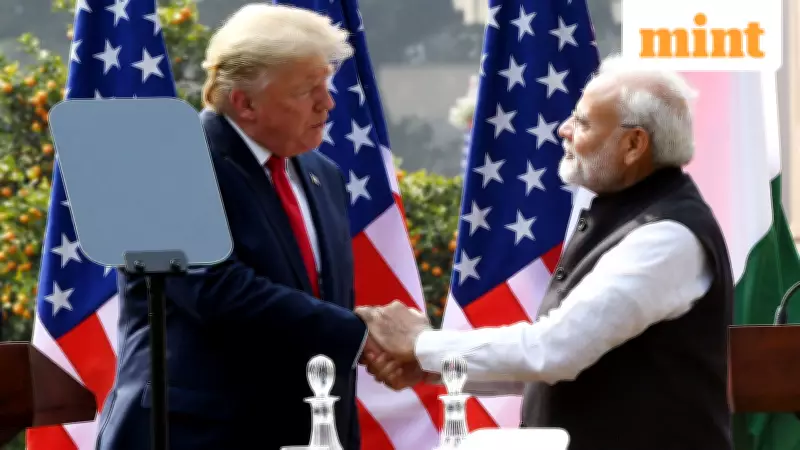
Prime Minister Narendra Modi responded nearly two hours later with a post on X, expressing his delight. "Wonderful to speak with my dear friend President Trump today. Delighted that Made in India products will now have a reduced tariff of 18%. Big thanks to President Trump on behalf of the 1.4 billion people of India for this wonderful announcement," he wrote.

PM Modi further emphasized the broader implications of the agreement, stating, "When two large economies and the world’s largest democracies work together, it benefits our people and unlocks immense opportunities for mutually beneficial cooperation."
Strategic Elements of the Trade Pact
In his detailed post, President Trump revealed that India has agreed to cease purchasing Russian oil as part of the deal. He noted that India would instead increase its imports from the United States and potentially Venezuela. According to Trump's statement, India committed to purchasing $500 billion worth of US products, including energy, agriculture, coal, and other goods.
"It was an Honor to speak with Prime Minister Modi, of India, this morning. He is one of my greatest friends and, a Powerful and Respected Leader of his Country. We spoke about many things, including Trade, and ending the War with Russia and Ukraine. He agreed to stop buying Russian Oil, and to buy much more from the United States and, potentially, Venezuela," Trump stated.
He added that this agreement aligns with similar trade deals the US has established with most countries worldwide, including China.
Timeline of Negotiations and Key Events
The trade deal, which took months to negotiate, follows India's efforts to address several US demands outlined in the Budget 2026-27. Here is a chronological overview of the critical events leading to the final agreement:
- 2 February 2026: US President Trump and PM Modi announced the commencement of bilateral trade agreement negotiations, with expectations of a settlement by year-end.
- 3 April 2025: The US imposed 27% 'reciprocal' tariffs on India. The United States Trade Representative (USTR) report criticized India's high applied tariffs on various goods.
- 9 April 2025: The US paused the implementation of country-specific reciprocal tariffs for 90 days, excluding China, providing a temporary respite.
- Mid-2025: President Trump repeatedly labeled India as the 'tariff king,' arguing that high tariffs hindered American companies like Harley-Davidson from thriving in the Indian market.
- Budget 2026-27: Union Finance Minister Nirmala Sitharaman announced a series of customs duty cuts on more than two dozen items, addressing some US concerns.
- 10 May 2025: India and Pakistan agreed to an immediate ceasefire following military escalations. Trump claimed the truce was facilitated by US tariff leverage.
- 7 August 2025: Trump doubled tariffs on India to 50% after India failed to meet American demands regarding agricultural market access.
Implications and Future Prospects
This trade deal represents a transformative shift in India-US economic relations, moving from contentious tariff disputes to a collaborative framework. The reduction in tariffs is expected to boost trade volumes, enhance market access for Indian products in the US, and strengthen bilateral ties.

The agreement also reflects India's strategic recalibration in global trade, balancing relationships with major economies while addressing domestic economic priorities. As both nations look ahead, this pact sets the stage for deeper cooperation in areas such as technology, defense, and energy, fostering mutual growth and stability.