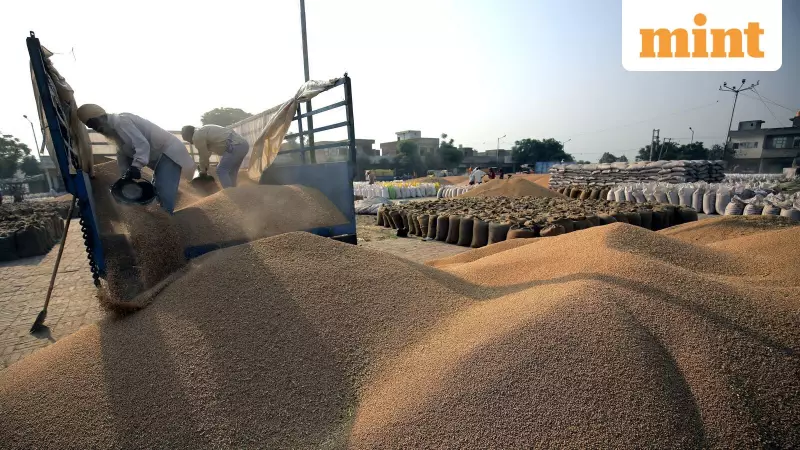
In a major technological push for its agricultural sector, the Indian government is set to launch Artificial Intelligence (AI)-powered automated grain analyzers from next year. This initiative aims to revolutionize the testing, storage, and distribution of food grains like wheat and rice, according to two officials familiar with the plan.
Modernizing a Massive Procurement System
The move comes as India handles record procurement volumes domestically while solidifying its position as a crucial player in international food markets. The need for robust, technology-led reforms has become paramount. During the 2025-26 rabi marketing season, wheat procurement hit 30 million tonnes, the highest since 2021-22. Concurrently, kharif paddy procurement reached 41.75 million tonnes as of December 20.
These massive inflows exert tremendous pressure on procurement operations, storage infrastructure, and quality control. The new AI-enabled analyzers are designed to address these challenges head-on. They utilize digital imaging and machine learning to assess critical parameters like moisture content, impurities, broken grains, and overall cereal quality in real-time.

Benefits: From Farm Gates to Global Markets
Replacing manual, subjective inspections with objective, automated testing promises multiple advantages. It aims to reduce wastage, ease congestion and disputes at mandis (wholesale markets), and improve the quality of grain entering government stocks.
"Automated testing could also improve storage outcomes," explained one of the officials. "Real-time quality data captured at procurement points would allow agencies like the Food Corporation of India (FCI) to segregate grain lots more efficiently, reduce moisture-related spoilage during storage, and optimize inter-depot movement."
This technological upgrade is also expected to strengthen the delivery of welfare schemes like the Pradhan Mantri Garib Kalyan Anna Yojana (PMGKAY) and the National Food Security Act (NFSA), which serve about 80 crore beneficiaries. Better quality visibility ensures consistency and reduces complaints at the beneficiary level.
Boosting India's Credibility as a Global Supplier
The initiative holds significant importance for India's export ambitions. According to a World Trade Organization (WTO) report from November 7, India's policy interventions contributed to a 29% fall in global rice prices in 2025, helping cool food inflation in dependent nations like Senegal, Benin, and Bangladesh.
"As India emerges as the world's largest rice exporter, improving grain quality assessment and storage efficiency becomes critical not just for domestic food security but also for maintaining India's credibility as a reliable supplier," said Binod Anand, a member of the high-level committee on minimum support price (MSP).
The International Grains Council (IGC) forecasts India to export a record 23.4 million tonnes of rice in 2025-26, accounting for over one-third of the projected global trade of 59.9 million tonnes. Industry experts believe AI can ensure that export surges do not compromise quality.
"Automatic grain analysers can revolutionise grain quality assessment by enabling faster, more accurate, and transparent evaluations," said Dr. Preet Sandhu of AVPL International. This technology eliminates subjectivity, ensuring fair pricing for farmers and consistent standards for agencies.
Industry bodies have welcomed the move. Tarsem Saini, President of the Federation of All India Rice Millers Association, stated that automated analyzers can bring transparency, speed, and uniformity to procurement, ensuring better-quality grain reaches consumers. The government had previously undertaken a pilot project based on this technology during the 2021-22 kharif marketing year.