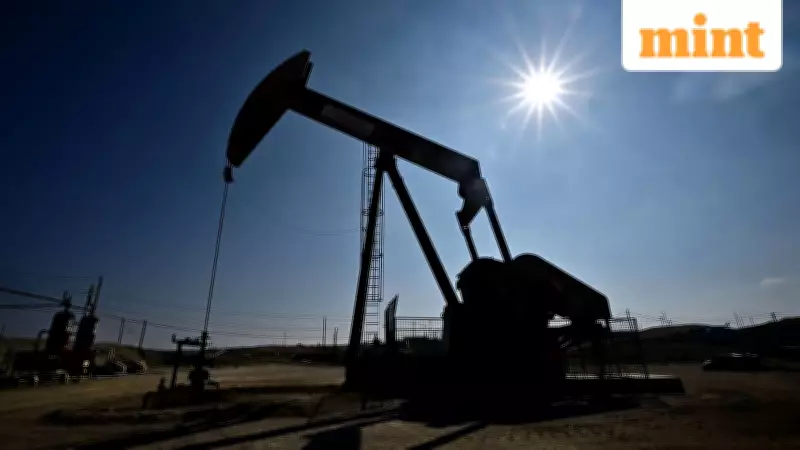
India Unlikely to Halt Russian Oil Imports Abruptly Despite Trump's Trade Deal Claim
Despite recent claims by US President Donald Trump regarding a bilateral trade agreement, India is not expected to abruptly cease its imports of Russian crude oil in the near term. Industry experts and refinery executives indicate that a gradual reduction strategy is more probable than an immediate halt, given existing contractual commitments and economic considerations.
Current Import Volumes and Contractual Commitments
India is likely to continue importing approximately 1.2 million barrels per day of Russian oil over the next two to three months, with bookings already secured for this period. According to Sumit Ritolia, lead research analyst at global ship tracking firm Kpler, imports are projected to remain broadly stable within the 1.1 to 1.3 million barrels per day range through the first quarter and early second quarter of 2026.
"Russian volumes remain largely locked in for the next 8–10 weeks and continue to be economically critical for India's complex refining system," Ritolia emphasized, noting that these imports are supported by substantial discounts on Urals crude relative to ICE Brent benchmarks.

Economic and Refining Considerations
An executive from a major Indian refinery, speaking on condition of anonymity, confirmed that Russian suppliers are currently offering discounts of up to $12 per barrel. This economic advantage makes Russian crude particularly attractive for India's refining infrastructure, which has become optimized for processing these specific grades over recent years.
While Indian refiners possess the technical capability to operate without Russian Urals crude, industry analysts warn that a rapid disengagement would present significant commercial challenges. The executive noted that "a gradual decline would be the way to curb imports, rather than an immediate halt" given the complex adjustments required in refining operations and supply chain logistics.
Government Policy and Energy Security
There has been no official directive from the Indian government to halt Russian oil supplies, according to refinery executives. Prashant Vasisht, senior vice-president at ICRA Ltd., explained that energy security and economic considerations remain primary policy objectives amid increasingly complex geopolitical dynamics shaping global oil trade flows.
India imports nearly 90% of its crude oil requirements, making the country highly vulnerable to supply-chain volatility that could significantly affect energy security, fuel inflation, and current account deficit. An increase of just $1 per barrel in crude prices could raise India's oil import bill by approximately ₹13,000 crore.
Diversification Strategy and Alternative Sources
Experts note that the recently announced India-US trade deal is likely to accelerate India's import diversification strategy rather than trigger an immediate shift away from Russian crude. Data from Kpler indicates that US crude is emerging as a primary beneficiary, potentially accounting for up to 10% of India's crude intake, largely displacing lighter West African grades rather than Russian supply.
However, the refinery executive cautioned that significant increases in US oil imports would require recalibration of Indian refining systems for increased intake of West Texas Intermediate crude. Other emerging suppliers include:
- Iraq (1.06 million barrels daily in early January)
- Saudi Arabia (891,000 barrels daily average in January)
- United Arab Emirates (385,000 barrels daily average in January)
- United States (351,000 barrels daily in early January)
- Nigeria, Guyana, and Brazil (each contributing 200,000+ barrels daily)
Historical Context and Future Projections
Russia emerged as India's top oil supplier in FY23 after Western nations curtailed imports following the Ukraine conflict. In FY25, Russia supplied approximately 35% of India's overall crude imports, up from less than 2% prior to FY23. This dramatic increase followed Russia's decision to ramp up exports of discounted crude to India after facing Western sanctions.

Vasisht noted that even if India significantly reduces Russian crude purchases, replacement with market-priced alternatives would likely increase the country's import bill by less than 2%. Venezuelan crude presents another potential alternative, though Ritolia cautioned that these volumes are expected to remain "episodic and constrained by weaker economics, sanctions compliance, insurance, and blending requirements."
The diversification drive has already shown results, with supplies from Iraq closing the gap with Russian imports. During the first 20 days of January 2026, India imported an average of 1.06 million barrels daily from Iraq, just 40,000 barrels lower than imports from Russia during the same period.
As geopolitical dynamics continue to evolve, India's approach to Russian oil imports appears focused on balancing economic advantages with long-term diversification goals, prioritizing energy security while navigating complex international relationships.