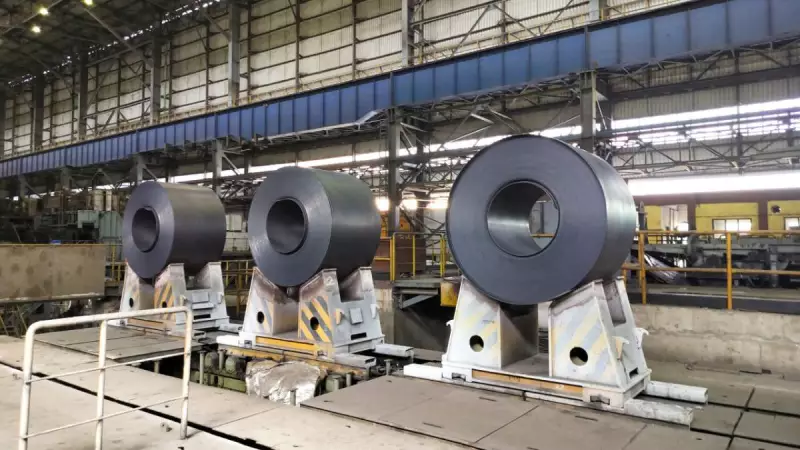
In a significant move to protect its domestic industry, the Government of India has decided to impose anti-dumping duties on certain steel products imported from China. This decision, announced on December 31, 2024, comes as a major relief to Indian steel manufacturers who have been grappling with the influx of cheap imports.
Details of the Anti-Dumping Measure
The Directorate General of Trade Remedies (DGTR), under the Ministry of Commerce and Industry, recommended the imposition of these duties following a detailed investigation. The probe concluded that certain flat-rolled products of aluminum or aluminum alloy, originating in or exported from China, were being dumped into the Indian market. Dumping refers to the practice of exporting goods at a price lower than their normal value in the domestic market of the exporter.
The investigation was initiated based on a complaint filed by the domestic industry, represented by major players. The DGTR found that the dumped imports were causing material injury to the Indian steel industry. The imposed duty is designed to offset the unfair price advantage and create a level playing field for local producers.

Impact on the Indian Steel Sector
This policy intervention is expected to have several positive outcomes for the domestic market. Firstly, it will shield local manufacturers from the adverse effects of predatory pricing. This protection is crucial for the health of an industry that is a cornerstone of India's infrastructure and manufacturing growth.
Secondly, the move is likely to boost the capacity utilization of Indian steel plants, which have been operating below potential due to competitive pressure from imports. With a more secure domestic market, manufacturers can plan for expansion and further investment with greater confidence.
The decision aligns with the government's broader vision of an 'Atmanirbhar Bharat' (Self-Reliant India), promoting domestic production and reducing reliance on imports in critical sectors. The steel industry, being a core sector, is vital to this national objective.
Broader Economic and Strategic Context
The imposition of tariffs is not an isolated trade action but part of a considered approach to manage the trade deficit with China and protect strategic industries. The Indian steel industry has long advocated for such measures, arguing that cheap imports stifle innovation and job creation within the country.
By enforcing these anti-dumping duties, the government sends a clear signal about its commitment to fair trade practices. It ensures that the growth of the domestic industry is not undermined by imports sold at below-cost prices. This step is anticipated to strengthen the financial health of Indian steel companies, enabling them to invest in modernization and sustainable practices.
In conclusion, the December 31st decision to levy duties on specific Chinese steel imports marks a pivotal moment for India's industrial policy. It balances the need for open trade with the imperative to safeguard a vital national industry from unfair competition, fostering a more resilient and self-sufficient economic ecosystem.