In a significant development at the intersection of global energy trade and diplomacy, a senior United States senator has made claims regarding India's strategic adjustments to its oil imports. The remarks highlight the ongoing geopolitical tensions and economic pressures shaping international relations.
Senator Graham's Claims on Indian Diplomacy
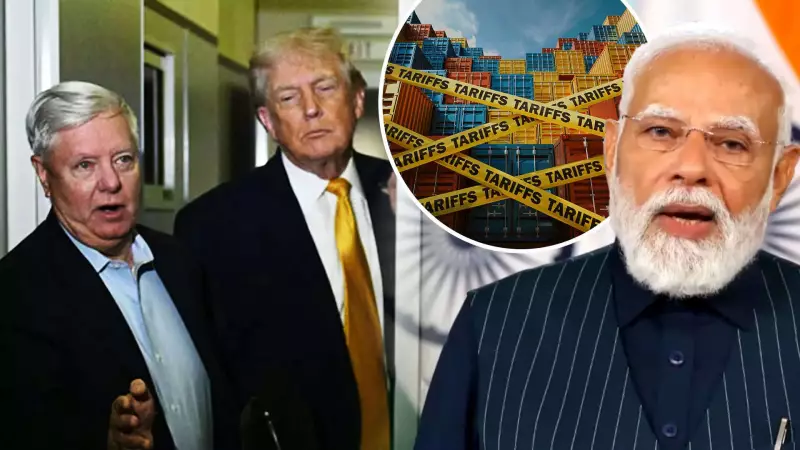
Speaking publicly alongside former President Donald Trump, US Senator Lindsey Graham asserted that the Indian government is actively working to decrease its reliance on Russian crude oil. The statement was made on January 6, 2026, as reported. Graham indicated that this shift is occurring amidst increasing tariff-related pressure from Washington.
The Republican senator revealed that India's envoy to the United States had communicated New Delhi's position directly. The message reportedly contained a dual assurance: that India was scaling back its purchases of Russian oil and was simultaneously seeking relief from the tariffs imposed by the Trump administration. This diplomatic exchange underscores the high-stakes negotiations happening behind the scenes.

The Context of US Pressure and Global Energy Sanctions
These comments arrive at a critical moment when the United States is internally debating the imposition of harsh penalties on nations that continue to engage in energy trade with Russia. Senator Graham framed the existing tariffs as a deliberate tool, designed to make discounted Russian oil a less attractive and more difficult option for global importers.
Former President Trump, who was present during the remarks, strongly endorsed this stance. He issued a clear warning, stating that tariffs on India could be escalated rapidly if Washington's concerns about continued trade with Russia are not adequately addressed. This positions trade policy as a direct lever of foreign policy.
India's Energy Calculus and Strategic Silence
The claims touch upon a vital aspect of India's energy security. As a nation that imports nearly 88 percent of its crude oil requirements, India has had to navigate a complex global market reshaped by Western sanctions on Russia. Following the imposition of those sanctions, India strategically increased its intake of discounted Russian oil, which at one point constituted nearly 40 percent of its total imports.
However, recent data and market analyses have pointed to a notable decline in this share, suggesting a recalibration of India's import sources. Despite the public claims made by the US politicians, the Indian government has so far maintained an official silence on the matter. This quiet diplomacy persists even as the broader India-US relationship continues to expand robustly across other domains, including defence, trade, and strategic cooperation.
The situation presents a delicate balancing act for New Delhi. On one hand, it must secure affordable energy for its growing economy. On the other, it must manage its crucial strategic partnership with the United States, which is increasingly using economic measures to enforce foreign policy goals. The outcome of this pressure will have significant implications for global oil markets and the geopolitical alignment of major nations.