India Bears Brunt of US Sanctions While Hungary Secures Exemption
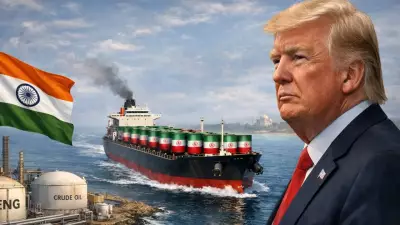
In a striking display of differential treatment, the United States has granted Hungary a one-year exemption from sanctions on Russian oil companies just weeks after imposing stringent measures, while India continues to face punishing tariffs that are significantly impacting its economy. The contrasting approaches reveal complex geopolitical calculations that are putting New Delhi at a distinct disadvantage.
The US announced sanctions on Russian oil giants Rosneft and Lukoil on October 22, only to surprisingly grant Hungary an exemption on November 7. The European nation secured this special status by committing to purchase American liquefied natural gas worth approximately $600 million and nuclear fuel valued at $114 million.
The Political Calculus Behind Sanctions Enforcement
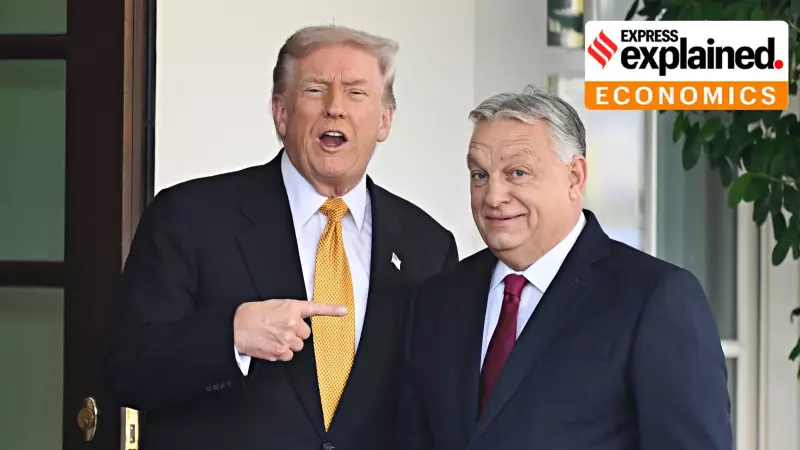
President Donald Trump's press conference with Hungarian Prime Minister Viktor Orbán revealed the political nature of the exemption decision. Trump praised Orbán for being "right on immigration" and noted that the Hungarian leader "understands Putin and knows him very well." This endorsement came despite evidence suggesting Hungary's increased dependence on Russian crude.

According to a report from the Centre for the Study of Democracy, Hungary increased its Russian crude reliance from 61% before the invasion to 86% in 2024, while Slovakia remained almost entirely dependent on Moscow-supplied oil. The report further noted that phasing out Russian oil is fully feasible for both Hungary and Slovakia through the Adria pipeline from Croatia.
Meanwhile, India finds itself facing the harshest consequences among nations purchasing Russian oil. The US imposed steep 50% tariffs on India on August 27 after trade negotiations collapsed, primarily due to India's objections to genetically modified US agricultural products.
Impact on Indian Economy and Russian Oil Imports
The consequences for India have been severe and immediate. Indian exports to the US slipped 12% in September, with labor-intensive sectors being particularly hard hit. More concerning for India's energy security, Russian oil dispatches to India have dropped sharply following the sanctions announcement.
According to provisional vessel tracking data from global commodity analytics provider Kpler, crude oil exports to India from Russia averaged 1.19 million barrels per day in the week to October 27. This represents a significant decline from 1.95 million barrels per day in the previous two weeks.
The crash in exports is primarily driven by reduced dispatches from Rosneft and Lukoil, which account for over half of Russia's oil production and more than two-thirds of India's Russian oil imports. Exports from Rosneft to India plunged to 0.81 million bpd from 1.41 million bpd in the previous week, while Lukoil recorded zero dispatches to India during the same period.
Potential Solutions for India Through Energy Diplomacy
A potential way out for India involves negotiating a trade deal with the US that includes higher purchases of American energy. Such an agreement could help New Delhi secure more favorable tariff rates between 15% and 20%, significantly lower than the current punitive 50% rate.
Commerce Minister Piyush Goyal indicated in September that India's energy security goals would involve significant US participation in the coming years. He specifically expressed interest in American small modular reactor innovations, noting that both countries would continue nuclear energy cooperation.
This approach mirrors the US-Hungary agreement, which included a Memorandum of Understanding on Nuclear Energy focusing on Small Modular Reactors and spent fuel storage. The joint statement indicated Hungary's intention to support construction of up to 10 SMRs with a potential value of $20 billion.
The ongoing US Supreme Court case regarding the legality of Trump's tariffs could also impact the dynamics. If the Trump administration loses, India might secure refunds and potentially fairer trade terms, though the political dimensions of the relationship will continue to play a crucial role in determining outcomes.