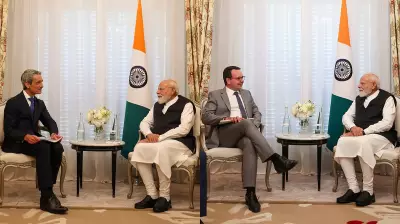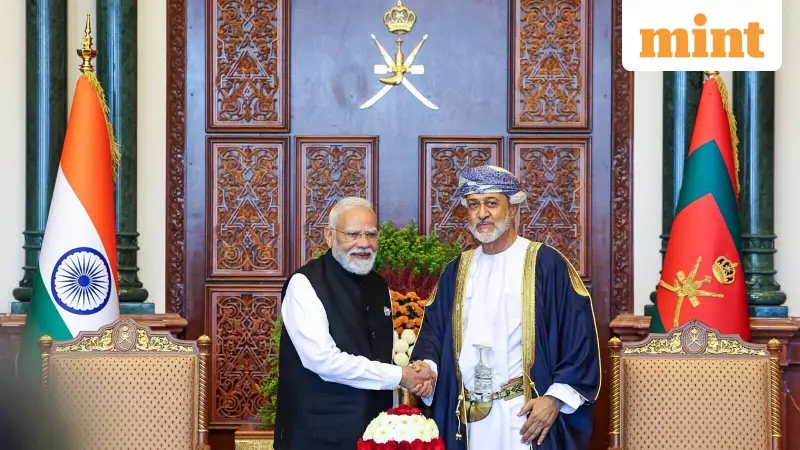
In a significant move to bolster economic ties and secure strategic interests, India and Oman inked a landmark Comprehensive Economic Partnership Agreement (CEPA) last week. The deal was finalized during Prime Minister Narendra Modi's official visit to Muscat, where he met with Sultan Haitham bin Tarik.
What Does the India-Oman CEPA Entail?
The Comprehensive Economic Partnership Agreement (CEPA) is a wide-ranging pact that covers both trade in goods and investment. Under its terms, Oman will grant zero-duty access on 98% of its tariff lines, which effectively covers 99% of Indian exports by value. In return, India has agreed to eliminate or reduce tariffs on 78% of its tariff lines, accounting for 95% of Oman's exports to India.
To protect domestic industries, both sides have carved out specific exceptions. India has shielded sensitive sectors by placing items like dairy, coffee, tea, gold, and silver outside the agreement's purview. Other sensitive goods such as dates, marbles, and petrochemicals from Oman will be allowed through limited tariff-rate quotas.

Boosting Trade and Strategic Foothold
Currently, bilateral trade between the two nations stands at roughly $10 billion annually, having declined from a peak of $12.4 billion in FY23 to $10.6 billion in FY25. The CEPA is expected to reverse this slowdown and inject fresh momentum.
Key Indian export sectors set to benefit immensely include gems and jewellery, textiles, leather footwear, engineering goods, and pharmaceuticals. These products, which previously faced duties of at least 5% in the Omani market, will now enjoy duty-free access. This tariff relief is particularly timely for Indian exporters grappling with heightened tariffs in markets like the United States.
Beyond immediate trade gains, the agreement serves a larger strategic objective. India has long pursued a trade deal with the six-nation Gulf Cooperation Council (GCC), comprising Saudi Arabia, the UAE, Qatar, Oman, Kuwait, and Bahrain. With bilateral agreements now successfully concluded with both the UAE and Oman, New Delhi has significantly improved its position and momentum towards eventually securing a broader GCC-wide pact.
India's Broader Trade Canvas
The Oman deal is a critical piece in India's renewed push to diversify its export markets and reduce dependency on any single economy, especially after the US imposed punitive tariffs. This strategy is seeing activity on multiple fronts.
Negotiations with the European Union, which were stalled, have been revived. Last week, the Netherlands' foreign minister indicated that talks on the India-EU trade deal are in their final stages and could conclude soon. Furthermore, India is engaged in trade talks with New Zealand and Chile. The India-UK trade agreement, signed in May this year, is also expected to be operationalized shortly.
However, a comprehensive bilateral trade deal with the United States remains elusive. While negotiations continue and high-level contacts between leaders are maintained, key hurdles persist. The US seeks greater access for its agricultural and energy products in India. While India is open to importing more energy, allowing wide access to its agricultural sector remains a sensitive issue. Indian officials now cautiously anticipate a potential agreement only by March next year.
The India-Oman CEPA, therefore, is more than just a pact to boost a $10 billion trade relationship. It is a strategic building block for India's economic security, its foothold in a critical region, and its broader ambition to become a central node in resilient global supply chains.