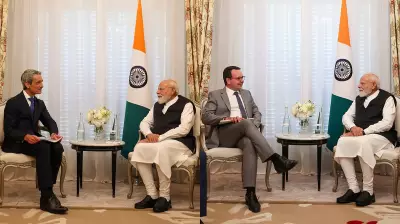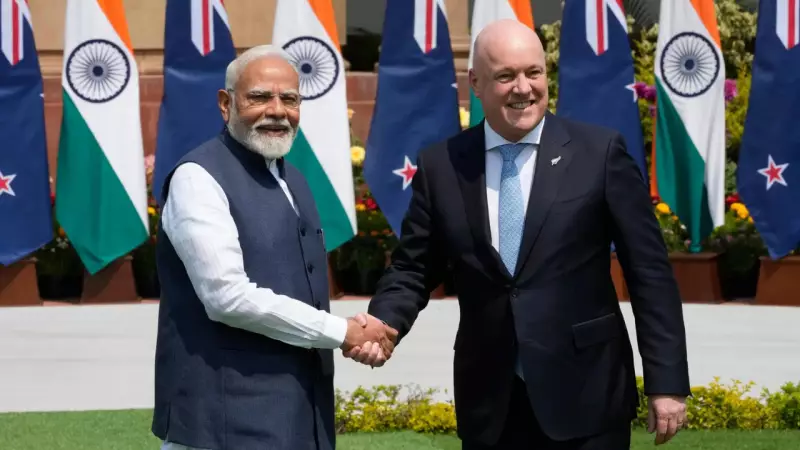
In a significant move to bolster economic cooperation, India and New Zealand officially concluded negotiations for a comprehensive Free Trade Agreement (FTA) on Monday. This pact is poised to substantially deepen trade and investment links between the two nations, with a shared goal of doubling bilateral trade over the next five years.
A Strategic and Economic Milestone
Marking India's third such agreement this year following deals with the UK and Oman, the FTA with New Zealand represents a key strategic and economic milestone. It underscores New Delhi's focused engagement in the Indo-Pacific region amidst a complex global geopolitical landscape. The agreement grants Indian products tariff-free access to New Zealand's markets, which is anticipated to boost the competitiveness of several crucial, labour-intensive Indian industries.
Prime Minister Narendra Modi announced the successful conclusion of the deal on social media platform X, following a phone conversation with his New Zealand counterpart, Christopher Luxon. He highlighted that the agreement, finalized in just nine months, demonstrates a powerful political commitment and a mutual desire to strengthen the economic partnership.

Key Provisions and Sectoral Impacts
The FTA is designed to provide a major fillip to Indian export sectors by integrating them more deeply into global value chains. Industries set to benefit include textiles, apparel, leather, footwear, marine products, gems and jewellery, handicrafts, engineering goods, and automobiles.
In the agreement, India has offered market access to New Zealand across more than 70% of tariff lines, covering an impressive 95% of the total bilateral trade value. However, in a move to safeguard domestic interests, India has strategically excluded nearly 30% of products from tariff concessions. Commerce and Industry Minister Piyush Goyal firmly stated that India will never open its dairy sector in any FTA. The list of exclusions prominently features dairy products, coffee, milk, cream, cheese, yoghurt, whey, caseins, onion, sugar, spices, edible oils, and rubber.
On the other side, New Zealand has committed to facilitating investments worth $20 billion in India over the next 15 years. Minister Goyal also pointed out innovative aspects of the deal, including technical collaboration in fruit cultivation, honey production, and dairy technology, aimed at helping Indian farmers and dairy professionals increase their incomes with modern techniques.
New Pathways for Professionals and Students
Beyond goods, the FTA introduces significant advantages for the movement of Indian people. It establishes improved entry and stay provisions for Indian professionals, students, and youth. Key features include work opportunities during study periods, clear post-study work pathways, dedicated visa arrangements, and a working holiday visa framework.
A notable provision is the creation of a new temporary employment entry visa for Indian skilled professionals, with a quota of 5,000 visas available at any time and a permitted stay of up to three years. This pathway specifically covers professions where India has unique expertise, such as Ayush practitioners and yoga instructors, opening new avenues for skilled employment in New Zealand.
Addressing the media, Minister Goyal emphasized that this agreement creates opportunities for all sections of India's export community, encourages new exporters with diverse products, and promises to benefit every region of the country—from the north and south to the east, west, and northeast—through different specialized sectors.