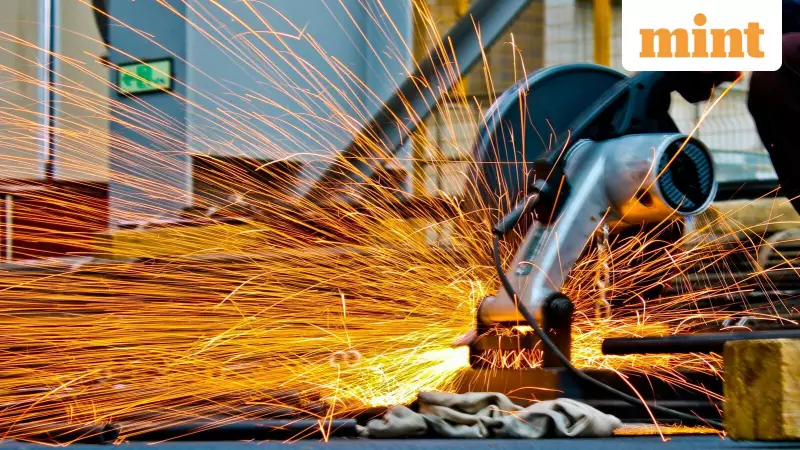
The growth momentum in India's crucial manufacturing sector showed signs of cooling in November, as the sting of elevated US trade tariffs and heightened global competition began to impact business sentiment and order books. The latest survey data reveals a notable deceleration in the pace of expansion, marking the softest improvement in operating conditions since February this year.
PMI Data Signals a Growth Slowdown
The headline seasonally adjusted HSBC India Manufacturing Purchasing Managers' Index (PMI) declined to 56.6 in November, down from 59.2 recorded in October. While any reading above the 50-mark indicates expansion, the latest figure represents the slowest rate of improvement in nine months. The survey pointed to weaker growth in both total new orders and production output, which expanded at their most subdued pace since February.
On the external front, the situation appeared more challenging. Although Indian manufacturers reported favourable demand from key international markets including Africa, Asia, Europe, and the Middle East, the growth in new export orders softened considerably. The New Export Orders sub-index plummeted to a 13-month low in November, reflecting the mounting pressures on overseas sales.

Business Confidence Hits a Multi-Year Low
The dampened outlook was most starkly visible in the forward-looking indicators. The Future Output Index, which gauges business confidence among manufacturers, slid to a nearly three-and-a-half-year low. Companies expressed significant concerns about the intensifying competitive landscape, specifically citing heightened competition from international firms. This pessimistic mood also weighed on employment trends within the sector, with hiring activity losing some steam.
Financial institution IDFC First Bank highlighted the expected drag on growth. "The key drag on growth in H2FY26 is expected to be from elevated tariffs and lower support from government expenditure," the bank noted. It further explained that the full impact of the 50% bilateral tariff would be felt in the second half of the fiscal year, having become effective from late August. Concurrently, government expenditure growth is anticipated to moderate due to a sharp slowdown in tax revenue collections.
Potential Relief from Trade Deal and Policy Moves
A potential beacon of hope emerged from the trade diplomacy front. Commerce Secretary Rajesh Agarwal stated last week that India is expected to sign the first phase of its bilateral trade agreement with the United States by the end of 2025. Analysts believe that favourable terms in such a pact could alleviate significant pressure on Indian manufacturers and aid in a recovery of exports.
HSBC's Chief India Economist, Pranjul Bhandari, added another dimension to the analysis. She suggested that the boost to the domestic economy from recent Goods and Services Tax (GST) rate cuts might be fading and could prove insufficient to counterbalance the demand headwind created by the tariffs.
Furthermore, in a subdued business environment and with input cost inflation easing, manufacturers found little room to raise their own prices. Consequently, the PMI sub-index for output charges fell to an eight-month low in November.
This complex mix of slowing growth, weak pricing power, and external pressures sets a critical backdrop for the Reserve Bank of India's (RBI) upcoming Monetary Policy Committee (MPC) meeting, scheduled for December 3 to 5. While benign inflation, with Consumer Price Index (CPI) inflation now below the central bank's 2% lower tolerance band, has led many to expect a 25 basis point repo rate cut to 5.25%, some economists are advocating for a pause. This caution stems from the surprisingly strong September-quarter GDP growth reading of 8.2%, the fastest pace in six quarters, which suggests underlying economic resilience.